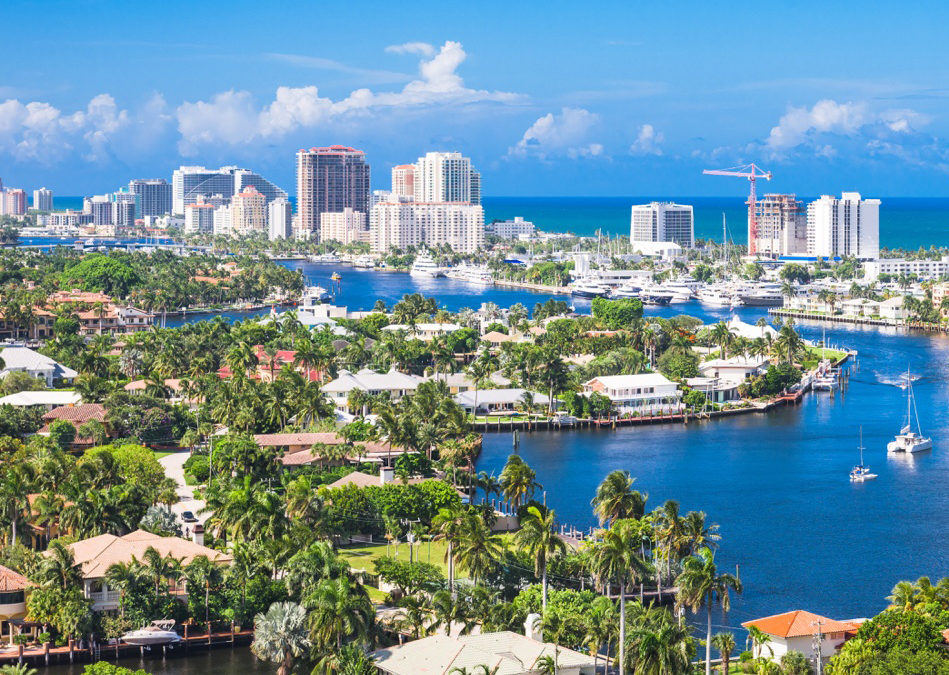
Real estate development is booming in Fort Lauderdale

Real estate development is booming in Fort Lauderdale

By: Beatrice Silva 
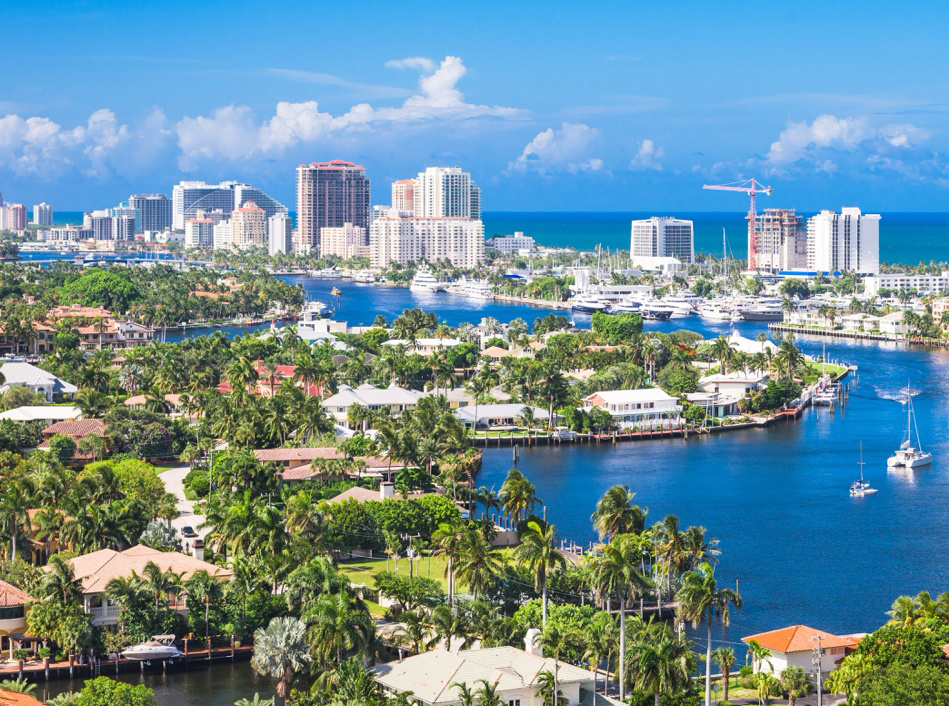
2 min read –  Real estate development in Fort Lauderdale is getting a jolt of confidence despite the lingering impact of COVID-19. On March 24, a majority of businesses were forced to shut down after Gov. Ron DeSantis announced a statewide shelter-in-place order. However, construction companies, hospitals, grocery stores, gas stations and other essential businesses were allowed to carry on with work as usual.


Florida is just one of several states that allowed construction to continue despite nationwide shutdowns. Similar to many other regions in the area, development is a vital part of Fort Lauderdale’s economy. The construction industry is projected to have the largest industry increase in employment from 2014 to 2024, according to the U.S. Bureau of Labor Statistics. 

A strong signal of the confidence in the market is a recent move by Oko Group, an international real estate development firm founded by Vladislav Doronin. It is the first company to close a large deal since the beginning of COVID-19. The firm recently purchased 6.68 acres of land east of the county courthouse in Downtown Fort Lauderdale for $62.59 million. “Oko Group is excited to expand its portfolio of South Florida real estate with the acquisition of a mixed-use development site in the heart of Fort Lauderdale’s urban core,” the developer said in a statement reported by South Florida Business Journal. “The Oko Group team, led by Doronin, now looks forward to working with the city of Fort Lauderdale to finalize plans for an exceptional development that will help to further transform the Downtown district while adding significant amenities for nearby residents and businesses.”

The majority of developments in the pipeline for Fort Lauderdale will most likely be residential. Retail and office real estate have proven themselves to be the weakest sectors in the market during the pandemic. “Prior to COVID-19, South Florida’s real estate sector was very strong, propelled by the demand and low interest rates. I think the commercial office market may see a bit of a correction. So many people are working from home and I imagine that most of them are going to continue to do that the rest of the year. I think business owners are getting more comfortable allowing their employees to work remotely. So far, the industrial and residential markets have proven themselves to be the strongest sectors in the real estate industry during the pandemic. I don’t think we’ll see any correction there. Currently, at Touchstone Webb Realty Company, we are watching retail and commercial as we move forward. We think it is going to take a good year before we see this sector begin to correct. We are still purchasing industrial and flex spaces for our clients,” Susan Thomas, president of Touchstone Webb Realty Company, told Invest: Palm Beach.

As Thomas mentioned, CDC regulations like social distancing have compelled more people to want to work from home. As a result, business owners could require less office space. Fairfield Cypress Creek is just one example of this trend. The new mixed-use project is currently underway between 6500 and 6520 N. Andrews Ave. The land which was originally occupied by office buildings will now hold 295 residential units, shops and restaurants. A new downtown could be another exciting project on the horizon for Broward County. Broward is recruiting a large company to relocate to the 140 acres next to the Everglades in Sunrise. “It’s one of the last few pieces you could make a statement. We really want to market this site internationally, not just nationally,” County Manager Bertha told the Sun Sentinel. 



A deeper look into how Philadelphia’s economy is recovering

A deeper look into how Philadelphia’s economy is recovering

By: Beatrice Silva

2 min read – Philadelphia is the seventh-largest metropolitan area in the United States. Its diverse population, affordable rents and urban atmosphere make it an ideal location for entrepreneurs to open up shop. So much so, that small businesses make up 99.7% of its economy, according to the U.S. Small Business Administration Office of Advocacy. The city was on a strong growth course before COVID-19. However, that all came tumbling down when all non-essential businesses were ordered to shut down in Pennsylvania on March 19. 


In an effort to limit the damage to the national economy, the federal government rolled out the Coronavirus Aid and Economic Security (CARES) Act on March 27. Part of the act, a loan called the Paycheck Protection Program, has played a particularly important role in Philadelphia’s recovery. The program set aside $349 billion for small business loans intended to help them stay afloat and keep their people employed during the pandemic. Within weeks, the federal aid was exhausted and small businesses were once again left with uncertainty. A second glimmer of economic hope presented itself  when Gov. Tom Wolf allowed Philadelphia to transition into the yellow phase of his recovery plan on June 5. Stay-at-home orders were lifted and in-person retail was again allowed. Despite rising coronavirus cases, most businesses were eager to open their doors under regulated CDC guidelines. 

Two weeks into Philadelphia’s reopening a new obstacle landed in the city’s lap. Some businesses experienced looting and vandalism due to nationwide protests in the wake of the killing of George Floyd, a black man who died after a Minneapolis police officer kneeled on his neck for nine minutes. On June 11, Philadelphia announced a new grant and loan program for small businesses affected by the COVID-19 shutdown and damages from recent lootings. The Restart PHl Loan Fund from the Philadelphia Industrial Development Corp. will be primarily for minority-owned businesses in low-income areas. The $3 million in loans to small businesses can cover costs for things like inventory, technology, staffing and employee training. Philadelphia also announced a $1.4 million “Restore and Reopen Program,” which will provide grants to independently-owned businesses that have suffered from property damage.

“These efforts are intended to provide equitable and immediate relief to ensure our small businesses can sustain themselves and return in a manner that allows them to thrive,” said Philadelphia Mayor Jim Kenney in a statement. 

It may be too early to tell how the region’s economy will fare as it heads into a post-COVID-19 landscape. However, there is one sector that is expected to thrive as a result of all of this. Now more than ever before technology has proven to be a vital aspect of everyday life. One key advantage the industry has is the ability to have its employees work remotely, unlike retail and food services. The tech sector could even play an essential role in igniting the reconstruction of the local economy, according to the Greater Philadelphia Economy League.


Charlotte: Toe to Toe with Coronavirus

Charlotte: Toe to Toe with Coronavirus

By: Felipe Rivas

4 min read June 2020—The tenacity of the coronavirus has challenged, and at times highlighted, the economic strength of cities across the nation. While the pandemic has severely bruised the Queen City’s economy, the city’s dexterity and sound fundamentals are helping to soften the blow as Charlotte recoups and prepares for an uncertain future. 


Marked by serious losses and promising victories, June has been a roller coaster of economic activity for the Charlotte Metro Region. Unexpectedly, the city’s hospitality sector, an already embattled segment of the economy, suffered a further blow when President Donald Trump and Republican leaders swiftly yanked the Republican National Convention (RNC) out of Charlotte after coronavirus-related concerns prevented North Carolina leaders from guaranteeing a fully operational Spectrum Center, hotels and other amenities. But as Charlotte reeled from this sudden blow, the region jabbed back at the coronavirus-related adversity with positive job expansion and promising rezoning announcements slated to be catalysts for growth in the near future. 

Two years of RNC preparations vanished as RNC leaders decided to move more than half of the August festivities to Jacksonville, Florida. Since winning the bid to host the 2020 RNC in 2018, the host committee and Charlotte’s hospitality and business leaders have toiled to ensure a smooth and enjoyable experience for the thousands of delegates, journalists, and visitors expected for the event. However, as government and business leaders entered 2020 confident about the state of the economy, the contingency plans unsurprisingly failed to factor in a global pandemic and the subsequent reduction in major events and large gatherings of people. 

In late May, in a letter to Gov. Roy Cooper, RNC leaders demanded that Charlotte, which remains in a state of emergency, guarantee a “full convention,” and “full hotels and restaurants, and bars at full capacity,” according to a response letter published by the governor’s office. Citing uncertainty and the state of the coronavirus come August, Gov. Cooper said planning for a scaled-down convention with fewer people, social distancing and face coverings is a necessity. “As much as we want the conditions surrounding COVID-19 to be favorable enough for you to hold the Convention you describe in late August, it is very unlikely,” Gov. Cooper wrote to the RNC leaders. “Neither public health officials nor I will risk the health and safety of North Carolinians by providing the guarantee you seek.” 

This lack of guarantee prompted RNC leaders and President Trump to move three of the four convention days to Jacksonville, according to different news sources. Charlotte will host the first day of the convention, with the traditional speeches and fanfare occurring in Jacksonville. The convention is scheduled to run Aug. 24-27.  

“We wanted to host the RNC because we hosted the Democratic National Convention in 2012 and so we want to prove to the world that we are capable of delivering high-quality events,” Charlotte Mayor Vi Lyles told Invest: Charlotte in the spring, before the RNC decision. She further explained the advantages for Charlotte: “It is a great branding opportunity for the city, as we expect up to 50,000 people, including many international journalists, to visit during the event. It will also provide a huge boost to our hospitality industry.” she said. The convention was expected to generate more than $150 million in revenue for the area’s restaurants, bars and hotels, the Charlotte Observer reported.  

As the hospitality and tourism sector begins to gather its composure after such a punch, Charlotte heavyweights aim to continue to strengthen the region’s foundation. Two significant redevelopments projects moved forward on Monday after receiving unanimous approval from city leaders. Rezonings were approved for the redevelopment of Atrium Health’s Midtown flagship campus and the former Eastland Mall property in east Charlotte, according to the Charlotte Business Journal. 

Atrium Health, the region’s largest employer, seeks to rezone close to 70 acres at the Carolina Medical Center to accommodate a live, work, and play environment, complete with a new bed tower, rehabilitation hospital, office space, affordable housing and more. In 2019, Atrium Health announced more than $1.5 billion investment in the Charlotte metropolitan area to help build new infrastructure, including new hospitals and medical facilities, President and CEO Gene Woods Told Invest:Charlotte in the spring. “This is about more than just adding brick and mortar. It’s about investing in this community because this is the place our friends, our neighbors and our loved ones call home, and we want to see it continue to thrive,” Woods said. “As the major healthcare system in the state of North Carolina, we know we can play a key role in helping our economy flourish as well.”

The Eastland rezoning includes close to 78 acres of mostly city-owned property, according to the Charlotte Business Journal. The site will be the future headquarters of the yet-to-be-named Charlotte Major League Soccer team, owned by business leader David Tepper. Similar to the Atrium Health project, Eastland will be the site of mixed-use development featuring residential units, office and retail space, and athletic fields. 

And while these projects are expected to pay dividends to the community in the future, the region scored significant economic development victories on Tuesday when Chime Solution and Ross Stores announced the addition of 250 and 700 jobs respectively to the region’s economy. 

Georgia-based Chime Solutions, a provider of customer contact services for several industries, will add jobs for licensed life and health insurance agents and will pay $16 an hour and include training and licensing,  WFAE reported Chime Solutions  opened an office in the University City area last fall. Leading off-price apparel and home fashion retail chain Ross Stores Inc. announced it will expand its distribution and warehousing operations in York County, according to the Charlotte Regional Business Alliance. The company’s $68 million investment is projected to create 700 new jobs over five years. 

To learn more, visit:

https://files.nc.gov/governor/documents/files/2020_06_02_RNC-Response-Letter.pdf

https://www.bizjournals.com/charlotte/news/2020/06/16/eastland-mall-atrium-health-rezoning.html

https://www.charlotteobserver.com/news/politics-government/rnc-2020/article243540772.html

https://charlotteregion.com/index.php?src=news&submenu=Relocation_Expansions&srctype=detail&category=Investor%20News&refno=8639&hurl=n

https://www.wfae.org/post/charlotte-says-chime-solutions-250-job-expansion-offers-economic-mobility#stream/0


Decatur Driving Global COVID-19 Response

Decatur Driving Global COVID-19 Response

Written by: City of Decatur 

2 min read June 2020 As the world seeks answers to the devastating impact of COVID-19, many of the most critical questions about the virus and how to eradicate it are being routed through Decatur. And while the CDC certainly plays an outsized role in this equation and generates most of the attention, The Task Force for Global Health in Downtown Decatur is quietly using its infrastructure to drive solutions.


“When it comes to our work, we take pride in operating mostly behind-the-scenes and shining the light on our partners rather than ourselves,” said Bill Nichols, executive vice president and COO for The Task Force for Global Health.


Behind the scenes or not, The Task Force has been a crucial force in the worldwide response to the coronavirus pandemic, including coordinating the distribution of 1.4 million pieces of personal protection equipment to hundreds of hospitals and healthcare facilities around the country, strengthening epidemiological and lab skills through training 14,000 individuals around the world, and hosting monthly teleconferences for health officials worldwide to connect and share best practices and treatments. 


Additionally, The Task Force is coordinating critical collaborations between the public and private sectors, aligning the contact tracing efforts of tech giants like Apple and Google with health officials around the world.


“This pandemic has clearly changed the way our country thinks about global health, and it’s up to all of us to ensure we don’t lose focus on this critical issue in the future,” said Nichols. “Being properly prepared for a pandemic requires billions of dollars, but it’s an investment worth making as an ‘insurance policy’ to protect against the type of economic fallout we are experiencing.”


While the coronavirus pandemic has thrust discussions about vaccines into the mainstream, The Task Force regularly works on coordinating the vaccine safety efforts related to epidemics affecting areas and regions that are often overlooked. Having this infrastructure in place has allowed the organization to continue its lifesaving work in underserved regions around the globe while also addressing COVID-19, including through its Brighton Collaboration, a worldwide network of over 5,000 vaccine researchers that ensures vaccine safety, and the Partnership for Influenza Vaccine Introduction (PIVI), a program that works with low and middle-income countries around the world to develop their influenza vaccine delivery infrastructure, which will better prepare them for when a COVID-19 vaccine becomes available.


“Now more than ever, our location in Decatur serves as a major asset when you consider how closely we are working with the CDC, Emory and other Atlanta-based institutions to address the pandemic,” added Nichols. “It also allows us to give back, as we are sharing our global expertise with the Dekalb County Coronavirus Task Force to guide our own community through a safe reopening in the days, weeks and months ahead.”


To learn more about this, visit: https://www.decaturga.com/


Florida and Pennsylvania unemployment claims level off as economies slowly reopen

Florida and Pennsylvania unemployment claims level off as economies slowly reopen

By: Beatrice Silva 

3 min read June 2020 — As of June 5, most of Florida has taken the next step of reopening the economy that was devastated by COVID-19. Unemployment figures are starting to level off as businesses slowly start to open up again. On June 6, the U.S. Department of Labor saw its lowest figure for new unemployment claims since March 26. However, the sunshine state’s economy isn’t in the clear just yet. Florida has the fourth highest unemployment claims in the U.S. To make matters worse, some Floridans are still struggling to collect their unemployment benefits. 


 Since March 15, the Florida Department of Economic Opportunity (DEO) has paid out $1.5 billion in state claims and another $4.6 billion in federal unemployment benefits. Approved applicants should be getting $600 per week from federal benefits plus the state’s additional $275 weekly benefits. Unfortunately, issues resulting from an influx of people filing for benefits has caused the Florida DEO’s website to crash on multiple occasions. On April 15, Gov. Ron DeSantis placed Jonathan Satter, Florida Department of Management Services secretary, in charge of fixing the state’s unemployment benefits system. As a result, a new mobile-friendly website was born. People can now submit an application on the new website if they don’t currently have an open unemployment benefits claim on file. 


Different markets were hit particularly hard by the COVID related economic slowdown. The transportation and hospitality sectors are expected to take the longest to get back on their feet.

“There are a couple of key industries that will be greatly impacted the longer this goes, especially tourism and real estate. On the positive side, there is a significant number of secondary markets in Florida. Traveling overseas will likely not be as popular in the next couple of years, speaking well for these secondary markets. Challenges do drive opportunities and developers might take cues from the latter. Hospitality and tourism will continue to suffer and will likely require continuous stimuli the longer this continues,” said Blain Heckaman, CEO for Kaufman Rossin in an interview with Invest: Miami. 


Florida isn’t the only state feeling economic pressure as a result of COVID-19. Northeastern regions of the United States that were hit particularly hard by the virus, like Pennsylvania and New York, have also started reopening nonessential businesses in an effort to jumpstart the economy. Since March 15, the Unemployment Compensation department has paid over $16.4 billion in state and federal unemployment compensation benefits, according to Pennsylvania’s government website. The state is also preparing to activate an unemployment program that would extend benefits for up to 13 more weeks for eligible individuals. The last time Pennsylvania initiated the extended benefits program was during the fallout from the Great Recession in 2009.


Pennsylvania Gov. Tom Wolf is taking a three-phase, regional approach to reopening the state. The system consists of red, yellow and green phases that are then applied to individual counties. Red is the most restrictive and green is the least. On June 5, Wolf allowed 34 counties to transition into the green phase. Although most restrictions are lifted during this final phase, people are encouraged to follow CDC guidelines. Businesses like gyms, hair salons and indoor recreation centers that remained closed in the yellow phase can start to reopen at 75 percent occupancy. There are still 33 Pennsylvania counties in the yellow phase, which serves the purpose of slowly powering up the economy while still trying to contain the spread of COVID-19. 


Gov. Wolf has publicly voiced his desire for Pennsylvania to reopen. However, he warns business owners not to open up too early. “By opening before the CDC evidence suggests you’re taking undue risks with the safety of your customers. That’s not only morally wrong, it’s also really bad business. Businesses that do follow the whims of local politicians and ignore the law and the welfare of their customers will probably find themselves uninsured because insurance does not cover things that happen to businesses breaking the law,” Wolf said during a press conference. 


To learn more visit…


https://kaufmanrossin.com/


https://www.baynews9.com/fl/tampa/news/2020/06/15/florida-unemployment-benefits-update


https://www.miamiherald.com/news/business/article243450076.html?


https://www.pa.gov/guides/unemployment-benefits/


Florida’s phase 2 reopening and what it means for South Florida

Florida’s phase 2 reopening and what it means for South Florida

By: Beatrice Silva 

2 min read June 2020 On June 3, Gov. Ron DeSantis announced his plans to transition the majority of the state into the second phase of its recovery plan. However, the three southeast counties hit hardest by COVID-19 — Miami-Dade, Broward, and Palm Beach — will not be included in the reopening. 


 “We’ll work with the three southeast Florida counties to see how they’re developing and whether they want to move into phase 2,” DeSantis said during a news conference in Orlando on June 3. “They’re on a little bit of a different schedule.”


Gov. DeSantis will allow the three southeast counties to enter phase 2 under certain circumstances. The county mayors or county administrators will have to seek approval to enter phase 2 with a written request. Palm Beach County Mayor Dave Kerner and County Administrator Verdenia Baker wasted no time sending their request letter to DeSantis. 


“Palm Beach County is ready to go into ‘phase 2,” said Kerner at a news conference on Friday afternoon. “But we want to do it with some particular carve-outs that are necessary for the unique nature of Palm Beach County.” The county’s public officials are waiting for approval from Gov. DeSantis. 


As for Miami-Dade, their previous reopening date was pushed back by protests against police brutality. Miami-Dade Mayor Carlos Gimenez lifted the countywide curfew on June 8, and approved the reopening of gyms and fitness centers under Amendment 2 to Miami-Dade County Emergency Order 23-20. Although the city isn’t officially included in the initial phase 2 reopening date, Gimenez says he is working with the state on reopening locations very soon. 


Upon approval, restaurants may allow bar-top seating with appropriate social distancing. Bars will be able to operate at a 50 percent capacity inside and full capacity outside. Retail stores are going to be allowed to operate at full capacity and entertainment venues like movie theaters and bowling alleys will be able to welcome back guests at a 50 percent capacity. Residents who do decide to venture out will still have to follow CDC guidelines like wearing a mask, social distancing, and frequently washing their hands.


Although the north and south regions of Florida are on different opening schedules. State universities will have to submit their blueprints by Friday. The State University System of  Board of Governors recommends things like social distancing, disinfecting, face masks and student’s desks being as far away from one another as possible. School districts on the other hand, will be given the final say on their own social distancing protocols. It is expected that students will have a much different learning experience upon returning to the classroom. 


“We have a great opportunity to get back on good footing,” DeSantis said. “I know our kids have been in difficult circumstances. … Getting back to the school year is going to be really, really important to the well-being of our kids.”


Broward County school districts are in the process of surveying parents to gauge what they would like their child’s school to look like this coming fall. “We will have schools open. We will have teachers in schools. We will have students in schools … including hybrid models that some parents are rightfully demanding,” said Alberto Carvalho, superintendent of Miami-Dade County Public School, at Wednesday’s school board committee meeting. 


Within the past four months, there have been 70,971 confirmed COVID-19 cases and 2,877 related deaths in Florida, according to the Florida Health. 


For more information visit: 


https://floridahealthcovid19.gov/#latest-stats/


https://www.miamiherald.com/news/local/education/article243464791.html


https://miami.cbslocal.com/2020/06/11/governor-ron-desantis-plans-reopening-schools-fall/


https://www.abcactionnews.com/news/state/florida-state-universities-must-submit-fall-reopening-plans-by-friday


Spotlight On: Andrew Burnett, Senior Principal, Stantec

Spotlight On: Andrew Burnett, Senior Principal, Stantec

By: Max Crampton-Thomas

2 min read June 2020 —Global design and engineering firm Stantec likes to think beyond traditional traits to focus on building communities,  Senior Principal Andrew Burnett told Invest: Miami in an interview. The company goal is to deliver continuity while protecting diversity and creative thinking. Stantec calls it “cultural resilience.”


What recent Stantec landmarks in the Miami-Dade region would you like to share? 

Recent landmark projects in full swing include Wynwood Square, a 12-story mixed-use facility that includes apartments and retail space; the 30-story YotelPAD Miami condo and hotel project under construction; and a 43-story Luma tower in Miami’s Worldcenter. And there are a lot of new projects to be announced soon and currently coming on board. Each asset within our portfolio contributes to our growth in the creative services space, beyond architecture and interior design, but also engineering and resilience. We think beyond traditional physical traits and focus on how our vast team builds our communities and what we create so there is continuity in our lives and the spaces we inhabit and to ensure that we protect diversity and creative thinking. We call it cultural resilience. 

How has your emphasis on cultural resilience unlocked your success? 

From a business perspective, a model that focuses on a single person is inherently limited to that individual. Whereas a business with tremendous expertise and resources in multiple channels, like Stantec, focuses on collaboration and the bandwidth to achieve more. When we empower people and foster collaboration, we are able to affect more positive change, get more involved in opportunities and better affect our clients’ bottom line. 

How would you rate local industry efforts on environmental resilience? 

There is a significant level of agreement across the industry related to what we are facing and where we need to go. It is only a matter of how and there are varying perspectives to harness. Our government agencies, utilities, partners, clients, insurance agencies and lenders all commonly understand the need to mitigate prevalent risks and maintain our quality of life. There is power in the collective movement and I am optimistic about our future and path. 

What opportunities and innovations can we expect from the post-COVID-19 period? 

There is a shift of trust and working in a different way. It may pose opportunities to bring in industry experts who normally could not access a project in South Florida. Now, they can have an influence and we can tap into knowledge we may not have been able to tap into before. Companies can even attract a different type of workforce that we could not attract before by operating with new flexibility. Also, we take proximity for granted and do not always make the best use of our time because of it. When it is an amenity or a luxury, you make better use of it. 

What will 2020-21 look like for Stantec and Miami-Dade? 

We have been quite busy, which is a reflection of the busy private development market. Projects are moving forward and the entire development community is gearing up for when the play button is pressed. In 2009, during the H1N1 outbreak, we established a pandemic committee, granting us an effective way to respond quickly to the pandemic and set up a remote work setting. Fast forward to today: Our productivity levels have allowed us to meet established deadlines and keep projects moving forward, continuing business as usual. Our current outlook for 2021 does not project significant levels of interruption. We want to continue to support that in any way we can. 

To learn more, visit: 

https://www.stantec.com/en


Spotlight On: Tom Slagle, CEO, Rasmussen College

Spotlight On: Tom Slagle, CEO, Rasmussen College

By: Max Crampton Thomas

2 min read June 2020 —With a history spanning more than 119 years, Rasmussen College is well-positioned and experienced in adjusting to unforeseen circumstances like the current pandemic the world is working to eradicate. CEO Tom Slagle spoke to Invest: Orlando about the school’s advantage as a leader in online education for over 20 years. He also spoke about the school being welcomed by the community in Orlando as one of the newest entrants into the local higher education sector. 


How is Rasmussen College positioned in Florida?

Rasmussen has been around since 1900. Rasmussen College acquired Webster College with campuses in Holiday and Ocala, Florida, in 2004. These campuses were merged into the Rasmussen College system in 2007. Later, the college expanded into Fort Myers, Tampa and Orlando. Overall, we have campuses in six states and a national online team serving more than 17,000 students. Healthcare education is a strength for the college, particularly licensure-required fields such as nursing. We are the largest producer of ADN (first licensure) nurses in the country and also offer a bachelor’s (BSN) and master’s in nursing (MSN) and soon a doctoral (DNP). We pride ourselves on providing affordable degrees and a student support network with individualized services. Our primary target market is the adult learner seeking to advance or change their career, more so than the traditional high-school graduate. 


What role does the school play in the Orlando education sector?

We are excited about our new campus in Orlando. We believe we pinpointed some real gaps in the local education market. Our healthcare portfolio is a great fit, and our offerings in business, technology and social services are also in strong demand. The opportunity to provide affordable and relevant credentials that employers are seeking from graduates is where we excel. Our goal is always to be deeply engaged in the communities in which we live and work, this is why we believe in our local campus network. Our programs offer tremendous flexibility with many fully online, but they also provide the campus-based learning environments necessary for labs and simulations. We have been welcomed by the employer community in Orlando and have developed strong relationships with the local healthcare institutions, which support our graduating students with employment opportunities. We want Orlando to become one of our larger campuses in Florida over the next three to five years.


How has COVID-19 impacted the college?

We have been an online leader in education for almost 20 years, so we know how to educate students in an online environment. It is not always simple to incorporate the proper content, curriculum, experience and assessment criteria on a digital platform, but fortunately, we have a lot of experience in that field. As an example, all of our nursing simulation, which typically takes place on campus or at clinical sites, was moved to an online environment, allowing no disruption to our nursing students’ educational journey or graduation. Also, we have seen that individuals displaced by the current environment want to build on their knowledge and competencies to better prepare themselves for the current and future workforce. We made the decision to support our communities by providing our eRasmussen Professional Certificates portfolio (eRasmussen.com) at no cost. We’ve had nearly 9,000-course registrants for the professional certificates so far. We have also sought ways to support our communities by donating much of our PPE to local healthcare organizations to ensure their readiness during this pandemic.


Which industries are driving the strongest demand for educational programs in Orlando right now?

Healthcare is probably top of the list, but we are also seeing strength in areas like technology and other business-related programs. Many applicants are looking for short-term certification to improve their options once they rejoin the workforce. Our Early Childhood Education portfolio also continues to perform well. Our model allows us to serve a segment of the population that has traditionally been underserved by other institutions. We are tremendously optimistic about the breadth of opportunities in the Orlando market.


What does the future hold for Rasmussen College in Florida?

With the economy potentially moving into a short-term recession, education tends to be countercyclical. As individuals are out of work, they look for ways to position themselves in a competitive market with enhanced skills to get a better job. There are also many people looking to make career changes, and we can help with that and make our local communities stronger. Our enrollment rate has continued to grow, and we believe that demand for our programs will remain strong given the unique experience Rasmussen provides our students. 


To learn more about our interviewee, visit: 

https://www.rasmussen.edu/


Spotlight On: Rodger Levenson, Chairman, President & CEO, WSFS Bank

Spotlight On: Rodger Levenson, Chairman, President & CEO, WSFS Bank

By: Max Crampton Thomas

2 min read June 2020 — For 188 years, WSFS has served its community by staying true to its values and managing for the long term.  Ultimately, the true measure of the value of any company is how it responds during periods of adversity. WSFS Bank moved to a work from home and drive-through model during the COVID 19 pandemic to continue supporting its customers. It also involved itself deeply in federal aid programs, such as the PPP for small businesses, while looking forward to a reactivating economy, according to CEO Rodger Levenson in an interview with Invest:.

What have the last 12 months been like for WSFS in the Philadelphia region?

In March of 2019, we closed the acquisition of Beneficial Bank, which was a huge milestone for us. It marked our significant entry into the Philadelphia border region. This was followed by a well-done, award-winning marketing campaign that introduced the WSFS brand to the community in a thought-provoking way, sharing our nickname, which was really consistent with the way that Philadelphians view banks and where it is very hard to differentiate yourself.


We married all that with Beneficial and what they brought to the community. We waited until six months after the close to do the systems and branding conversion because we thought it was important to allow ourselves some time to get customers, associates and the community acclimated to our name and become familiar with us. We thought that because of the size of this market, there was value in taking some time.


At the same time, and as part of the Beneficial combination, part of the strategic rationale was to start in a significant way to really deal with the trend in banking over the last few years, which is this shift away from physical delivery channels like branches and more into digital channels – a trend that has been accelerated by the current environment. We used cost savings to invest heavily in our technology overhaul. Not that we had an offering that was lagging behind our competitors, but we saw the need to move faster than we had in the past.


What has been the bank’s strategy to adapt to the situation stemming from the COVID-19 pandemic?

The company has done well. We are serving our customers, we are supporting each other, we are supporting the community. Like everybody else, we’ve had some challenges through this environment, but I would tell you that we are managing through this very well. We are really pleased at how the company pivoted and adjusted how we do things.


I think this is a by-product or a combination of some good planning resulting from our business continuity plans. We clearly had not planned for an extended scenario or a pandemic, but we had plans in place, we had groups that had done offsite, remote workdays and things like that to be prepared. When we made the decision on March 16, to work from home, it was certainly an adjustment, but we weren’t starting from scratch.


On the retail office side, it was not a hard decision to go to drive-thru only. We saw that it was clear that we were dealing with a major health situation and the safety and well-being of our customers and associates; that was our No. 1 priority. We made the call and we went from 90 branches to 72, which were those that had drive-thru capabilities. After a few weeks of that, seeing our customers’ increased use of different channels like mobile, and to keep our associates safe, we adjusted even that footprint. We put together a different model in which our associates who were working at those locations, instead of working a five-day week, started working on four-day on, four-day off teams.


How involved is the bank in federal aid initiatives such as the Paycheck Protection Program (PPP)?

We were really pleased to be a participant in the PPP program from the Small Business Administration and serve our customers. When the dust settles from this program, we will have processed just about 5,000 loans and just a little bit under a billion dollars. 


At the end of the day, that’s almost a billion dollars that we put into the regional economy. If you look at the spreadsheets and the people who received those loans, many were $10,000 to $25,000. These were real people who were in need, who did not have the resources that other people had. Hopefully, a lot of it will be forgiven. We did that whole loan program with everybody working from home and more than 200 associates working seven days a week.


What role will the bank, and the sector in general, play in reactivating the economy?

I think the banking community is really doing everything possible to support our customers and get them through this really difficult stage to bridge them into what hopefully will be the opening up and recovery in the second half of the year.


As things move forward and we open up our ability to continue to support those customers with additional lending requests, among others, we are going to do everything we can to support them and the community. We moved $3 million into the WSFS Foundation, which supports nonprofits in the region, and we did that because so many of those nonprofits are struggling right now. I think that is the beauty of the community banking model.


To learn more about our interviewee, visit: 

https://www.wsfsbank.com/