6 New Areas of Study You Didn’t Know Were in Miami

By Yolanda Rivas
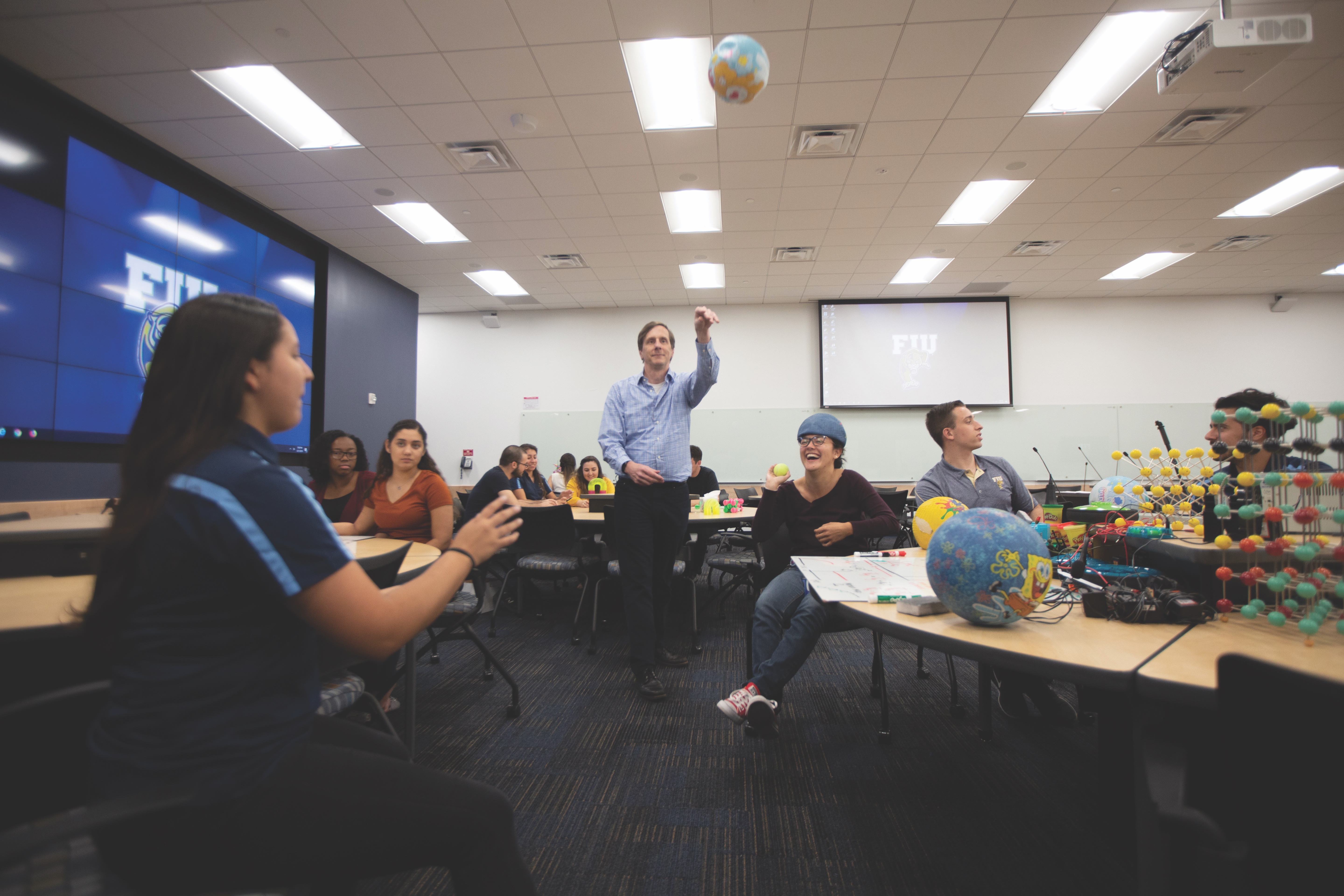
2 min read JULY 2019 — Technology has reshaped not only how education is delivered but what courses are being taught, with universities and colleges revamping their curriculums to better prepare students with the skills employers demand. 

In Miami, local public and private higher education institutions have upgraded their academic offerings and have focused on working with local businesses to provide opportunities for more than a quarter-million students. 

Invest: Miami spoke with local leaders in the sector to get an update on their new offerings.

Florida International University (FIU)

FIU recently added a bachelor’s of science in the Internet of Things to provide knowledge and expertise in modern digital communication devices. It is also beginning to develop lifelong learner programs, including weekend, just-in-time and certificate programs related to technological and data-literacy development.

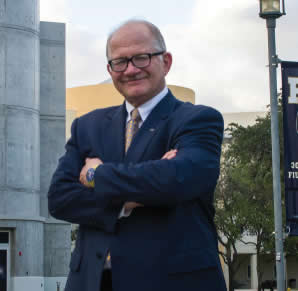
“Skill sets are increasingly becoming multidisciplinary in almost all areas. It’s a whole new world out there, and we want to make sure that our students are at the cutting edge of that,” said FIU President Mark Rosenberg, when he recently sat down with the Invest: Miami team.  

University of Miami Graduate school: 

UM Graduate School will add a degree program centered on climate change and health as part of a set of new interdisciplinary programs in the works. 

“We have to continue to push the envelope and be innovative. Educational programs tend to be concentrated, and I believe we need to continue developing interdisciplinary programs. We must give students an opportunity to practice some of their non-discipline-specific skills as well,” Guillermo “Willy” Prado, dean of UM Graduate School, said.

University of Miami Miller School of Medicine:

The school is revamping its curriculum to focus on using “entrustable professional activities” to determine the competency of a medical student, as opposed to the traditional four-year structure. The approach will allow students to complete an earlier transition from medical school to residency. 

“We are in the process of designing a Miller-specific curriculum that we believe will be the model that other institutions will mimic for years to come. There has been a lot of evolution in the field, and we believe we have an opportunity to innovate and help lead in that domain,” said Dr. Henri Ford, dean and chief academic officer of Miller School of Medicine, in an interview with Invest:. 

Miami Business School (MBS): 

MBS is starting a 10-month M.S. in sustainable business next August. “That will be the first STEM-certified M.S. in sustainable business degree in the country,” Dean of MBS John Quelch told Invest:.

University of Miami School of Law:

The law school established joint degrees with University of Miami schools covering at least 10 specialties. “We’re the most interdisciplinary unit within the university. Many of our curricular offerings and our rich, intensive clinical education program in various substantive areas such as human rights, immigration and environmental justice are deeply interdisciplinary,” Patricia White, dean of the University of Miami School of Law, told Invest:.

UM Division of Continuing & International Education:

UM Division of Continuing & International Education launched certificates in coding and cybersecurity as part of its academic focus on STEM. The division’s dean, Rebecca MacMillan Fox, told Invest: that both certificates “have exceeded our expectations for enrollment and industry demand.” 

The division is also launching a GPRO Certificate Program (Green Professional Building Skills Training) that is customized for the climate and regional needs of South Florida.


To learn more about our interviewees, visit their websites:

Florida International University (FIU): https://www.fiu.edu/ 

University of Miami Graduate School: https://www.grad.miami.edu/ 

University of Miami Miller School of Medicine: http://med.miami.edu/ 

Miami Business School (MBS): https://www.bus.miami.edu/ 

University of Miami School of Law: https://www.law.miami.edu/ 

UM Division of Continuing & International Education: https://www.dcie.miami.edu/

A shared role 

A shared role 

Florida International University (FIU) President Dr. Mark Rosenberg speaks on the role of public-private partnerships in enhancing higher education and workforce development

What are the most urgent priorities when it comes to workforce development? 
Miami has historically been a net importer of talent from either the northeastern U.S. or the Southern Hemisphere. While this is a competitive advantage, we also need to establish our own talent base. The Beacon Council’s One Community One Goal Academic Leaders Council, which I chair, is focusing on developing internship programs in conjunction with private sector employers. Because of the velocity of change in the occupational spectrum, universities are limited in their ability to train graduates into the specific niches this global economy is creating; the applied dimension can come only through the internship modality. Improving the level of talent in the workforce is a shared responsibility between the universities and the private sector.
 
How would you comment on the university’s ability to attract talent – faculty, fellows, researchers, etc.?
We have hired 500 new faculty in the last five years, across all departments, but the issue is not talent acquisition; it is talent retention. Maintaining laboratories and infrastructural support to retain the best talent is a costly enterprise and we are becoming more competitive in those areas.  This is why we have been building so much – we’ve either finished or started roughly $349 million worth of construction projects in the past five years.
 
Can you speak to the funding landscape for public universities in Florida?
We created a forefront funding offensive that maximizes the state support we receive, while more aggressively fundraising through philanthropy, establishing private sector partnerships and competing for federal research dollars. Our budget has grown by about 25 percent in the last five years. We supported that through tuition increases in recent years, but that era is largely over. Additionally, we have benefitted from the enrollment of 14,000 new students and the savings from efficiencies we have been able to drive, particularly in the area of energy.
 
In which programmatic areas does FIU excel?
Academically, we have identified four strategic thematic areas to focus on: international/global studies, environment, health and the arts. In those areas, we are strong, as well as in hospitality, accounting, management, and liberal arts. Moreover, our geography and our demography are our destiny. As such, we have a strong international element. FIU has the second-largest number of foreign students in Florida.  We have worked in Latin America for over 40 years, and have a strong name in the region for our administration of justice and democracy initiatives. We also have a campus in Tianjin, China, which awards FIU degrees to 1,100 Chinese students and focuses largely on hospitality and tourism management.
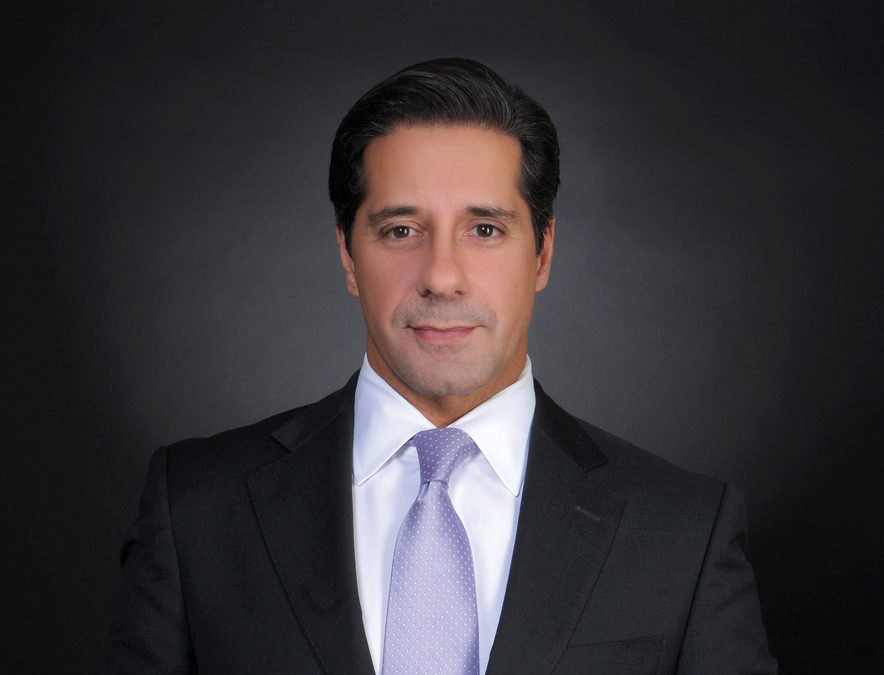
Invest: Miami speaks to Alberto Carvalho, Superintendent, Miami-Dade County Public Schools

Invest: Miami speaks to Alberto Carvalho, Superintendent, Miami-Dade County Public Schools


Academic enrichment and rigor in the classroom are just as important as preparing students for the workplace and beyond. Internship programs for high school students are no longer an option, but a necessity if students are to thrive in their chosen careers. Increasingly, employers want to hire recent graduates with workplace experience.

Miami-Dade County Public Schools (M-DCPS) working collaboratively with the Beacon Council, has recognized this trend and has made preparing students for the workforce a priority. As part of the Beacon Council’s One Community One Goal (OCOG) Target Industry Strategic Plan, M-DCPS has worked to align student coursework, training and internship programs that target seven professional industries – aviation, creative design, hospitality and tourism, information technology, international banking and finance, life sciences and health care, and trade and logistics.

M-DCPS Career Technical Education (CTE) ensures students are college and career-ready through programs aligned to career clusters. CTE students graduate with world-class academic and technological skills, and industry-recognized certifications critical to their transition to higher education and careers, giving them an edge in the career and college application process. Recognized by the National Academy Foundation, the district’s industry-themed career academies – which support skill development and career awareness related to OCOG target industries – are a model for the nation. Stu-dents participate in summer internships; network with business and community leaders; participate in community service projects, and are eligible for dual enrollment courses and college scholarships.

Initiatives like the Superintendent’s Business Advisory Council encourage school/business partnerships that expand the conversation around creating a roadmap to success for students. These and other district initiatives have made M-DCPS a national leader and among the highest performing districts in the nation as evidenced by the district’s 2012 Broad Prize recognition and the College Board AP Equity and Excellence District of the Year.

Lifelong learners

Lifelong learners

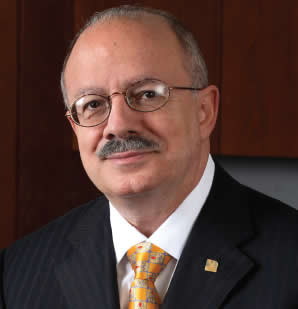
Miami Dade College President Dr. Eduardo Padron discusses the triumphs and challenges of creating a competitive workforce in today’s economy

What niche does Miami Dade College (MDC) occupy in the educational landscape of South Florida?  

In Miami-Dade County, it is hard to find a household that has not been touched by this college. Like myself, many of this county’s leaders – the mayor, commissioners, 17 bank presidents – are MDC graduates. They are also immigrants, and when they first arrived to Miami, MDC was the only college accessible to them, the only means for them to realize their American dream.

We have also played a key role in building Miami-Dade’s cultural infrastructure. Miami used to be referred to as a “cultural wasteland.” We came here and started the Miami Book Fair International, the Miami International Film Festival, MDC Live Arts – these were the precursors to the big developments in the arts that have taken place in recent years. We take a great deal of pride in this institution being a real community anchor.

What is MDC’s strategy for workforce development?

We have clustered our programs around the target industries identified by the Beacon Council. We have strong linkages with the business community, with over 700 local business leaders serving as advisors for our programs. If a program does not exist, we work hand in hand with business and industry to develop it.

Like much of the U.S., Miami is a predominantly small business community. As such, we cultivate entrepreneurship and innovation to give SMEs the tools to bring their business to the next level.

To further identify gaps, we conducted an exhaustive survey of collegiate programs in the U.S. to learn which programs we needed to either create or enhance to better serve the local community. This is how we created the biotechnology, biopharmaceutical and bioinformatics programs, as well as the robotics engineering, data analytics, cybersecurity, animation and game development programs.

How do you envision the local workforce evolving?

Our goal is to ensure that the local talent are equipped to meet the rapidly changing needs of industry. For instance, the county is looking to grow its film industry. In response, we created a film school, so that if a production company wanted to shoot here, they would only need to call us and we would provide them with everything they needed, from equipment to personnel. If production companies had to bring their own personnel here, it would make the process more expensive for them, and Miami less attractive as a filming destination.

That said, technical competence, while necessary, is not sufficient to developing a competitive workforce. Soft skills are critical too. What really helps students succeed is to be able to engage in critical thinking – we place great value on liberal arts for this reason. We work to develop students who can adapt to a rapidly changing workforce, contribute to their society and become lifelong learners.