Spotlight on: Nicholas Haines, CEO, Bromley Companies

Spotlight on: Nicholas Haines, CEO, Bromley Companies

By: Max Crampton-Thomas

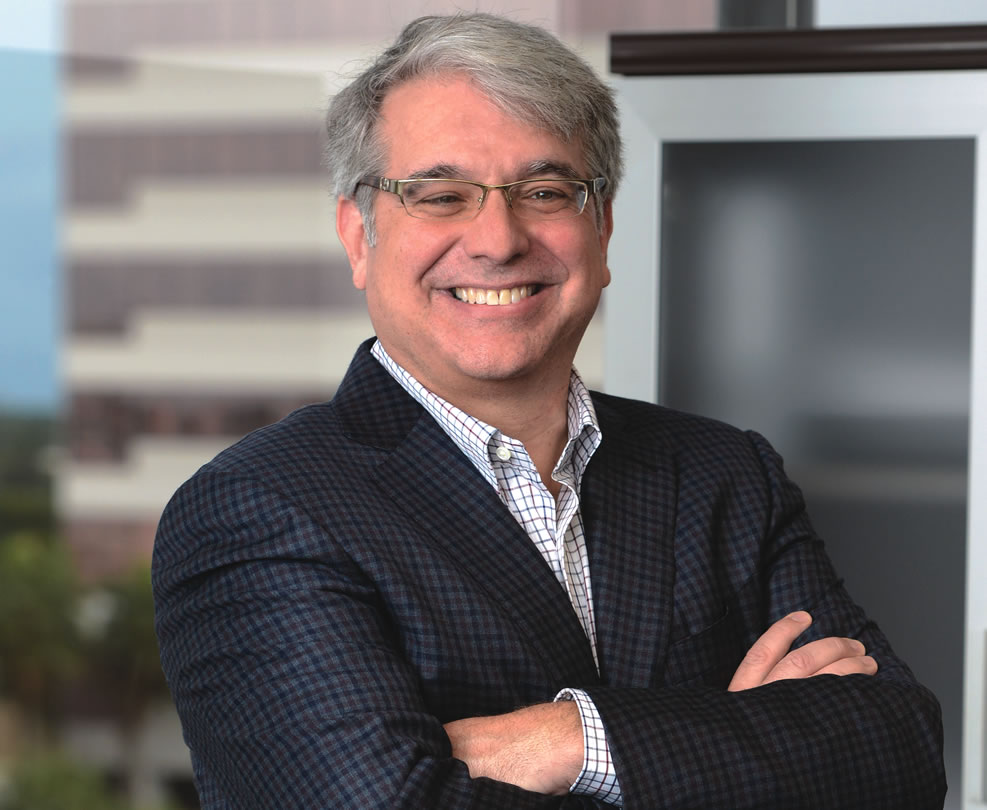
The future of Tampa Bay is developing in front of our very eyes and there are a few select developers making this vision come to life. Real estate developer Bromley Companies broke ground in mid-2019 on its ambitious Midtown Tampa project. Company CEO Nicholas Haines discussed the importance of incorporating new tendencies, such as a pedestrian-focused design, and the challenges that both a proper mix of high-end and affordable housing present for the city.


What’s the status of the Midtown Tampa project?

We broke ground on the Midtown project in May 2019 and we are well under construction for the first phase. There are 11 buildings going up at the same time: three residential, two office buildings, and several retail, including a Whole Food Kitchen and True Food Kitchen, both of which are significant expansions in the market. There is also a 1,000-car parking garage that is already topped out, and we’re right on schedule. The goal is to finish it by the 2021 Super Bowl, which will be held here in Tampa Bay just a couple miles up the street. 

A lot of what we are doing now is spending a tremendous amount of time on the finishing touches of the common-space designs that create community. It is about creating an imaginative destination not just for the people working, living and shopping here, but for the neighborhood by adding public art and a feel for the place, all the things that make a space interesting and dynamic. We are building a city within a city — an entirely new district. 

What business trends are you keeping an eye on as you go ahead with this development?

Accessibility and pedestrian-friendliness. I just read about a development in Arizona, with 1,000 residential units and no parking. That is a bold thing for a non-superurban area. What we are trying to do is create one of the first, pedestrian-first mindset versus car-first developments in Tampa Bay and Florida. All the streets inside the development are private, which is a really interesting feature of Midtown Tampa. We are not constrained by the city’s rules regarding traffic and street design. For a big event like the Super Bowl, we can close the streets so that all the cars access Midtown from the periphery.

We have designed curbless sidewalks, for example, and dedicated ride-share drop-off areas. The city of Tampa is working on a number of mass transit initiatives and we are working to accommodate a mass transit stop on one of our main corridors. People are going to live, work and shop here because they want to wake up, go to a coffee shop, walk their dog at the dog park, go shopping at Whole Foods, have a drink at the hotel rooftop bar, and maybe work at one of the office buildings. They’ll also be able to ride a bike path that connects from Midtown Tampa to the Greenway Trail System, from Tampa to St. Petersburg, by crossing a 10-lane bridge at Dale Mabry.

Are there any other areas that you see as a hotspot or active as real estate developments for the moment? 

Yes, it’s really exploding. The Heights area is really interesting. St. Petersburg is incredibly exciting and a great example of a vibrant, urban place with the interplay between food and art. We are talking about a city that has transformed itself over 10 years in terms of the energy there. 

What is your outlook for the Tampa Bay region, and how do you see the region addressing its challenges? 

Regarding sustainability, it is really important to get the mix right between higher-end housing like we are building here and affordable housing. There’s a need to provide better incentives for the private sector to offer that kind of housing. You can only do so much as a city if everyone is building luxury apartments. It is an issue for all cities, but Tampa today does not have a cohesive development and zoning policy to encourage that. Tampa is still a very affordable place on a relative basis, but that affordability gap is narrowing. People who have been living here for a long time with a moderate income are being pushed further and further away from the urban core. 

Transportation is a huge thing too. In some ways, advances in mass transportation technology might help Tampa. The city might not have done it in the past, but in some ways that might not be the worst thing. Tampa might be able to take advantage of innovations in technology like self-driving buses to implement something that is very forward thinking, instead of having to put up the heavy infrastructure and the massive amounts of capital for a light rail system.

To learn more about our interviewee visit: 
https://www.bromco.com/

Spotlight On: Mayor Sandra Bradbury, City of Pinellas Park

Writer: Max Crampton-Thomas

2 min read August 2019 — The unprecedented economic growth the Tampa Bay MSA, including Pinellas County, is enjoying comes with both benefits and challenges. At the very center of Pinellas County is it’s fourth largest city, Pinellas Park. Invest: Tampa Bay recently spoke with Mayor of Pinellas Park Sandra Bradbury. She discussed how the city is handling the region’s growth, its focus on remaining economically and environmentally sustainable, and her outlook for the next year.


What efforts are being made to encourage environmental sustainability in the city? 

In a partnership with the Wounded Warriors Abilities Ranch, we just started development on a new park called Lurie Park. This park is going to be completely accessible for all handicapped people, from children to the elderly, and will be geared toward our veterans. We also just purchased a four-acre property that was a horse stable, which we are in the process of converting to a farm. It is an extension of the existing Helen Howarth Park. Our goal is to work with the U.S.-based network of youth organizations 4-H and bring students to the farm to teach them how to sustainably raise and grow their own food.

How are you supporting local business growth? 

Businesses come to us all the time because we have a relatively large amount of commercial area that’s available for development. The city council and voter referendum created a package of incentives that we could use to retain businesses that want to grow and expand. These incentives allow businesses the flexibility to move offices or add square footage to their buildings. We are one of the few places that has this ability. It is within our ordinances to allow our economic development manager and her team to offer incentives to local businesses, which revolves around how much they are growing and how many employees they will be hiring with the expansion. So far, city council has provided seven packages to different companies that have grown in Pinellas Park. 

What does the next year look like for Pinellas Park? 

We think the future is bright. We have a lot of businesses that are still looking at us as a place to expand into. Our position is unique because we are at the very center of the county. We are also one of the few cities that still has vacant land available, especially in our industrial area. This gives a business the opportunity to come here and develop their work space. With the economic growth in the region, our homes have gone up in value over the years, but overall the Pinellas Park area is still affordable. We have parks in the area, and our citizens assist in the conservation and revitalization of those parks as necessary. Overall, we feel extremely positive about the next year. 


To learn more about our interviewee, visit:

https://www.pinellas-park.com/

Spotlight On: Gregory Stuart, Executive Director, Broward Metropolitan Planning Organization

By Max Crampton-Thomas


2 min read August 2019 — Almost a billion dollars a year are spent on transportation in Broward, and as the region continues to grow so will this number. With so much money being funneled into transportation, there must be an overseer to decide how to disperse these federal funds. This overseer is the federally-mandated agency The Broward Metropolitan Planning Organization. Invest: Greater Fort Lauderdale recently spoke to Executive Director of the MPO Gregory Stuart, who discussed how the passage of the penny sales tax will help fund new transportation initiatives, the more immediate changes Broward will see thanks to the sales tax and the challenges facing transportation in the county. 

What have been Broward MPO’s most significant highlights over the last year? 

There have been three. The first is possibly the most significant, which was the passage of the penny sales tax that added $350 million a year to our annual budget. We spend about a billion dollars a year on transportation in Broward, so adding this $350 million is a substantial increase in transportation spending for our region. Second, was the municipal portion of that sales tax, which was one of the most significant items to be included in the penny sales tax. While we can talk about the large-scale projects that the sales tax will generate for the region, the impact of 23% of that money being dedicated to our municipal partners to build quality of life improvements when it comes to the transportation system is going to be key. It will provide those dedicated funding sources for our community shuttles, which folks use to go to the grocery store, appointments and other short distances. Third, was the implementation of the quiet zones for the FEC and CSX tracks here in Broward. While this didn’t necessarily improve the overall condition of transportation, it improved the quality of life for the residents along both of those corridors. 

What will be some of the more immediate changes due to the passage of the penny sales tax for transportation? 

Realistically, the immediate changes aren’t going to result in construction. We are focusing on enhancing the traffic signalization program. This includes coordination between traffic lights and people’s vehicles through the installation of smart communication equipment. Another immediate change that has happened already but which we’re not going to notice for about another year, is the county transit agency’s purchase of another 130 buses. Considering they are operating a fleet of about 300 buses right now, this is a one-third expansion and a significant increase in the bus system. 

What are some of the biggest challenges facing transportation and transit in Broward County?

The biggest challenge that we face is just trying to get everybody on the same page, whether it is a local government, the county government, the state government, the federal government or homeowners and business associations. It can be a very difficult task, but it can be done. We are working to strengthen the relationship between the three counties: Miami Dade, Broward, and Palm Beach. They all need to be talking to one another if we are going to make real positive change when it comes to transportation needs across South Florida. 

To learn more about our interviewee, visit:

http://www.browardmpo.org/

Spotlight On: David Gwynn, District Seven Secretary, Florida Department of Transportation

Writer: Max Crampton-Thomas

2 min read July 2019 — Challenges with transportation, traffic and transit options are not new issues for the Tampa Bay region. As the area continues to make strides in its economic and population growth, there is a heightened emphasis on finding solutions. Invest: Tampa Bay recently sat down and discussed these issues with David Gwynn, District Seven Secretary for the Florida Department of Transportation. Gwynn spoke about how FDOT is working to mitigate these challenges, enact forward-thinking initiatives and his outlook for transportation in Tampa Bay for the next year.

What is the biggest initiative for Florida Department of Transportation in District 7? 

We have been working on a program called Tampa Bay Next. Over the last two and a half years, we have had hundreds of public meetings with big and small interest groups, elected officials and general members of the public, which we used to gather some great input. A key issue that we identified was transportation. Although we recognize that our interstate needs some work, there are other areas, like the downtown interchange, where infrastructural improvement would have a pretty massive impact on the surrounding neighborhoods. As a result, we are focusing on ways we can improve transit and intersections in those areas to help make them safer, while also not requiring a significant expansion of the highway footprint.

How are you working to mitigate the traffic issues in the region? 

We have come to the conclusion that simply widening and continuing to build more roads is not going to completely mitigate this issue. We have shifted our efforts to also look at multimodal solutions, like the streetcar system in downtown Tampa. Until last year, it was underutilized, but we recognized that this could be a good part of a transit system. The question was how to make it more attractive for people to start riding it. What we found was because there was not a lot of local money to fund it, it was only running from 11 in the morning until 8 at night. We were able to get a grant to allow the streetcar to run from 7 in the morning until 11 at night and on a more frequent basis. The ridership has since tripled, and that is important because we now have a strong case for the federal government to invest in expanding that streetcar system further out into Tampa Heights. If we can get federal funding, they will put 50% of the cost in, the locals put in 25%, and then our department covers the last 25%. 

What is the outlook for the transportation sector in Tampa Bay for the next year?

The passage of the sales tax in Hillsborough County was a big step forward because the local money allows us to do things with state and federal matching money. We will start to see an increased frequency of buses, better stations and more opportunities to expand the systems. On the highway side, we continue to build road and safety improvements. Four hundred of our signalized intersections that had the highest number of crashes are in the process of receiving new LED lighting that will illuminate these intersections at night much better than they have been. We are going to start the Howard Frankland Bridge project, and the Gateway Expressway will probably be completed in another two years. 

To learn more about our interviewee, visit:

https://www.fdot.gov/home