How Orlando is improving its transportation infrastructure through technology

How Orlando is improving its transportation infrastructure through technology

By: Beatrice Silva

2 min read  — Public transportation is a vital contributing element to urban sustainability. Practical transportation networks that integrate public travel can help lower a city’s per capita carbon footprint. It also makes metropolitan areas more livable by easing commute times and expanding accessibility. Over the last few decades, technology has played a critical role in the evolution of transportation. Transportation technologies most often tackle challenges involving alternative fuels, demographic shifts, traffic analytics, safety and security. 


Almost 300,000 people live in Orlando and an estimated 75 million people visit the city every year, according to Visit Orlando. These figures are just part of the reason why Orlando has issues with its transportation system. Among companies tackling these challenges is Omnimodal LLC, an interdisciplinary team of mobility tech experts that has created smart mobility management solutions to ease congestion by helping to make public transportation easier to navigate. 


“Let’s say you live over by Orlando Health, but you work in Winter Park. You have to take a bus or catch a bike share to get to the [train] station. You’re having to possibly download the Lynx bus tracker app. You have to download whatever scooter or bike-share app you want to use. Then you have to download the SunRail app. They all possibly have separate payment interfaces as well. The future here is how do we integrate things to let folks download whatever app they want? Let’s allow the data to flow and have interoperable payment options, so folks use what’s going to work best for them. Otherwise, you have 16 apps on your phone that you’re kind of playing bingo with to figure out,” David Thomas Moran, CEO of Omnimodal LLC, told Orlando Business Journal.

Beep, a driverless and electric shuttle, is another company making big changes within Orlando’s transportation industry. The company uses key hardware and software to enhance safety, sustainability and mobility. Not having a human driver may seem like something out of a science fiction novel, but it is actually quite common and effective. Beep believes that its technology eliminates human error when it comes to driving. The shuttle is equipped with scanners, sensors and cameras that make its reactions similar to a human driver but without having to worry about the human distractions. As for sustainability, it’s electric-powered motor makes it extremely environmentally friendly. “Look at the passenger count we had, which was 14,000 riders, equivalent to 7,000-9,000 cars off the road. That starts to show the impact these vehicles can have in not only eliminating road congestion and removing or reducing parking requirements but also impacting safety,” Joe Moye, CEO of Beep, told Orlando Business Journal. 


As transportation continues to be transformed, safety will always be a top priority. Autonomous vehicles will reduce the reality of human error which is the cause of 85% of all accidents on roadways. Improved safety is a result when combined with a reduction of cars on the roadways due to this mobility service, according to Beep’s Mobility Platform. 


Undoubtedly, technology will continue to impact the way people commute. Today, travelers are demanding more and more mobility alternatives. A city’s sustainability relies deeply on the different ways it’s able to offer transportation for its community. To ensure a region’s success and growth, metropolitan areas must continue to find more effective solutions to increase the overall quality of their transportation services.


 

Face Off: Miami-Dade ripe with opportunity

Face Off: Miami-Dade ripe with opportunity

By: Max Crampton Thomas

4 min read July 2020 While the ongoing pandemic has been nothing short of a gut punch to what was set up to be another monumental year for economic growth, real estate development and investment has continued to adapt and move forward through a somewhat uncertain landscape. Invest: recently spoke with two Miami-Based leaders within these spaces. Real estate investor Jeronimo Hirschfeld, chairman, founder and CEO of One Real Estate Investment (OREI), and commercial real estate developer Bernardo Rieber, president and CEO of Rieber Developments, both spoke to the immediate effect and changes the pandemic has created for their projects and industry, as well as why they continue to believe in the Miami-Dade marketplace regardless of the roadblocks thrown up by COVID-19. 

What advantages does the Miami marketplace offer to your business operations?

Bernardo Rieber: I think that Miami is one of the greatest cities in the world. I travel a lot, especially in recent years, and it is hard to find a city like Miami where everything works. It’s new, beautiful, with great weather most of the year. People are amazing, and the properties in general are still less expensive than in other major urban centers. The airport is one of the top in the nation and they have done a great job of expanding to meet the need. I think that Miami will continue to grow. Money will continue to be invested here.

In the commercial segment, I also see a strong market, for several reasons. In particular, more and more people are moving to South Florida. It might be because of low taxes, and the fact that it is becoming more of a global city, compared to 40 years ago when it was beaches and malls. Now, we are a culinary center, with new cultural centers, museums, a lot of great things happening. People move here from the East Coast, from South America and Europe. There are a lot of young professionals in areas such as Brickell. There is great demand for offices because a lot of international companies in the financial world are doing business here.

But there has also been a situation related to traffic, in which smaller municipalities, like Aventura, have been developing more commercial infrastructure to accommodate the people who live there and don’t want to commute into Downtown Miami. More offices are needed, and that’s fueled the market. In my particular case, as I am a developer of mostly medical spaces, I see Miami as a tremendous hub for medical tourism. I am right next to the Aventura Hospital and Medical Center, which is a level two trauma center, with 500 beds. I am finishing an extended stay hotel next door, and a total of 80,000 square feet of offices.

Jeronimo Hirschfeld:  In today’s market, especially in the asset class that OREI operates in, which is multifamily, I believe there are going to be many opportunities here. In previous years, there were a lot of developers and investors deploying money into these investments, but as more uncertainty surrounding the real estate sector becomes apparent, opportunities begin to arise for firms like One Real Estate Investment.  What we are seeing today is that these investors are now realizing that their strategy and their returns are not what they expected, so they are turning around and selling.

Bernardo Rieber

Jeronimo Hirschfeld


Multifamily assets are commonly tiered in A, B, C, and D categories based on the asset, location, and tenant base. In the market where I play, which is typically workforce housing in the B+ to C+ space, the assets tend to have a level of insulation from macro market drivers and economic factors. This is because when there’s a crisis and we see unemployment increase, many people begin to downsize to a living space that is more economically practical and feasible. So, when looking in multifamily real estate, you’ll see renters that were previously paying $4,000 in rent coming down to $3,000, and so on. Looking at the assets I invest in, the rents average between $750 and $1,200. These assets tend to perform in times of crisis because, as I mentioned, when people adjust their lifestyle, rent is usually a major expense that can be altered. As individuals who were once living in the Class A and B apartments begin to see a decrease in income, they will make the shift to a B or C class apartment. Ironically, I’ve seen the occupancy of my properties across the board tends to increase during a crisis between 1 to 2% because in addition to the individuals downsizing, many tenants who currently reside at our properties work blue collar jobs that aren’t drastically affected by a downturn. We feel very good about where we sit and what we are doing. Our competitive advantage is showcased through finding the right opportunity, taking advantage of the right deals and making sure we put the appropriate debt structure in place. Multifamily is an asset that sustains itself and performs very strongly during these times.


Where do you see the real estate market in Miami going over the next couple of years?

Rieber: We are mostly focused now on selling office condominiums in the medical sector, and there’s been a great response. We are sold out at our project Ivory 214 and we broke ground on our 12|12 Aventura mixed-use development in early 2020. We demolished the previous structure, prepared the land, started piling, and we are now about to start the foundations. We are on schedule to be up and running by the first quarter of 2022. Of course, since the COVID-19 situation began, we have had to adjust our sales process, but we continue to have interest in our offering and I expect to fully rebound.

Hirschfeld: In terms of neighborhoods, Wynwood is pretty hot, and you have nearby Allapattah, which is also a growing area with a lot of opportunities. It is still industrial, but as population and developments move up north, all these industrial neighborhoods will start changing into places where people are going to be living, playing and working. That’s what we saw with Wynwood. OREI is still very much in acquisition mode, as we are consistently sourcing new deals, while bringing in new equity groups and private investors who are interested in the multifamily space. 

How has the fallout from the COVID-19 pandemic altered your developments at least for the near term?

Rieber: It’s been a shock from a business perspective. We are monitoring the situation daily. Of course, there have been ripple effects because Miami-Dade County’s building department closed, and you cannot call for inspections, which you need to continue building, and permits are delayed, but everyone is powering through and adjusting as best as possible during this unprecedented time. I truly believe that this short-term pain does not compare to the long-term potential of this community. 

Hirschfeld: (With  more people working from home in the future) there are a lot of things that we are implementing. We are implementing USB outlets in new projects, to make sure people can connect their devices directly. We are also implementing smart thermostats that you can control remotely through your phone, making it more efficient because you can set it up to emit minimal power every time you leave and to start cooling five, 10 minutes before you return to the apartment. In our Wynwood project, we have a large bike space at the street level.

To learn more about our interviewees, visit:

http://www.rieberdevelopments.com/

https://www.onerealestateinvestment.com/

Spotlight On: Jenna Kelly, Northern Georgia Region President, Truist

Spotlight On: Jenna Kelly, Northern Georgia Region President, Truist

By: Felipe Rivas

2 min read May 2020SunTrust and BB&T have combined in a historic merger of equals to create Truist, the sixth-largest U.S. bank holding company. With 275 years of combined history serving clients and communities in high-growth markets, the new company will deliver the best of both companies’ talent, technology and processes, Northern Georgia Region President Jenna Kelly told Focus: Atlanta.


Q: What has stood out for Truist in Atlanta in the last year?

A: We announced our merger in February last year and closed it in December. We spent the bulk of the year operating independently as SunTrust and BB&T. This meant we really only had three months as a joint entity before the COVID-19 pandemic struck. All along, we have been talking about how this merger was an opportunity to build a better bank and we looked at how we were better together, including our complementary business lines and strategies. One of the exciting developments this year was our announcement of the new branding and our purpose. The Truist purpose is to Inspire and Build Better Lives and Communities. That purpose is at the center of everything we do, and something that differentiates us, especially given the current circumstances, to our clients.

Q: What has been the real impact of the COVID-19 outbreak on the operations of Truist?

A: We said from the outset of the merger that all our client-facing teammates would retain roles. Within the Northern Georgia region, our team remains in place and our efforts have really been more about how we integrate culture. With the pandemic, most of our team is working remotely. We paid a $1,200 special bonus to all our teammates who make less than $100,000, we have implemented additional time off and we have introduced more flexibility given family dynamics can be difficult to juggle when childcare or education are not available. 

We also turned our attention to how we can provide our clients with relief. We are participating in the Paycheck Protection Program (PPP) and we are working on how we can get our clients the funding they need. Through the first round of funding, we have helped around 32,000 clients with $10 billion in PPP loans. In Atlanta, we made around $4 million in grants to the agencies that are on the frontlines of the crisis response. 

Q: As you have seen the landscape change, how have you seen the banking industry set up for the future?

A: The message is that there is a place for everyone, whether it be a small bank, a large regional or a multinational. The impetus behind our merger was the growth of technology in banking. We looked at the demands our clients have in the way they want to be serviced, and it is not necessarily walking into a branch anymore. We needed some additional scale, and we came together so we could be more innovative and make new investments. This does not mean there is no longer a role for community banks. We believe we have a unique opportunity however to leverage our high touch community bank model with investments in technology to create better client experiences and build more trust – something we call T3.

Q: What role does Atlanta continue to play for Truist in its portfolio?

A: Atlanta is our largest market, given it was the headquarters of SunTrust. When we merged, we enhanced our market position. Atlanta is a diversified economy both in industries and population and from a banking perspective, we like where we are in the market. We continue to invest to strengthen our position.  

We have a very long history of supporting Atlanta as well as communities across the state. We announced last year that we would double our commitment to the Atlanta community to $300 million in investments over a three-year period. The investments include a combination of community development investments from the bank and philanthropic grants from our foundation. 

More broadly, the Southeast has been one of the most attractive areas of the country. Those growth dynamics play well for Atlanta, which will continue to attract jobs, companies and population. As we come out of the COVID-19 pandemic, we hope to recover faster than other parts of the country, given our position going into the crisis. 

Q: How are banks going to be able to help small businesses through this crisis?

A: Unfortunately, small businesses will be the hardest hit through this pandemic. The government stimulus is certainly a starting point and that will give them some temporary relief. We want to be able to leverage the tools and capabilities we have as a larger bank and deliver them on a local, personalized level. We, as a bank, can perhaps help fund CDFIs that can in turn fund small businesses. There is no one solution, but that is an area we were considering well before the pandemic.

I think it will be interesting to see how this pandemic changes the world for all of us. We have all adapted in ways we probably thought we never would or could. There is a lot of digital activity going on now that makes our merger make even more sense. We set up a portal for the PPP program within 36 hours so our small-business clients could apply for this funding quickly. Now we have this online business portal we can use when it is over to help small businesses apply for loans in ways that were not possible before. It remains to be seen what the scale of the impact will be. For our teammates, the priority will continue to be about their safety and when we will go back to working in a more traditional environment. But we have all proven that we can be productive in a nontraditional environment.

Q: What is the outlook for Truist Atlanta in the next 12-18 months?

A: We will continue our integration of the two banks because we are still operating fairly independently in terms of systems and brands in the market. The full rebranding will not happen until the third quarter of next year, so we have a lot of integration work to do in the next 18 months. We will focus on doing this in the least disruptive way for our clients. One significant and positive development is that we will not need to change our clients’ existing account and routing numbers so they will not have to order new checks. Creating a seamless transition to Truist will help solidify and grow our brand awareness in Atlanta, especially given the loyalty our previous brands generated. 

To learn more about our interviewees, visit: https://www.truist.com/


Face Off: Understanding Unforeseen Change

Face Off: Understanding Unforeseen Change

By: Max Crampton- Thomas

4 min read March 2020 With the global economy in a state of flux caused by COVID-19, it is important that both the community and industry leaders work together to not only flatten the curve of coronavirus but also help to understand its impact on the various sectors of the economy. It is just as vital to continue looking to the future, post-COVID-19, at what other continuing or emerging trends could have an impact on a specific industry throughout 2020 and beyond. In regard to real estate, Invest: Miami spoke with two of the region’s industry leaders in real estate, David Diestel, regional president, south for FirstService Residential, and Michael Fay, principal and chairman of the U.S. Capital Market Executive Committee for Avison Young. While they work in two seperate areas of real estate, both discuss how the coronavirus has affected their industry, other factors that will continue to spur change and trends they are keeping a close eye on in 2020. 

David Diestel 

How is the coronavirus outbreak impacting your industry?

Dave Diestel: The outbreak of the coronavirus has brought the country to a screeching halt. I don’t know if anyone was prepared for something of this magnitude that has impacted basically every industry. As the leader in property management in North America, it’s our job to provide support to the board members and residents of the communities we manage. We immediately formed task forces throughout the organization, continuously monitored reliable information from the CDC, World Health Organization, as well as local authorities and health agencies. And the key to our support: communication. On everything from preventing the spread of the virus to working with boards to enhance cleaning and sanitation at our properties to working with attorneys to discuss any change in community rules and regulations. This situation has helped cement the importance of communication during a crisis – to report facts and to keep people calm. And to let our customers know that we’re in this together.

Michael Fay: We are such an international city at this point that we need to look at how we fit on the geopolitical stage, as well as how the virus will shape how we live in the future. We are always looking at the Latin-American influence within our market, as well as the European, Asian and Canadian influences, given Miami has become such a major, global city. When I first did this interview, the COVID-19 virus was just an Asian problem and not a global pandemic.  I truly believe the two asset classes that will provide opportunity and stability as we move through this will be real estate and well-positioned stocks. With Miami being such a global city, and having been through many other crises, we tend to bounce back quickly with resilience. We will continue to see strength in the multifamily sector as well as the industrial sector as we understand new, global supply chain issues. Retail and hotel will see weakness as we move through this pandemic and new way of life for the foreseeable future. There is more capital in the marketplace overall, outside of opportunity funds, with lots of mezzanine equity, loans and regular equity creating a sizable amount of capital. The interest rate environment we are in is the lowest we have seen in the United States. Distressed will have a new meaning.  

Michael Fay

What other factors will continue to spur or change your market’s growth? 

Diestel: The demographic shift in this region is challenging our communities to keep up with the times. New owners and residents are challenging those communities to invest more in technology and in amenities. People are looking for investment back into their community,  and also looking for investment into community spaces. These demographics do not just want the standard gym or card room, they want thoughtful programming, focusing on wellness and convenience. One of the drivers of real estate values ultimately comes down to a building’s reputation. When people feel good about living where they live, realtors know people feel good about it and there is a great sense of community. This all drives property values up.

Fay: I’ve been in this business for 36 years. When it’s good, it’s good for everybody, but when it’s bad, it’s great for us. We are highly cognizant of inflexions and disruptions in the marketplace. We built a major business on understanding the bad times better than the good times. We understand how to operate in a bad market better than others. Anybody can be good in a winning streak. Year in, year out, decade after decade, issue after issue, we spot early, watch early and see how things are going. In my own opinion, we will be seeing a recession; however, I believe it will be short-lived because of the strength of the economy going into the crisis.  On the negative side, we saw a 14% rise in the homeless population in 2019. The lion’s share of this increase is coming in from other cities in the Midwest. Absent thoughtful solutions, it can really hurt the city. Also, we need to take care of our environment. Global warming is a slippery slope if we do not understand it and deal with it by making rash decisions. Sea rise needs to be studied further. If we have any narrative of investors, owners or companies leaving Miami due to sea rise, our city will have a major issue. We need to think about ways to mitigate it and work around it. 

What is a trend in your industry that you are keeping a close eye on moving forward? 

Diestel: Short-term rentals are a hot topic throughout Miami, especially in Miami Beach. It’s also constantly talked about in the Florida legislature. Investors are looking to own real estate with the purpose of using it as a short-term rental. Innovations like Airbnb aren’t going away. In fact, communities built for short-term rental are starting to pop up. We are actually in talks to manage two of these types of properties. This is a trend that will continue to evolve. Some cities are not quite there yet in terms of understanding it. We are very active in Tallahassee because there are bills being introduced in regard to short-term rentals. Our position, as both FirstService Residential and as the industry, is to allow the homeowner association the right to govern as they were set up to do. We are educating the legislature and are working to help protect the rights of an individual community.

Fay: The Opportunity Zones will come into much more focus in 2020, and we will gain a real understanding of how it fits into the market. In 2019, many guidelines and an interpretation of the tax code were not available. When Opportunity Zones were laid out initially, they were based on basic census tracking, with governors approving wherever that might be. Several developers were left in the dark and as a result, lots of Opportunity Zone funds slowed raising capital given the uncertainty. There is a lot more clarity now, which is key. The new guidelines issued will have much more effect going forward and an increase of funds and transactions.

To learn more about our interviewees, visit:

https://www.fsresidential.com/corporate

https://www.avisonyoung.com/

Logistics Expo MODEX Going Ahead Despite Coronavirus Concerns

Logistics Expo MODEX Going Ahead Despite Coronavirus Concerns

By: Sara Warden

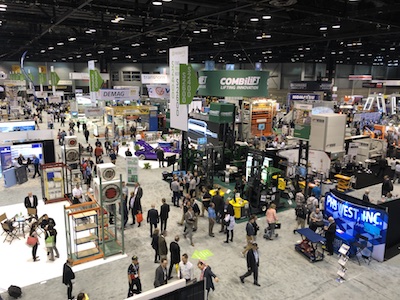
2 min read March 2020 — Despite Coronavirus concerns, this year’s MODEX conference is going ahead as scheduled on March 9-12 at the Georgia World Congress Center in Atlanta. The conference attracts 900 exhibitors and, as logistics companies, all have a stake in the developments currently fragmenting the supply chain.

The Covid-19 outbreak that began in China at the end of January has already shut down national and international borders, but this is one reason why expos such as MODEX are so important. The companies present in Atlanta will be supply chain and logistics optimization companies whose goal is to optimize operations by reducing or even eliminating human involvement. 

One of the technologies to be launched at the expo is the Puck 32MR, a joint venture between California’s Velodyne Lidar and South Korea’s Seoul Robotics. The technology is a lidar sensor that can detect obstacles in a warehouse setting, allowing for safe automated navigation. “Supply chain systems need to continue to become smarter and safer, more efficient and further automated. To address these requirements, companies are turning to lidar to play a key role in enabling the next generation of manufacturing and supply chain solutions,” said Jon Barad, Velodyne’s vice president of business development, in a press release. 

Another company presenting its portfolio will be industrial vehicle automation company Elokon, which has a global presence and U.S. operations headquartered in Atlanta. One notable product that will be presented at the expo is MHI Innovation Award-winning solution ELOshield, which is a sensor that detects proximity and provides collision warning with specific warning and protection zones.

And Atlanta-based Elemica provides a cloud-based supply network that provides tracking transparency and optimizes product shipment. “These enhancements improve use of inventory, streamline onboarding for inter-business connectivity, improve search, including hazardous material (Hazmat) criteria, and allow for more in-depth visualization for track and trace of product safety and knowing where orders and shipments are at all times,” said Arun Samuga, Elemica’s Chief Technology Officer in a press release.

The transportation management system (TMS) market in North America is poised to grow by $1.62 billion during 2020-2024 and Atlanta is at the forefront. American Software, an Atlanta-based supply chain software solutions provider, was recently upgraded to a Strong Buy rating by Zacks. The company’s president, Allan Dow, said in the company’s most recent earnings call that the software will allow customers to be “better positioned to overcome the growing supply chain talent shortage that may impact their profitable growth and ability to respond to rapidly changing market conditions or unanticipated supply chain disruptions.”

And with there being no signs of the Coronavirus slowing down and quarantine numbers growing by the day, more integrated, automated supply chains and logistics systems could be just what the economy needs to boost trade activity. 


To learn more, visit:

https://www.gwcca.org/georgia-world-congress-center/

https://velodynelidar.com/

https://www.seoulrobotics.org/

https://www.elokon.com/en-EN/

https://elemica.com/

https://www.amsoftware.com/

Tech and funding create GFL’s perfect innovation storm

Tech and funding create GFL’s perfect innovation storm

By: Sara Warden

2 min read March 2020 — The convenience economy means reality is increasingly becoming virtual, cloud-based and autonomous. Essentially, anything that can make life less complicated is likely to be a hit. From online banking to ride-sharing, the possibilities of technology are endless. Not only is Greater Fort Lauderdale developing the software, but it is also providing the venture capital funding.


Greater Fort Lauderdale is among the Top 50 U.S. tech talent hubs. No wonder, then, that so many tech startups are choosing the city as their home. Everything from semiconductors to security analytics, to telehealth and connected cars – you name it, Greater Fort Lauderdale has it.

Last month, GFL-based bookkeeping and accounting app Xendoo was chosen as one of 10 companies in South Florida that would receive $75,000 to scale their business via the Finance Forward US accelerator program, which is backed by the MetLife Foundation, PayPal and Village Capital. Previously, Xendoo had secured $3.5 million in funding.

Greater Fort Lauderdale’s technology chops are clear to see. Since 1994, Fort Lauderdale has been the headquarters of Microsoft Latin America. Motorola Solutions’ Plantation facility developed an advanced two-way portable radio for use by police, fire rescue and other first responders. Southeast Florida was home to the first IBM PC and the first smartphone.

GFL also knows how to foster talent. Citrix was established in Fort Lauderdale in 1989 as an IT company with market-leading cloud, collaboration, networking and virtualization technologies and now boasts $2.97 billion in annual revenue. And Plantation-based construction project management company e-Builder was acquired by Trimble for $500 million in 2018.

The region is not only bringing the technology and innovation, but also the funding. Fort Lauderdale-based AutoNation recently announced it would invest $50 million in Alphabet’s Waymo self-driving technology. “Waymo is the proven leader in self-driving technology, is the only autonomous vehicle company with a public ride-hailing service, and is successfully scaling its fully driverless experience,” Waymo operating board member Egon Durban told Silicon Valley Business Journal.

Another factor behind the marriage of tech and venture capital is the concerted effort of associations to continue to bring both sectors together. TechLauderdale promotes involvement in Broward County’s tech ecosystem by hosting events that bring together technology companies and funding. The association also promotes education and retraining for those who want to get involved in startup activity. 

“Our startups were having problems scaling up,” Richard Berkowitz, chair to the Broward Workshop’s technology committee, told South Florida Business Journal. “Our hope is that the rest of the business community and technology community in Broward County joins in creating this very strong platform to enhance our tech ecosystem.”


To learn more, visit:


TechLauderdale: https://techlauderdale.org

Xendoo: https://www.xendoo.com/

Citrix: https://www.citrix.com/

AutoNation: https://www.autonation.com/

Waymo: https://waymo.com/

Broward Workshop: https://www.browardworkshop.com/


A look at American Airlines’ Charlotte operations: 700 daily departures and counting

A look at American Airlines’ Charlotte operations: 700 daily departures and counting

By: Felipe Rivas

2 min read Feb 2020From its strong headquarter relocation culture to its growing population and access to both capital and high-skilled talent, the Queen City has been flying high for several years. Undoubtedly, much of the region’s success can be directly attributed to the Charlotte Douglas International Airport (CLT) and the American Airlines hub that now serves more than 700 daily departures. 

The airport is undergoing a $3 billion makeover, modernizing and expanding its infrastructure with American at the center of the renovation efforts. In this process, the airport and American are helping recruit companies to Charlotte and training the next generation of the aviation workforce.  

This past holiday season, the airport renovation projects began to materialize as American added four gates on Concourse A to its Charlotte operations. “Charlotte 700” refers to American’s growth strategy in the Queen City and aims to serve more than 700 daily flight departures, a figure which Vice President of Operations Dec Lee said the airline surpassed. “Charlotte 700 refers to our original plan to have 700 flight departures a day, but we are actually over 700 departures a day now,” Lee told Invest: Charlotte. “Every time you want to add options for customers, you have to make sure that you can handle that and still have a great operation. We have a great collaboration with our network team and with the airport to build the right flight schedule,” he said.


The airport and American have been a vital part of the region’s economic diversification success and thriving headquarter relocation culture. “When you listen to some of the corporate announcements explaining why companies have moved here, you often hear about the ability to fly out of the hub. It is a great experience, particularly for business travelers, to be able to fly out in the morning and come back in the afternoon,” Lee said. Charlotte Mayor Vi Lyles echoed Lee’s sentiments. “We have invested heavily to make our airport a transport hub for the region with access to global businesses,” Lyles told Invest: Charlotte. 

Charlotte government officials and business leaders have been working in tandem to promote the Queen City as a business destination to local and international companies. One major target sits across the Atlantic. “This year, we will make a concerted effort to reach out to companies in Europe to let them know that Charlotte, thanks to its strong travel infrastructure, is a viable destination for their U.S. expansion,” Lyles said. 

For those interested in aviation, mechanics and engineering, American could be a potential job destination. The airline is coming to the end of a labor cycle, meaning opportunities will open for young workers. “We have a population of mechanics and pilots who are beginning to reach retirement age. That is unfortunate for us, but it is a fantastic opportunity to bring new folks into an industry that is doing so well compared to the early 2000s,” Lee said.  Overall, the future looks bright for the next generation of pilots, mechanics, and flight attendants. “You are bringing people into an industry that is growing and vibrant, and these jobs are exciting jobs.”


To learn more about our interviewees, visit: 

https://www.aa.com/homePage.do https://www.cltairport.com/

https://charlottenc.gov/Pages/Home.aspx

Face Off: Bringing More Energy to the Bay

Face Off: Bringing More Energy to the Bay

By: Max Crampton Thomas

4 min read February 2020 As the Tampa Bay region continues to grow both in population size and new developments, the need for access to more energy and cleaner energy solutions grows with it. Invest: spoke with the leaders of two of the main sources of energy for the region and their innovative approach to creating cleaner energy solutions. T.J. Szelistowski serves as the president for Peoples Gas, which has provided Florida residents and businesses with reliable, environmentally-friendly, economical natural gas products and service since 1895. Nancy Tower leads Tampa Electric as its president and CEO. The utility has served the Tampa Bay area for 120 years, with more than 5,000MW of generating capacity. 

How is your company innovating in terms of technology?

T.J. Szelistowski: The last time we spoke, we discussed implementing gas-fired heat pumps that use natural gas instead of electricity for air conditioning. We are working with several customers on installations of this technology.  Additionally, we have installed the technology in three of our facilities and have been pleased with the performance.  

In terms of other technologies, we are targeting farming and waste facilities that release methane into the air. Our environmental solution is to capture that methane and clean it up to reinject it into the system. This not only provides a cleaner form of natural gas but also reduces methane emissions. We look forward to announcing some significant projects with this technology in the near future.

Nancy Tower: We believe battery storage is a part of our energy future. The technology is new, and we’re not ready to deploy that on a large scale until we figure out the true impact it will have on our system. We have put in place a battery storage project this year near our Big Bend solar project, which will give us really good information on how solar and battery storage interacts with our system. We’re really looking at how we can integrate battery storage into the complexity of the renewable energy ecosystem.

In other technologies, we are also in the middle of a large-scale installation of smart meters, which provide a lot more information and allow us to provide customers with superior service. 

T.J. Szelistowski

Why has investment in cleaner, more renewable energy and environmental sustainability been such a focus for your company?

Szelistowski: Natural gas is the perfect partner to renewable solar energy to provide capacity when the sun is not shining and to ensure energy is available to customers around the clock. Additionally, natural gas can provide great environmental benefits by replacing diesel fuel usage in large vehicles, such as buses and waste-management trucks.   

 A variety of ships are starting to convert to natural gas because of changing environmental regulations, specifically IMO 2020, which slashes permissible levels of sulfur permitted in fuel for seaborne vessels to minimal levels and opens the door for liquefied natural gas (LNG) as an alternative.

Tower: The biggest factor is that customers want it. When thinking back over the last few years, the number of people focused on a cleaner environment has increased exponentially. This is symbolic of the focus citizens and our customers have on environmental stewardship, and that is not going away. We are very happy with our progress.

I think it’s our obligation on behalf of customers to demonstrate that clean energy is not only our responsibility in terms of an environmental perspective, but also from a cost perspective. We are focused on both of those things simultaneously. As the entity generating electricity, we have the responsibility of doing that in the most responsible way.

Nancy Tower

How would you respond to the argument that clean energy is not yet cost-effective or readily available?  

Szelistowski: Natural gas interstate transmission pipelines are relatively new to Florida compared with the Northeast, having been introduced only in the 1950s. In addition, natural gas is a primary source of space heating in many parts of the country. With limited space heating in Florida, natural gas is primarily used for cooking, water heating and clothes drying in addition to industrial uses. We see a great desire for natural gas by people who have moved from other parts of the country and have enjoyed using natural gas in the past.  

In terms of misconceptions, people do not realize the widespread availability of natural gas in Florida. Additionally, they may not realize the affordable nature of home and business use of natural gas. With low and steady gas prices, natural gas provides a great alternative to both business and homes.  

Tower: It is our job to ensure that our generation portfolio is the most cost-effective for customers. Over the long term, we have carried out extensive cost modeling to ensure we can meet these expectations. In the next number of years, we will add more solar capacity and our generation will include more small-scale methods combined with battery storage. This doesn’t come without hard work and we need to find the right ways to keep costs low. This involves finding the right land close to our transmission infrastructure, ensuring suppliers are providing competitive prices and efficient cost management. Costs have come down, but we need to ensure we tightly manage this.

To learn more about our interviewees, visit:

https://www.tampaelectric.com/

https://www.peoplesgas.com/

Philadelphia Building on Life Sciences Success

Philadelphia Building on Life Sciences Success

By: Sara Warden

2 min read January 2020 — Last March, Philadelphia came in at an impressive eighth in CBRE’s ranking of top life sciences markets. Now, almost a year on, the city’s life sciences industry shows no sign of losing momentum – in fact, it is gathering speed.

Last week, the Philadelphia Science Center announced it would award $200,000 each to three Philadelphia-based researchers to develop their early-stage concepts for cancer treatment and diagnosis. The individuals – Ian Henrich, a postdoctoral researcher at the Children’s Hospital of Philadelphia; Emily Day, a bioengineer at the University of Delaware; and Haim H. Bau, a professor of mechanical engineering at the University of Pennsylvania – are developing novel technologies to progress the understanding, detection and prevention of cancers, HIV and sickle cell disease.

This strong focus as a city on the importance of cutting-edge research is one factor that attracts multi-million-dollar companies from around the United States to invest in Philadelphia, which in turn attracts auxiliary services such as specialized logistics and software companies. Digital marketing firm Imre Health, which represents AstraZeneca’s diabetes and respiratory portfolios, announced its decision to establish an office in Philadelphia late last year for just that reason.

“We have carved out a niche at Imre, redefining the patient and HCP experience through digital channels, and Philadelphia is the [ripest] with that kind of talent even compared to New York,” Imre’s President and Partner Jeff Smokler told PR Week. “We view this Philadelphia office as a major tool to help us manage growth and ensure that we’re keeping pace with service needs and requirements. We see the Philadelphia office as dousing the industry with more gasoline.”

But the real test of the success of any company is its ability to list on a stock exchange. In 2019, three of Philadelphia’s life science companies went public, raising nearly $200 million in IPOs. Arch Street-based biotech company Cabaletta Bio raised $74.8 million. Galera Therapeutics, which is developing a treatment that reduces harmful effects that stem from radiation therapy, raised $60 million, with an option for investors to purchase an additional 750,000 shares. And in November, Tela Bio, a surgical reconstruction company developing novel material for tissue reinforcement, raised $52 million in exchange for the 4 million shares it leveraged.

It doesn’t stop there. In October, Anpac Bio, a Chinese bio-medical science company, chose Philadelphia for its US headquarters and second clinical laboratory. “We are very excited to be moving forward with our U.S. corporate headquarters and laboratory in Pennsylvania. The state has a mature life sciences ecosystem and a supportive startup environment that will allow our U.S. business to lay the foundation for future success,” said Shaun Gong, Anpac’s U.S. president, in a press release.

To learn more, visit:

https://sciencecenter.org/

https://www.cbre.com/

https://imre.com/health/

https://cabalettabio.com/

https://www.galeratx.com/

https://www.telabio.com/

https://www.anpacbio.com/