Face Off: Leveraging tech in providing accounting and finance services

Face Off: Leveraging tech in providing accounting and finance services

By: Yolanda Rivas

2 min read March 2020 — Investment advisory, cybersecurity, business planning and strategy and other related advisory services are seeing a steady demand in the accounting and finance sector. Another change driver in the industry has been the advances in technology and AI. In separate interviews with the Invest: team, Reynold P. Cicalese, managing shareholder at Alloy Silverstein, and Carl H. Bagell, managing partner – Southern NJ at Friedman LLP, spoke about the areas of growth in their firms and how they are leveraging technology.

Reynold Cicalese

What services are seeing the most demand at your firm?

Carl H. Bagell: As a multidisciplinary firm with a growth mindset, we provide a wide variety of services and seek new opportunities to better serve our clients. In South Jersey, we focus on tax preparation, business valuation, forensic and matrimonial, international tax and tax controversy, and every area is expanding. For example, we expanded the number of our international tax practice partners in response to our clients’ growing needs in the face of ever-evolving global trends; the qualified Opportunity Zones segment of our real estate practice is seeing an increased demand for investment advisory; and our cybersecurity division is one of the fastest-growing areas in the region and abroad due to the cyber-threat landscape. 

Notably, SEC audits consistently play a major role in driving revenue for the firm and as such, we have offices in China with about 50 team members to address our clients’ needs. 

Not only has our client base expanded, but so have our employee numbers. To accommodate this growth, we almost doubled our size by relocating to a new office in Marlton. We have a lot of room for expansion and an amazing, flexible space where we can hold seminars, staff meetings and business events. We have a great collaborative working environment. 

Reynold P. Cicalese: All our consulting-related services are seeing growth. Business planning and strategy has been steadily growing. Our business analytics area is also in high demand. These advisory areas help to get our clients the information they need to make informed decisions.

We have engaged with a significant number of new businesses. We are getting more opportunities from nonprofit organizations. Giving back to the community is important for us, and we find we are getting more and more clients from the nonprofit sector. We are also getting more work from the for-profit sector. For the region, in the last six months there has been a big influx of micro businesses. As a result of e-commerce, there are more small, micro businesses starting out of their houses. These businesses may not need retail or office space, but they do need financial and tax advice.

Carl Bagell 

What impact is technology having on the accounting and financial sectors?

Bagell: Technology is a crucial part of our workflow. We have advanced technology at Friedman that allows us to leverage data to support our clients and attract new clients. Our cloud-based accounting software allows us to have faster, more effective internal communication. We also have a team specialized in cryptocurrency and blockchain, and we are now seeing more and more clients coming to us for advisory services. 

Cicalese: Technology has brought significant changes to our industry, allowing us to better serve our clients beyond just preparing a tax return or financial statement. We are on the cloud ourselves, encourage our clients to be on the cloud, and use technology to help and collaborate with clients on a daily basis. Our advisers are proactive in helping design our clients’ future, as opposed to only telling them what they historically have done. We use software and apps that allow us to create KPI dashboards for our clients so they can have real-time data to make better decisions based on today’s information – not from last month or last year. We also have clients all around the world and we use meeting apps to constantly communicate with them.

Artificial intelligence is severely disrupting the industry. The investment in AI will significantly increase within the next five to six years. We need to keep an eye on this trend and make sure we remain competitive. With regard to audits, for example, it is expected that AI can look at every transaction and provide an efficient audit report. For regional and smaller firms it will be a challenge to compete with larger firms that have the capacity to invest in AI. 

To learn more about our interviewees, visit:

Alloy Silverstein: https://alloysilverstein.com/ 

Friedman LLP: https://www.friedmanllp.com/ 

Spotlight On:  Arnold Johnson, Market Director – Banking, Chase Bank

Spotlight On: Arnold Johnson, Market Director – Banking, Chase Bank

By: Yolanda Rivas

2 min read March 2020 — Chase is the U.S. consumer and commercial banking business of JPMorgan Chase & Co., a leading global financial services firm. Chase serves nearly half of America’s households with personal banking, credit cards, mortgages, auto financing, investment advice, small business loans and more. The bank began expanding into the Delaware Valley in 2018, opening its first local branch in Camden. Chase’s Delaware and South Jersey Market Director Arnold Johnson spoke with Invest: about the bank’s expansion efforts in the region, why Chase is unique and some of the challenges facing the banking sector.

What is the status and impact of your expansion effort in the South Jersey region?

One of our main efforts in the region is making sure we are opening enough branches to support the community. In the past year, we have opened four new branches: Camden, Cinnaminson, Mount Laurel and Marlton. We are excited to be expanding in Southern New Jersey and our fifth location, in Cherry Hill, is scheduled to open this summer. From a performance standpoint, we’ve been doing very well. The community has received us well and we are glad to be taking care of all their financial needs. 


Is there anything different or new about these new branches?

The branches we are building, as we expand, have a home feeling. For example, we have a living room-style setting in each branch’s lobby. We have digital technology, which provides Wi-Fi, charging stations, and enhanced ATM machines both inside the lobby and at standalone locations. One of our goals is to make sure that we are talking about our digital opportunities, so that people know we facilitate the tools for customers to experience the total digital power of Chase. 


What makes Chase unique?

We are focusing on providing a holistic approach to our customers. We offer expertise within the branch in the whole life cycle of a customer. We are able to take care of basic checking and credit card needs, but also holistic needs, whether it’s retirement, buying a home, small business or learning about the financial aspects of life. For example, we offer Chase Chats, which are Chase-led conversations held in our branches on a variety of topics, especially financial health. We’ll do them in every Chase branch in 2020, across the country, including right here in Southern New Jersey. The Chase Chats allow our customers to visit us and learn about banking and how to help make the most of their finances. It’s an example of one of the things we always offer: education. By helping customers from a financial and educational standpoint, we are able to build solid relationships with the communities we serve. 


What are some challenges in banking?

Some of the challenges that banks may see in their brick and mortar locations would be traffic coming into the branch. For Chase, we really utilize technology within the branch to help make sure we’re helping all of our customers as efficiently and effectively as possible. As an example, our enhanced ATMs can perform close to 70% of routine transactions. Our Associate Bankers are always on-hand to help customers however they would like to transact. Whether that’s helping them open an account digitally, or processing a traditional transaction at the window, we want our customers to know they can come in and be serviced the way they prefer to be serviced. That’s why it’s such a big deal for us to be increasing our presence in South Jersey. We were not local before, so many of our clients had a particular product with us, like a credit card. Now that we have a physical presence in the region, we want our customers and prospective customers to know that we are here as your local bank. Our challenge is to get the message out, let the communities know that we are open and help them understand that we can serve all of their financial needs.


To learn more about our interviewee, visit:

Chase Bank:  https://www.chase.com/ 


South Jersey’s higher-ed sector at the forefront of workforce readiness

South Jersey’s higher-ed sector at the forefront of workforce readiness

By: Yolanda Rivas

2 min read March 2020 — Education affordability, talent retention and the demographic change of fewer students going onto college are some of the challenges facing the industry. Educational institutions in South Jersey and the state government are placing a particular focus on affordability and workforce readiness. 

 Many universities and colleges now see that workforce development and curriculum updates are necessary to meet the demands and needs of employers and the jobs of tomorrow. That is the case of the Rowan University/Rutgers-Camden Board of Governors. Part of its mandate is to facilitate collaboration between Rutgers-Camden and Rowan University in the development of curricula and programs related to health sciences. 


“Presently, we are working together to respond to projected employment growth in healthcare professions,” said Dana Redd, CEO of the Rowan University/Rutgers-Camden Board of Governors, in an interview with Invest:. “Some of the initiatives that we have launched include a Medical Assistant workforce development and training program for graduating high-school students from Camden’s traditional public schools.”


Another projected demand is the increased need for healthcare providers to assist individuals diagnosed with Alzheimer’s and dementia-related disorders. In anticipation, the board launched the Alzheimer’s Navigator Program in 2017. “The curriculum is taught by Camden County College. Inspired by the Patient Navigation model in oncology, Alzheimer’s Journey Coordinators aim to improve access to care and treatment for people with Alzheimer’s,” Redd said.


A challenge not only affecting South Jersey but the whole country is declining enrollment rates. Data from the State of New Jersey’s Office of the Secretary of Higher Education shows that the overall number of people attending higher education institutions in the state slightly declined over the last decade.


Unlike some universities that are struggling with declining enrollment, Rowan University doubled enrollment in the past 10 years to 19,600. During that time, the university transformed from a well-regarded regional university to a nationally ranked, Carnegie-classified R2 research university. According to Ali A. Houshmand, President of Rowan University, the STEM fields and businesses are the areas seeing the greatest growth. “We built new facilities for our colleges of engineering and business three years ago and doubled enrollment in their programs,” he said.


“Another growth area is our medical schools. We are one of only three institutions in the nation to offer both M.D. and D.O. medical degrees. Our commitment to medical education is important given the nation’s growing physician shortage,” Houshmand stated in an interview with Invest:.


Community colleges also play a key role in the workforce development of any community. In the southern New Jersey region, Camden County College (CCC) offers the most certification programs. According to CCC’s President Donald Borden there is great demand for machinists in the region. “Companies come to hire them as soon as they become proficient,” Borden told the Invest: team. 


“Students trained in robotics, automobile tech and optometry all find work after graduating. We offer some of those programs that are not traditionally seen as higher ed, but they have been in very high demand,” Borden said. Business and education and criminal justice are also in-demand programs at CCC. 


To fulfill the needs of the employers and provide access to education for all students, it is imperative that colleges, universities and government provide initiatives for education affordability. In February 2020, Gov. Phil Murphy announced the “Garden State Guarantee,” which is a $50 million investment in four-year senior public colleges and universities through his proposed FY2021 budget that would allow all eligible New Jersey undergraduate students to attend any public college or university in the state tuition-free for two years.


“We know students drop out of college — or worse, rule it out as an option for them — because they believe the price tag is unaffordable. After more than a decade of decreased state investments in higher education, our administration’s innovative plan creates a path for broader college affordability,” Gov. Murphy said in a written statement. “This complementary program underscores New Jersey’s continued commitment to tuition-free community college. We remain laser-focused on retaining in-state talent through our Jobs NJ initiative and expanding opportunities for low-income communities and communities of color.”

The program complements similar existing efforts at William Paterson University, Rutgers-Camden, Rutgers-Newark, and New Jersey City University. According to the “Garden State Guarantee” official press release, the guarantee builds on existing state programs to make college affordable, including financial aid provided to students through the Community College Opportunity Grant, Tuition Aid Grants and New Jersey Student Tuition Assistance Reward Scholarships. 


To learn more about our interviewees, visit:

Rowan University/Rutgers-Camden Board of Governors: https://rurcbog.com/ 

Camden County College: https://www.camdencc.edu/ 

Rowan University: https://www.rowan.edu/

State of New Jersey: https://nj.gov/governor/index.shtml 


Spotlight On: Reynold P. Cicalese, Managing Shareholder, Alloy Silverstein

Spotlight On: Reynold P. Cicalese, Managing Shareholder, Alloy Silverstein

By: Yolanda Rivas

2 min read MARCH 2020— Alloy Silverstein is a regional full-service accounting and advisory firm, headquartered in Southern New Jersey. In an interview with Invest: South Jersey, Managing Shareholder Reynold P. Cicalese discussed the changes in the sector and the firm’s support for small businesses in the area.


What changes have you experienced in the accounting sector over the last few years?

Technology has brought significant changes to our industry, allowing us to better serve our clients beyond just preparing a tax return or financial statement. We are on the cloud ourselves, encourage our clients to be on the cloud, and we use technology to help and collaborate with clients on a daily basis. Our advisers are proactive in helping design our clients’ future, as opposed to only telling them what they historically have done. We use software and apps that allow us to create KPI dashboards for our clients so they can have real-time data to make better decisions based on today’s information – not from last month or last year. We also have clients all around the world and we use meeting apps to constantly communicate with them.

Artificial intelligence is severely disrupting the industry. The investment in AI will significantly increase within the next five to six years. We need to keep an eye on this trend and make sure we remain competitive. With regard to audits, for example, it is expected that AI can look at every transaction and provide an efficient audit report. For regional and smaller firms it will be a challenge to compete with larger firms that have the capacity to invest in AI. 

How do you support the small-business community?


We find that many startups are underserved. We recently launched our Startup Hotline, which is a complimentary CPA Q&A for new and emerging businesses. Micro businesses may have questions regarding the type of entity they should start, for example. Through this tool, we give them access to our team of advisers and experts who can provide guidance on accounting, tax, payroll, and many other general business topics.


In addition, we add value for our clients and other small businesses in the community by hosting complimentary monthly lunch workshops, which we call “Alloy Academy.” What started as presentations on accounting software has evolved to bringing in guests so we can cover a wide variety of topics that may be important to a business owner or their employees.


To learn more about our interviewee, visit:

Alloy Silverstein: https://alloysilverstein.com/ 


Small business, commercial and construction lending drive strong growth for South Jersey banks

Small business, commercial and construction lending drive strong growth for South Jersey banks

By: Yolanda Rivas

2 min read February 2020 — The Southern New Jersey region is mainly driven by the healthcare, education and retail sectors, but small businesses remain key cogs in the region’s economic machinery. Their financial needs are among the busiest service areas for lenders along with commercial and construction lending, according to local banking leaders who spoke with Invest: South Jersey.


Small businesses represent growth opportunities for South Jersey financial institutions, as evidenced by the robust professional sector in the region that continues to grow rapidly as more individuals start their own businesses. 

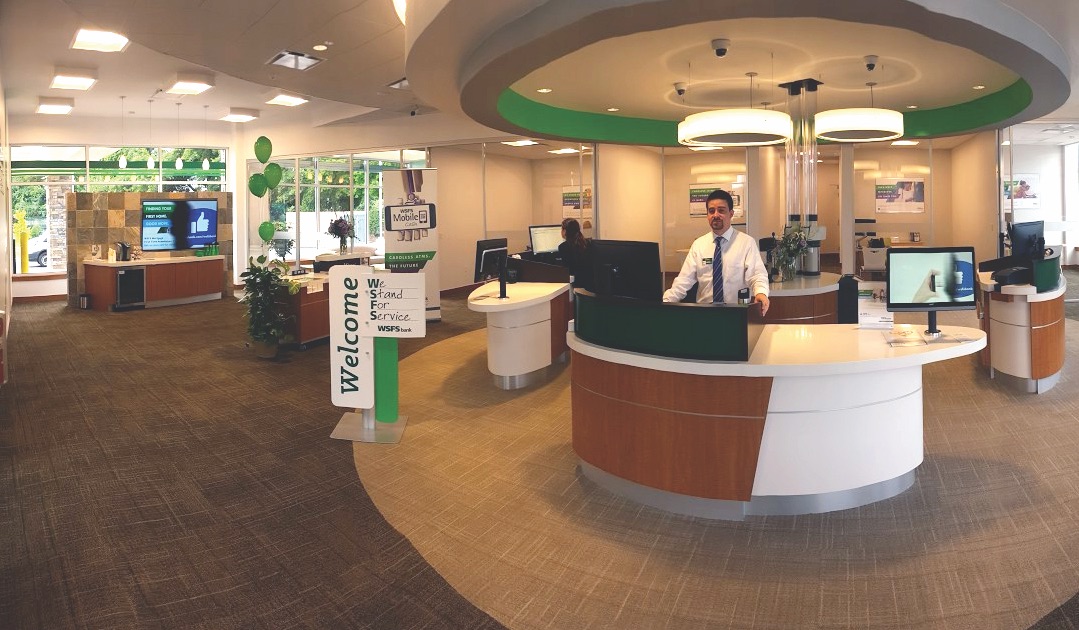
WSFS Bank has about 50,000 primary core customers in South Jersey, with millennials being its second-largest demographic. Phil Corradino, Senior Vice President and New Jersey Regional Director at WSFS, is focusing on growing alongside millennials as they launch their own companies, purchase their first properties and start their families. 

“In terms of small business, we feel that we’re in a great growth position. The small-business sector went through a very difficult period from 2008 and onward, even as recently as 2015, but now you see a lot of small business growth and lending, especially in South Jersey. We’ve put dedicated lenders in place at the local level to serve these business owners, and it’s their mission to be there to help educate them, with roundtables, focus groups and networking events.”

Louisville, Kentucky-based Republic Bank has consistently been a top small-business lender in the region over the last few years and is also experiencing growth in that segment. “We focus on small businesses because South Jersey is known for its mom and pop shops. We promote our commercial customers and make donations to help attract consumers to their businesses and support their growth. We don’t limit our services to just one industry or type of business, we try to serve every business and prospect in any industry,” said Joe Tredinnick, market president at Republic Bank.

Financial institutions are positive about the near-term growth outlook for the small-business segment.”The small-business potential and growth that I believe we are going to see over the next three to five years in South Jersey is going to be monumental, and WSFS is excited to be in the middle of it,” Corradino stated.

According to Parke Bank President and CEO Vito S. Pantilione, its construction lending product is enjoying strong demand in the Philadelphia and South Jersey areas. “It is a very attractive product, especially because many banks have discontinued this banking product. Even though the regulations for construction lending have become much more stringent, our structure allows us to handle it because we are well-capitalized and we have the experience and expertise,” said Pantilione.  

Most recently, the bank has also seen an increased demand further north, in the Bronx and Brooklyn areas of New York City. “We carefully entered the Bronx and Brooklyn markets and now have multiple multifamily projects and commercial loans in these areas,” he said. 

Similarly, New Jersey-based OceanFirst Bank is seeing fast growth in its commercial lending activities. Vincent D’Alessandro, OceanFirst’s southern region president, said the bank’s growth has been driven by its talented commercial relationship managers. “Our business customers have a specifically assigned relationship manager who focuses on those businesses. Our expansive growth has enabled our relationship managers to dive deeper into businesses that they may not have been able to tap into before, in providing more sophisticated products and services.” 


To learn more about our interviewees, visit:

Parke Bank: https://www.parkebank.com/ 

OceanFirst Bank: https://oceanfirst.com/ 

WSFS Bank: https://www.wsfsbank.com/ 

Republic Bank: https://www.myrepublicbank.com/ 


Spotlight On: Leor Hemo, Founder & Managing Principal, Vantage Real Estate Services

Spotlight On: Leor Hemo, Founder & Managing Principal, Vantage Real Estate Services

By: Yolanda Rivas

2 min read January 2020 — Real estate investors from high-valuation areas like New York, North Jersey, Texas and California are bringing considerable activity to the Southern New Jersey region due to its affordability, according to Leor Hemo, founder and managing principal of Vantage Real Estate Services. The Invest: team recently interviewed Hemo about the strengths, challenges and areas of growth in South Jersey’s real estate market. 


 What unique investor opportunities does South Jersey offer?

South Jersey geographically is positioned to attract not only investors but also companies that require space, such as those in logistics, transportation and warehousing. South Jersey has the land mass to allow for large-scale, industrial developments. I-95 and or I-295 and the New Jersey Turnpike connect to New York, Washington, D.C., Maryland, and further down to the Southern states. Comparatively, the eastern Pennsylvania and Philadelphia markets lack this land mass. With the national economy so strong, low interest rates and small business confidence up, we are experiencing an influx of small businesses leasing office space. There has even been increased activity in the retail world in the past few years. Retail space is being occupied by service providers, such as healthcare and financial services. There is a soaring demand for large-scale developments for multifamily projects in South Jersey. 


What is the landscape for healthcare real estate?

The large healthcare systems are taking over the traditional family practices and specialties. Dental specialists and oral surgeons are active in starting new practices or expanding them. The same can be said for physical therapists and chiropractors. These specialty practices are growing and fueling a large demand for space. By the nature of their business, chiropractors, physical therapists and dentists are always interested in retail space for visibility and exposure purposes.


What challenges do you face in South Jersey?

The biggest challenge is the bureaucracy from our local governments, as well as the tax burden on businesses and individuals. Real estate taxes are still the No. 1 issue for property owners and businesses because of the impact on rents. Some regulations in place are hampering business and growth.


What is your outlook for the company and the market?

In terms of Vantage Real Estate, we just opened a new office in Philadelphia. It is a market we are rapidly growing into. We are also expanding our services portfolio: We have expanded our services and specialties and offer healthcare real estate, business brokerage, investment sales and multifamily as well. If the economy does well, South Jersey will do well, provided the regulatory framework remains unrestrictive. 


To learn more about our interviewee, visit:

Vantage Real Estate Services: https://www.vantageres.com/ 


Spotlight On: Les Vail, CEO & President, Gloucester County Chamber of Commerce

Spotlight On: Les Vail, CEO & President, Gloucester County Chamber of Commerce

By: Yolanda Rivas

2 min read January 2020— The Gloucester County Chamber of Commerce’s focus on business development and education has positioned it as the fifth-largest chamber in the state of New Jersey. The chamber’s partnerships with local county colleges and universities have been key for businesses and the local workforce. Les Vail, president and CEO of the chamber, discussed with Invest: the different ways the chamber is promoting Gloucester County as an economic engine in the region.


 What have been some of the highlights for the Gloucester Chamber of Commerce over the past 12 months?


We have been making a concerted effort over the past year to improve branding and marketing to ensure that our message reaches as many people as possible. We initiated a partnership with Rowan College of South Jersey that provides around 30 percent discounts on degree tuition fees for any of our employees and members. We are already seeing that initiative bearing fruit, with over 12,000 unique visits per week across our social media platforms and a significant uptick in returns on our email blasts.


How is the chamber working to promote South Jersey as a catalyst for economic development in the tri-state area?


We have grown to become the fifth-largest chamber in the state with almost 1,000 members, and a big reason for that success is our focus on business development. We act as the middleman to help companies and executives connect with each other. Our efforts on education are also vital. We firmly believe that economic development starts with educating the workforce, as this is what attracts new businesses to the region. 


Manufacturing, for example, has a great need for employment. Gloucester County is the fifth-largest region in the country for food manufacturing. The sector offers competitive wages, but it is struggling to find sufficient numbers of skilled workers, not only for now but for the future. The industry does not necessarily require a college degree, but usually requires some form of certification. That’s where our partnerships with local county colleges can have an important impact. We listen to the business community and we support them in their efforts to increase the number of qualified workers for this industry.


What kinds of businesses are you trying to attract to the Gloucester County region?


We are not known as a technology hub, but we have a research institution and two medical schools that are contributing in this area. So we are looking to attract technology-based industries that can offer competitive wages. We have the land capacity and infrastructure in place to attract these businesses.


What are the main challenges facing businesses in the county?


Workforce is still the main issue. We need more plumbers, electricians and carpenters. Manufacturing businesses and refineries, despite offering attractive salaries, are struggling to find their future workforce. It is important to change the mindset of young people today and to let them know that not every career requires a college degree. We need to find people without college degrees and include them in the workforce by giving them valuable skills that contribute to the economy. This process starts in high school, so it is encouraging to see institutions like Gateway Regional High School offering guidance and advice on potential career paths to students from an early age.


To learn more about our interviewee, visit:

Gloucester County Chamber of Commerce: https://www.gc-chamber.com/


Capital Analytics Shines a Spotlight on South Jersey


Invest: South Jersey to highlight key investment opportunities in the city 

December 2019

Seasoned media firm Capital Analytics has chosen South Jersey as the next destination to launch a focused annual report on investment opportunities offered by the city. Invest: South Jersey will bring together key industry leaders across the public and private sectors to provide commentary on South Jersey’s rise as an attractive investment destination in recent years.

Entering its sixth year publishing the highly praised flagship project Invest: Miami, Capital Analytics identified South Jersey as the next key market in its portfolio of annual economic reports. This newest edition will focus on the growing importance of South Jersey as a business hub and spotlight opportunities for investment.

Capital Analytics’ successful Invest: Miami venture allowed it to establish footholds in Atlanta, Greater Fort Lauderdale, Philadelphia, Tampa Bay, Palm Beach, Charlotte and Orlando, and the company has high expectations for its South Jersey undertaking.

Invest: South Jersey will complement the Invest: Philadelphia publication, shining a light on an integral part of the region’s greater economic ecosystem. With a rich history and diversity and a unique and strong local culture, South Jersey plays a vital role in manufacturing, logistics, education and services,” said Jack Miller, Regional Director at Capital Analytics.

The Capital Analytics team has already started laying the groundwork for Invest: South Jersey and is looking forward to replicating its success in other markets, speaking to high-profile executives and leaders of key organizations in the area. This will be the most comprehensive independent report available on South Jersey’s vibrant business climate, seen through the eyes of those at the forefront.

New Jersey’s Gross Domestic Product (GDP) per capita is expected to reach $62,891 by 2022. South Jersey has a high level of education, with 40 higher education institutions, meaning new high-paying jobs in tech and science are opening up. Add to that a local government that understands the importance of attracting investment and South Jersey is the perfect place for investors to focus their attention. 

“At Capital Analytics, we are excited to begin conducting interviews and compiling research on the South Jersey market in anticipation of the first edition of Invest: South Jersey,” said Miller. “We look forward to discussing the many efforts of both the public and private sectors to reinvigorate the area, attract business and investment and bring awareness to exciting developments in South Jersey.”

Capital Analytics produces in-depth business intelligence with a focus on providing comprehensive investment knowledge on markets within the United States for the domestic and global business community. Over a six-month research period, it meets with more than 200 top political, commercial and industry leaders to deliver targeted information, in-depth analyses and strategic insights to the global business community on economic trends and investment opportunities.

Its first publication, Invest: Miami, has a global readership and includes among its readers top executives working in real estate, finance, technology, trade and logistics, health, hospitality and others. Books are distributed locally, nationally and globally to trade and investment boards, executives of Fortune 500 companies, institutional investors, consulates and embassies, hedge funds, leading chambers and associations, as well as high-level summits and conferences.


For more information contact 

contact@capitalaa.com

TEL: 305-523-9708