How Broward is Solving its Transportation Troubles

How Broward is Solving its Transportation Troubles

By Max Crampton-Thomas
4 min read October 2019 —  For over a century, the car has been America’s top transportation choice when getting from point A to point B. As the population in the United States has grown exponentially year over year, so has the dependency on these vehicles, which has led to worsening transportation issues like congested roads, air pollution, traffic accidents and in some cases fatalities. Throughout South Florida, in this case Broward County, the negative effects of the population’s dependency on single-occupancy vehicles are rampant throughout the region. While these issues pose a major challenge to Broward, there is hope as the younger generations are looking to avoid the stress of car ownership, and many community leaders and organizations are making a push toward better mass transit and alternative transportation options.

While these are not all new ideas, in the last couple of years the emphasis for Broward has become truly exploring and executing these ideas. This starts with the  30-year Penny For Transportation Surtax that was passed last November and is set to generate billions of dollars toward improving transportation and mass transit options throughout the county. Invest: recently spoke with Monica Cepero, deputy county administrator for Broward County, who discussed what the community could expect from the revenues generated by the tax. “This sales tax is set to generate about $16 billion over the next 30 years, and will be used in the more immediate future to improve and modernize public transit services. Our long-term plan for those funds is focused on creating connectivity, extending roadway capacities, multimodal improvements and improving transportation facilities and service.”

Invest: also spoke with Gregory Stuart, executive director of Broward MPO, about the near-term changes that could be expected from the revenues collected from the tax. “Realistically, the immediate changes aren’t going to result in construction; we are focusing on enhancing the traffic signalization program. This includes a coordination between the traffic lights, people’s vehicles and installing smart communication equipment. Another immediate change that has happened already but which we’re not going to notice for about another year, is the county transit agency’s purchase of another 130 buses. Considering they are operating a fleet of about 300 buses right now, this is a one-third expansion and a significant increase in the bus system,” he told Invest:

While the tax is going to be a huge benefit for transportation in the region, a change in mindset is another factor impacting how people get around. One option is the Tri-Rail, which is celebrating its 30th year servicing the South Florida community. Tri-Rail Executive Director Steven Abrams spoke about how it is benefiting from the changing mindset toward mass transit in the area. “South Florida is a tourist and service-related economy, and these individuals, like waiters or construction workers, cannot work from their homes. We have people coming from all over the world who are used to rail transportation in their countries, and they are feeding into our system. Our roads are also just becoming so congested. It used to be that our ridership would principally, and almost exclusively, fluctuate with gas prices, but now that  gas prices are stable and dropping, we still have people riding our system because ultimately it is the overabundance of cars on the road that is urging them to seek alternative transportation.”

Abrams also spoke to how Tri-Rail has improved and updated its operations over the years to encourage use by a larger population. “Over those 30 years, we have improved our service, added more trains, added weekend and holiday service and added connections to the three airports. We are a transportation system that has become popular over time and we have really embedded ourselves in the tri-county area.” 

The other popular train in South Florida is also the newest mass transit option for the region, Virgin Trains USA. Running through the three counties of Miami-Dade, Broward and Palm Beach, the train is looking toward the future by connecting the three counties with Orlando and an eventual Tampa Bay stop as well. 

Patrick Goddard, president for Virgin Trains USA, discussed with Invest: how it wants to be a catalyst for transit change in South Florida. “We are reinventing train travel in America, so there are always going to be challenges, but none that we have not been able to overcome so far. The advent of this project has awakened a desire and a curiosity within the municipalities to recognize the full potential for mass transit in South Florida. We are solving the challenge in Florida of medium-haul travel. Airlines take care of long trips, while rideshare, motorized scooters and buses take care of short ones. There has always been this gap with the 200- to 300-mile distances that are too short to fly and too long to drive. By introducing an option like this, it encourages people to leave their cars at home and start using a more environmentally sustainable means of transit.” 

A key factor in remaining economically sustainable is having good transportation and mass transit options. As Broward County continues to develop into an economic powerhouse so to must its transportation, and with changing mindsets and push from community leaders the future looks bright. 

To learn more about our interviewees, visit:

https://www.tri-rail.com/

http://www.browardmpo.org/

https://www.gobrightline.com/

https://www.broward.org/

ATLNext Targets New Heights

By Sara Warden


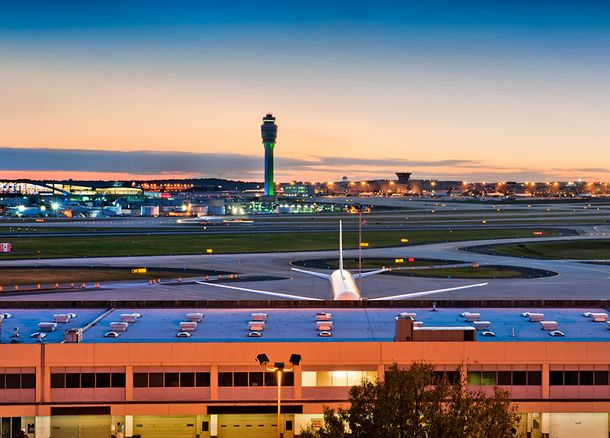
2 min read SEPTEMBER 2019 For the 21st consecutive year, Atlanta’s Hartsfield-Jackson Airport was named the world’s busiest airport this month. With passenger traffic of over 107 million in 2018, the airport continues to serve as a major economic driver of the city. Capital Analytics took a closer look at the characteristics that make the airport the world’s transport hub.

ATL is the state of Georgia’s largest employer, generating 63,000 direct on-site jobs and creating an estimated $34.8 billion economic impact for Metro Atlanta – or almost 7% of total state GDP. The 47,000-acre Hartsfield-Jackson facility has 263 concessions, 193 gates, seven concourses, five runways and the tallest control tower in North America, coming in at 121m.

“It’s a complex operation,” Airport General Manager John Selden told How Stuff Works. “One little piece going astray can cause massive chain-reaction ramifications. To keep the complexity of this operation running smoothly, it takes a village.”

But to keep operations running smoothly, the airport must constantly keep up with growing passenger numbers through more and more expansions. “As you look at passenger flow over time, it’s always trying to eliminate the bottleneck,” Tom Nissalke, the airport’s assistant general manager of planning told How Stuff Works. “Sometimes, when you fix one bottleneck then it’s another bottleneck somewhere else.” 

In 2016, the Hartsfield-Jackson Airport unveiled ATLNext, a $6 billion capital investment in the continuous expansion of existing infrastructure. By 2022, a total of $1.9 billion is to be invested in the modernization of the central passenger terminal, which will include aesthetic renovations that involve landscaping and lighting, as well as the extension of Concourse T to add five new gates and the addition of 10 new gates to Concourse G.

To accommodate growing air traffic, $1.3 billion will be invested in airfield upgrades that include a sixth runway, slated to be completed by 2034. Investments in auxiliary services such as parking and a mixed-use hotel and office space development are also planned. Air cargo facility upgrades will come in at around $200 million.

“The infrastructure has to keep up with the growth,” Selden said to Reporter Newspapers. “We cannot turn into [New York’s secondary airport] LaGuardia. My goal and my team’s goal is to do everything we can to work with everybody that we need to [in order to] ensure that Hartsfield-Jackson is not a limiting factor on the growth of the Atlanta region.”

The investment is a joint venture between the public and private sector. A consortium of three companies – CH2M Hill (since acquired by Jacobs), RohadFox and Parsons Transportation Group – won the contract to carry out the ambitious expansion. Overall, PPPs are an innovative idea in airport projects, but could be the future, allowing the public sector to free up funds for other priorities. “I think we’ll see other examples where other companies get involved. And gradually, familiarity builds, and it won’t seem outlandish at some later date when the subject of the whole airport comes up,” said Robert Poole, director of transportation policy at Reason Foundation, in an interview with the Atlanta Journal-Constitution.


To learn more about our interviewees, visit:
http://next.atl.com/

https://reason.org/

http://www.rohadfox.com/

http://www.jacobs.com/ 

https://www.parsonsgroup.co.uk/

Business is Booming for Deerfield Beach

Business is Booming for Deerfield Beach

By Max Crampton-Thomas

2 min read September 2019 — When discussing growth in Broward County, the conversation would typically center around the economic hub that is the city of Fort Lauderdale. While it may be the most universally recognized city in Broward, it is certainly not the only one in the county experiencing an economic boom.

Located at the northernmost point of Broward County is Deerfield Beach, a city whose growth cannot be understated or overlooked. Home to over 80,000 individuals, this beach community has capitalized on the economic prosperity and ever-increasing migration of individuals to the South Florida region. Invest: Greater Fort Lauderdale spoke with Bill Ganz, the mayor of Deerfield Beach about the city’s major developments in the last year. “We have had a lot of growth in the city in the last 12 months, including over 11,000 building permits that total nearly a billion dollars in new construction. We have new residential developments under construction from some of the top developers in the area, such as Lennar, Toll Brothers, Ram Realty and Weingarten Realty. One of the finest organizations in Broward County is also located in our city, JM Family Enterprises. They are working on a $176 million expansion of their corporate headquarters,” he told Invest:. 

The growth of Deerfield has not just been predicated on the development of new construction projects for the private sector. The city has recognized the importance of reinvesting in itself to better serve its residents. This is apparent in the ongoing construction of a new 12,000-square-foot community center, which is a revitalization of the old Tigner Community Center. When completed, it will be one of the largest community centers in Deerfield Beach. 

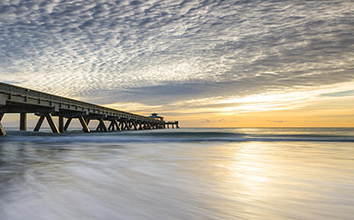
Successful economic growth of an area in Broward County is also dependent on addressing future threats to that growth. Ganz made a point of talking to Invest: about how the city is addressing the looming threat of sea level rise and its efforts toward environmental resilience. “We have been working on these issues for several years, starting with the West Wellfield project, which helps to solidify the water system in Deerfield Beach, so we are much better protected against salt water intrusion. We have taken the initiative to become LEED certified with some of our city projects that have recently finished, including the new pier and facilities on the beach.” 

He continued to speak on how he hopes Deerfield will serve as a positive example on these issues for other areas of Broward County. “We have a new Siemens Energy Efficiency Program that we hope can be used as an example for other municipalities to address these issues. The city has also been working on an Emergency Preparedness and Response Plan. We don’t want to just talk about sea level rise, but really address it from a safety standpoint, especially in the event of another hurricane.” 

The advancement of Deerfield Beach has not been by chance, and can be attributed to well-thought-out and deliberate initiatives and actions taken by the city’s public and private sectors. There is a recognition that to sustain the economic growth, the city must continue to present unique opportunities to businesses in the area. 

One of the ways the city is doing this is by recognizing the need to retain a strong workforce within the city, as highlighted by Ganz: “We want to make sure that we provide them with a wide variety of opportunities, not just entertainment, but business opportunities as well. We also are trying to make sure that we are appealing to all generations of the workforce. One of the ways we hope to accomplish that is with some of the new residential construction that is being built. We have worked with these developers to make sure they are keeping the new buildings attractive to all segments of the workforce in the city. We are also fortunate to have the most beautiful beaches in all of Broward County, and these people can really take advantage of this being a nautical destination.” 

While it has been a successful year for the city, local government and the business community will continue to focus on sustaining this growth for the foreseeable future. 

To learn more about our interviewee, visit:

http://www.deerfield-beach.com

Miami A Bridge for US-Latam Tech Investment

Miami A Bridge for US-Latam Tech Investment

Writer: Sara Warden

2 min read SEPTEMBER 2019 — It seems that more and more US cities are being labeled tech hubs every day, but Miami-based companies see a unique opportunity in the state that cannot be provided elsewhere. Instead of locking themselves into one market, Miami can provide startups a launch pad into the vast untapped Latin American market, and tech startups are flocking to the city in droves to take advantage of these opportunities.

Possibly the most famous is SoftBank Group, a Japanese investment firm that has set up roots in Miami to gain access to Latin America’s infant venture capital market. SoftBank has pledged $5 billion to the Latin American market, with some of that amount already invested to date. In fact, by the first half of 2019, these kinds of investments in Latin America have almost reached the $2.4 billion invested in all of 2018 – and it could not be done without Miami.

“This is the kind of capital that has never been seen before in Latin America,” Andre Maciel, a managing partner at SoftBank Group told Bloomberg.

About 70% of Miami’s population is composed of Latinos, providing the city with a unique workforce that can capture the attention of untapped Latin American entrepreneurs from a US base. “Part of our secret sauce is that we’re a city built by immigrants. Miami is a very young city, but we have the grit and resiliency of those people. Miami is a startup in and of itself. If you’re willing to roll up your sleeves, you can make it here,” Felice Gorordo, the CEO of eMerge Americas told Forbes.

But Miami is not just a base for investment in other regions. It also has the credentials that make it one of the best places to invest in the US. It comes seventh nationally for venture capital investments and in the first half of 2019 alone, around $1.54 billion was invested in South Florida tech companies.

SoftBank also made a multimillion-dollar investment at the end of 2018 in ParkJockey, making the company Miami’s first unicorn and one of the most valuable parking companies in the world. Building on the sharing economy model, ParkJockey allows landlords to rent parking spaces to large-scale companies like Uber and Lyft. The reception to this technology says “a lot about the ability to build a business in Miami and take it to significant size,” founder Ari Ojalvo told the Miami Herald.

“Miami has a tremendous tech talent pool, and we’re fortunate to be located in this burgeoning tech market,” said Taunia Kipp, says Executive Vice President of Corporate Marketing & Communications at Kaseya, an IT management software company, on Refresh Miami.

Kaseya is one of the most recent success stories for a Miami-based tech firm. Last month, the company attracted a $500 million investment from San Francisco-based investment firm TPG. Kaseya CEO Fred Voccola said in a press conference that the Miami growth will not stop as the company heads for an IPO within the year. “We want to open up people’s eyes to the talent that is here—and that it can be scaled,” Voccola said.

Another IPO that’s on the cards could be Buenos Aires-headquartered firm Technisys. In May, it closed a $50 million funding round. And when it wanted to establish a footprint in the United States, Miguel Santos, one of the three founders told Forbes that there was no question that Miami should be the location. “We are here to stay and the plans are big. The next stage is probably a public offering in say, three to four years,” he said.

To learn more about our interviewees, visit:

https://group.softbank/en/

https://www.technisys.com/

https://www.kaseya.com/

https://www.parkjockey.com/

https://www.emergeamericas.com/insights/

Big Banks’ Long-Term Investment Vision for Charlotte

Big Banks’ Long-Term Investment Vision for Charlotte

Writer: Sara Warden

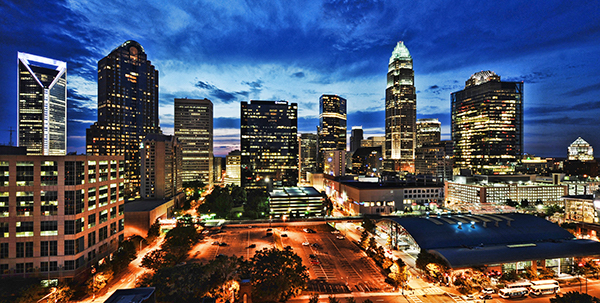
2 min read AUGUST 2019 — Charlotte has long been the eastern hub of Bank of America (BofA) and is one of the headquarters of Wells Fargo. But this year it has been attracting attention from the third bank belonging to the Big Four, which together hold around 45% of total U.S. deposits. JP Morgan Chase announced earlier this year that it will add up to 21 branches in Charlotte in the next three years.


“We’ve been serving the Carolinas for more than a decade and opening branches allows us to lend to more consumers and small businesses, and offer good paying jobs,” Thasunda Duckett, CEO of Chase Consumer Banking, said in a press release.

JP Morgan Chase will be entering a market where many are seeing huge potential. In April this year, U.S. Bank announced it will open 10 branches in the city by 2020. The bank, which emerged from the $66 billion merger between BB&T and SunTrust, will also be headquartered in Charlotte.

Despite Wells Fargo and BofA controlling around 89% of the area’s deposits, the new entrants seem confident there will be a big enough piece of the pie for them to get their teeth into. “This expansion marks a major milestone for our firm by allowing us to serve more customers, small businesses and communities across the country,” said Duckett. “To us, this is so much more than building branches. This is about new customer relationships, better access to credit and local jobs.”

Charlotte is home to 425 corporate headquarters in the finance industry. At 2.5%, the city has the lowest corporate tax rate in the country. For three years consecutively, North Carolina’s annual residential growth has exceeded 100,000 people.

“I don’t think there’s any industry that’s having an easy time staffing with the kind of human capital that they need, so one of North Carolina’s biggest advantages right now continues to be population growth,” says Christopher Chung, CEO of the Economic Development Partnership of North Carolina told WeWork publication FiveThirtyEight.

Charlotte’s finance industry is the second-largest banking hub in the country behind only New York City, with banks holding more than $2.3 trillion in assets. The city has added more than 200,000 jobs since 2001.

“We’ve built a great city that helps companies attract and retain today’s best talent,” Frances West, business recruitment and retention leader in Charlotte’s Economic Development Office, said to FiveThirtyEight. “Where we are today is not by happenstance and where we will be in 10 years is not by happenstance — it’s all by intentional growth.”

And the financial institutes have Charlotte in their crosshairs for the long run. U.S. Bank announced it reached an agreement with the city’s authorities this month to be the lead sponsor of a delayed pedestrian bridge project that connects Charlotte’s uptown and South End. U.S. Bank will contribute $1 million to the $11 million infrastructure project.

“Bridging the gap between uptown and South End will provide additional connectivity for residents, workers and guests, while further knitting together two of our great urban neighborhoods,” Michael J. Smith, CEO of Charlotte Center City Partners, said in a press release.


To learn more about the companies mentioned, visit:

https://www.charlottecentercity.org/

https://charlotteregion.com/eco-dev/charlotte-regional-business-allianceeconomic-development/

https://edpnc.com/