Technology Shaping Healthcare Sector in Miami

By Yolanda Rivas
2 min read JULY 2019 — The health sector in Miami, already known for its positive outcomes, is banking on innovation and technology to keep its high ranking as a healthcare provider. Artificial intelligence, telemedicine, virtual reality, electronic medical records, digitized healthcare and blockchains are some of the advances that are transforming the industry. 

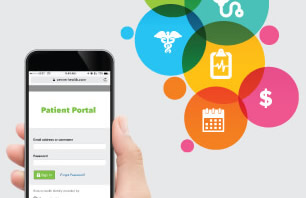
The Renfrew Center of Florida is among the local institutions integrating virtual therapy to improve access for patients. Virtual healthcare allows patients to communicate with out-of-town healthcare providers without the necessity of traveling. It represents a more affordable and convenient way to receive care. 

“Virtual therapy is an area of significant growth in the mental health field that allows us to reach people who live in areas where there aren’t therapists or treatment facilities for eating disorders,” Gayle Brooks, chief clinical officer at The Renfrew Center, told Invest:. 

The center recently launched a telehealth therapy group in Florida, which provides support to anyone in the state who is struggling with any eating disorder. “This program works for two types of people: those who come into that group and discover that they need a higher level of care, or those who use it as a tool for their continuing care after they receive a higher level of treatment,” Brooks explained. 

According to a Deloitte survey, 58–69% of physicians expect to increase their use of technology. Tenet Health’s Miami-Dade Group CEO Jeffrey Welch, in an interview with Invest:, emphasized the importance of technology to provide faster and more effective solutions that can lead to healthier individuals living in healthier communities. 

“Every one of our hospitals in the area has at least one robot that can be used for thoracic general surgery, gynecological and colorectal procedures,” Welch said. “The goal is to utilize technology to provide minimally invasive treatment options that can reduce recovery time and get people their lives back, so they can do what they love,” he added.

Accenture’s Digital Health Tech Vision 2019 report showed that 94% of healthcare executives say that the pace of innovation in their organization has accelerated over the past three years due to emerging technologies.

Health institutions, like Miami Jewish Health Systems, are also integrating innovative programs to improve the delivery of care. The Florida PACE Centers (Program of All-Inclusive Care for the Elderly) is an example of how a diverse and innovative program can keep people out of institutions. 

“Miami Jewish Health has a reputation for being innovative in the delivery of healthcare for the elderly. Our PACE centers, which are responsible for the delivery of all primary, acute, long-term care and supportive services, continue to grow and expand,” Jeffrey Freimark, CEO of Miami Jewish Health Systems, told Invest:. 

Miami Jewish Health also has a major project underway called the S. Donald Sussman EmpathiCare Village, which will be wildly innovative in terms of its free-range open-living environment for patients with neurocognitive disorders.

According to Deloitte’s Healthcare and Life Sciences Predictions 2020 the top external factors that will shape the sector are: more informed and demanding patients, new business models due to digitized medicine, wearables and mHealth applications, Big Data and the influence of technology and science in regulations and patient safety. 

To learn more about our interviewees, visit:

The Renfrew Center: http://renfrewcenter.com/locations/non-residential/coconut-creek-fl 

Tenet Health Miami-Dade Group: https://tenetflorida.com/ 

Miami Jewish Health: https://www.miamijewishhealth.org/ 

6 New Areas of Study You Didn’t Know Were in Miami

By Yolanda Rivas

2 min read JULY 2019 — Technology has reshaped not only how education is delivered but what courses are being taught, with universities and colleges revamping their curriculums to better prepare students with the skills employers demand. 

In Miami, local public and private higher education institutions have upgraded their academic offerings and have focused on working with local businesses to provide opportunities for more than a quarter-million students. 

Invest: Miami spoke with local leaders in the sector to get an update on their new offerings.

Florida International University (FIU)

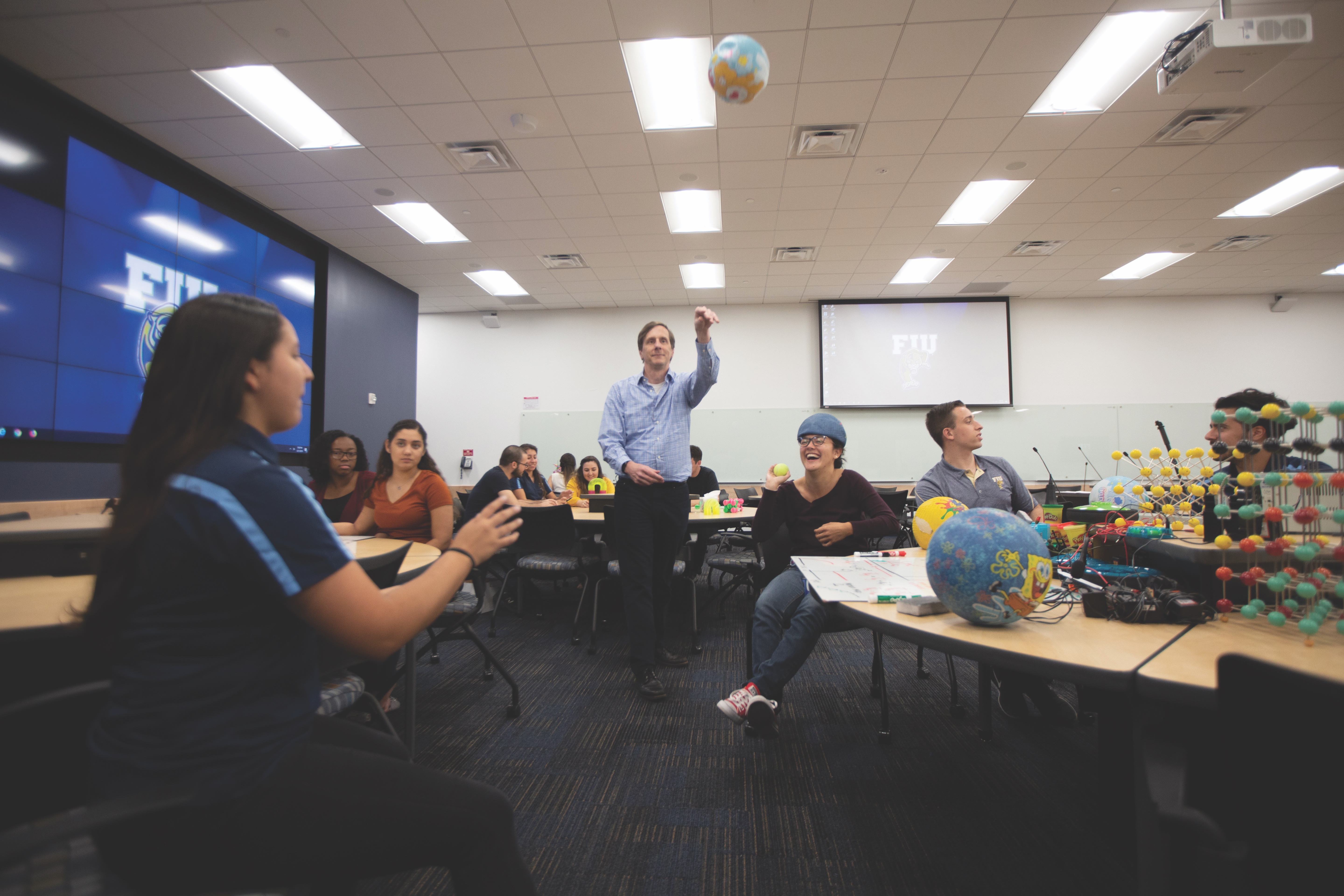
FIU recently added a bachelor’s of science in the Internet of Things to provide knowledge and expertise in modern digital communication devices. It is also beginning to develop lifelong learner programs, including weekend, just-in-time and certificate programs related to technological and data-literacy development.

“Skill sets are increasingly becoming multidisciplinary in almost all areas. It’s a whole new world out there, and we want to make sure that our students are at the cutting edge of that,” said FIU President Mark Rosenberg, when he recently sat down with the Invest: Miami team.  

University of Miami Graduate school: 

UM Graduate School will add a degree program centered on climate change and health as part of a set of new interdisciplinary programs in the works. 

“We have to continue to push the envelope and be innovative. Educational programs tend to be concentrated, and I believe we need to continue developing interdisciplinary programs. We must give students an opportunity to practice some of their non-discipline-specific skills as well,” Guillermo “Willy” Prado, dean of UM Graduate School, said.

University of Miami Miller School of Medicine:

The school is revamping its curriculum to focus on using “entrustable professional activities” to determine the competency of a medical student, as opposed to the traditional four-year structure. The approach will allow students to complete an earlier transition from medical school to residency. 

“We are in the process of designing a Miller-specific curriculum that we believe will be the model that other institutions will mimic for years to come. There has been a lot of evolution in the field, and we believe we have an opportunity to innovate and help lead in that domain,” said Dr. Henri Ford, dean and chief academic officer of Miller School of Medicine, in an interview with Invest:. 

Miami Business School (MBS): 

MBS is starting a 10-month M.S. in sustainable business next August. “That will be the first STEM-certified M.S. in sustainable business degree in the country,” Dean of MBS John Quelch told Invest:.

University of Miami School of Law:

The law school established joint degrees with University of Miami schools covering at least 10 specialties. “We’re the most interdisciplinary unit within the university. Many of our curricular offerings and our rich, intensive clinical education program in various substantive areas such as human rights, immigration and environmental justice are deeply interdisciplinary,” Patricia White, dean of the University of Miami School of Law, told Invest:.

UM Division of Continuing & International Education:

UM Division of Continuing & International Education launched certificates in coding and cybersecurity as part of its academic focus on STEM. The division’s dean, Rebecca MacMillan Fox, told Invest: that both certificates “have exceeded our expectations for enrollment and industry demand.” 

The division is also launching a GPRO Certificate Program (Green Professional Building Skills Training) that is customized for the climate and regional needs of South Florida.


To learn more about our interviewees, visit their websites:

Florida International University (FIU): https://www.fiu.edu/ 

University of Miami Graduate School: https://www.grad.miami.edu/ 

University of Miami Miller School of Medicine: http://med.miami.edu/ 

Miami Business School (MBS): https://www.bus.miami.edu/ 

University of Miami School of Law: https://www.law.miami.edu/ 

UM Division of Continuing & International Education: https://www.dcie.miami.edu/

Miami Banks Leading Tech Charge

By Yolanda Rivas

July 2019

2 min read  — Advances in technology are having a dramatic influence in the banking sector across the globe. Innovations are impacting the delivery of products and services, making the banking process faster, easier and more reliable. Customer satisfaction and increased competition are driving the tech push, and there is more on the horizon.

“We are changing our core banking system and investing more than $25 million to make that change. It’s an important step for us because we know technology will be the driving force to our growth in the future,” Fernando Beyruti, CEO of Itau Private Bank, told Invest:. 

An article from Bank Innovation explains that banks are spending more than $100 million to replace their aging core systems. Advances in blockchain technology, IoT, fintech, online banking and robotics have helped many financial institutions improve efficiency and accessibility. 

The investment isn’t just to make banking easier now, it is also part of the future. Technology is an integral part of City National Bank’s five-year plan. “We will invest over $15 million in digital transformation for the organization. This will ensure that we continue to be innovative as well as impactful through improving our client experience,” President and CEO Jorge Gonzalez told Invest:.  

Many financial institutions are also partnering with financial technology (fintech) groups to improve their offerings. According to a 2017 report from multinational professional services network PwC, 82% of financial leaders expect to increase fintech partnerships in the next three to five years. 

Cybersecurity and fraud detection are other areas where technology is playing a key role. “When we invest in technology we are also investing in strengthening our cybersecurity,” Gonzalez stated. The investment is not just in the technology, but also in bringing in the right people who have the experience and talent to be able to instill their knowledge throughout the organization,” he said. 

In that regard, First American Bank recently created a senior-level position — information security officer — whose role is to train employees and allocate resources in preparation for possible cyberattacks. “Security threats are on the rise, forcing us to be mindful that our information can be compromised at any time. Through back-room investments and increased training, we are taking the necessary precautions to reduce risk by educating our employees as well as our customers,” Brian Hagan, Florida Market President for First American Bank, told Invest:. 

Although technology adoption can be a challenge for some financial institutions, especially smaller banks that do not have the financial capacity to keep up with the latest innovations, ultimately it can provide a cost-savings. “I think all of us as a banking community in Miami are saddled with compliance concerns. But I think that, with technology, those kinds of costs can be reduced gradually while still maintaining the kind of vigilance that we have to have. There’s a good opportunity for our industry here,” G. Frederick Reinhardt, Chairman and CEO of Brickell Bank, stated in an Interview with Invest:. 

To learn more about our interviewees, visit their websites:

Itau Private Bank: http://www.itauprivatebank.com/

City National Bank: https://www.citynationalcm.com/home/home 

First American Bank: https://www.firstambank.com/personalbanking/ 

Brickell Bank: https://brickellbankmiami.com/ 

PwC: https://www.pwc.com/ 

Bank Innovation: https://bankinnovation.net/