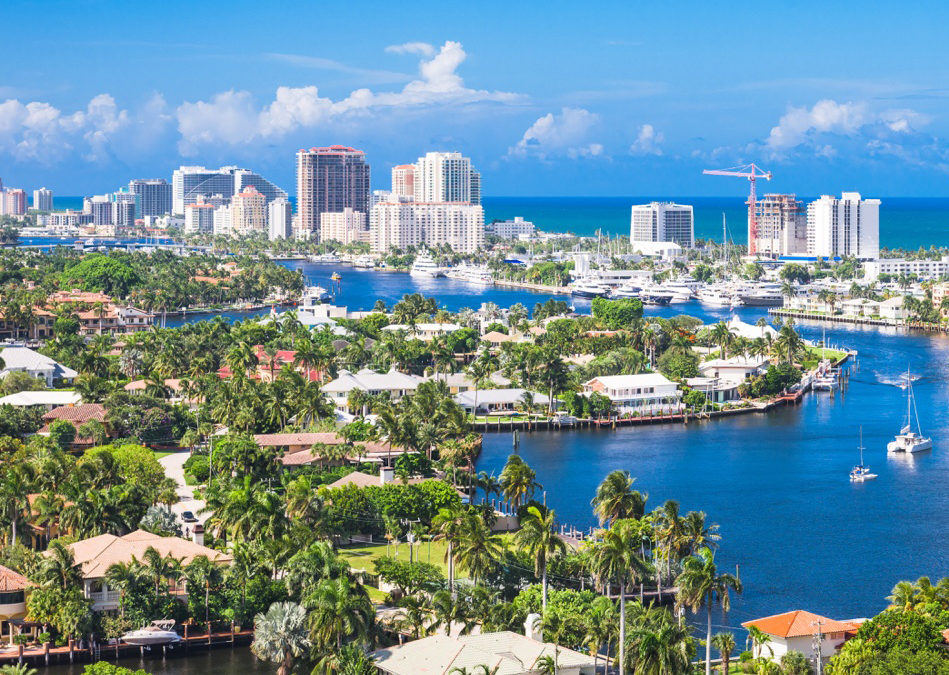
Real estate development is booming in Fort Lauderdale

Real estate development is booming in Fort Lauderdale

By: Beatrice Silva 
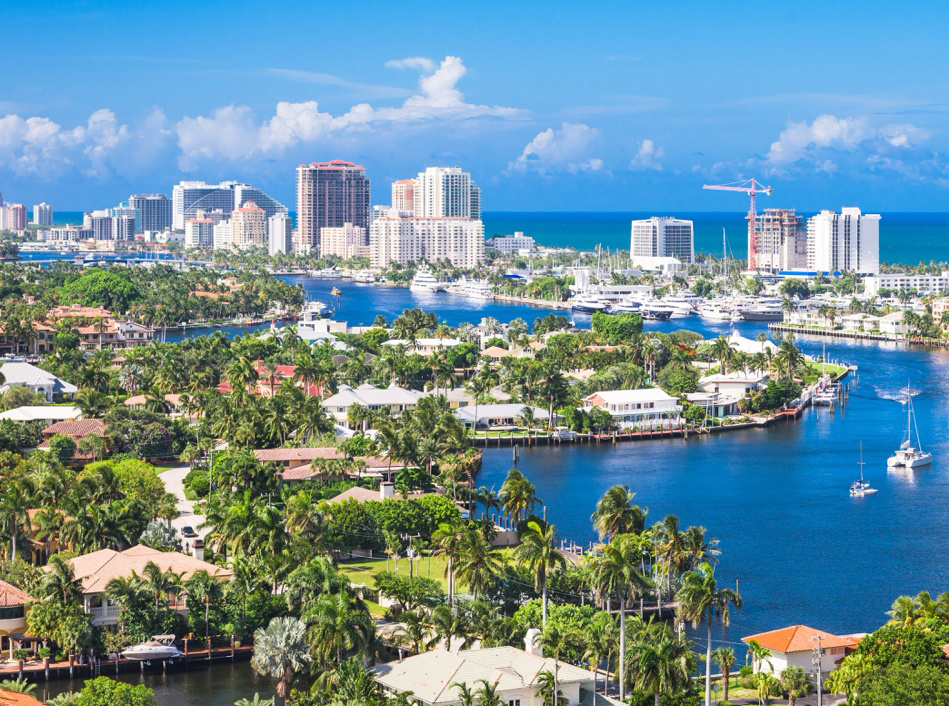
2 min read –  Real estate development in Fort Lauderdale is getting a jolt of confidence despite the lingering impact of COVID-19. On March 24, a majority of businesses were forced to shut down after Gov. Ron DeSantis announced a statewide shelter-in-place order. However, construction companies, hospitals, grocery stores, gas stations and other essential businesses were allowed to carry on with work as usual.


Florida is just one of several states that allowed construction to continue despite nationwide shutdowns. Similar to many other regions in the area, development is a vital part of Fort Lauderdale’s economy. The construction industry is projected to have the largest industry increase in employment from 2014 to 2024, according to the U.S. Bureau of Labor Statistics. 

A strong signal of the confidence in the market is a recent move by Oko Group, an international real estate development firm founded by Vladislav Doronin. It is the first company to close a large deal since the beginning of COVID-19. The firm recently purchased 6.68 acres of land east of the county courthouse in Downtown Fort Lauderdale for $62.59 million. “Oko Group is excited to expand its portfolio of South Florida real estate with the acquisition of a mixed-use development site in the heart of Fort Lauderdale’s urban core,” the developer said in a statement reported by South Florida Business Journal. “The Oko Group team, led by Doronin, now looks forward to working with the city of Fort Lauderdale to finalize plans for an exceptional development that will help to further transform the Downtown district while adding significant amenities for nearby residents and businesses.”

The majority of developments in the pipeline for Fort Lauderdale will most likely be residential. Retail and office real estate have proven themselves to be the weakest sectors in the market during the pandemic. “Prior to COVID-19, South Florida’s real estate sector was very strong, propelled by the demand and low interest rates. I think the commercial office market may see a bit of a correction. So many people are working from home and I imagine that most of them are going to continue to do that the rest of the year. I think business owners are getting more comfortable allowing their employees to work remotely. So far, the industrial and residential markets have proven themselves to be the strongest sectors in the real estate industry during the pandemic. I don’t think we’ll see any correction there. Currently, at Touchstone Webb Realty Company, we are watching retail and commercial as we move forward. We think it is going to take a good year before we see this sector begin to correct. We are still purchasing industrial and flex spaces for our clients,” Susan Thomas, president of Touchstone Webb Realty Company, told Invest: Palm Beach.

As Thomas mentioned, CDC regulations like social distancing have compelled more people to want to work from home. As a result, business owners could require less office space. Fairfield Cypress Creek is just one example of this trend. The new mixed-use project is currently underway between 6500 and 6520 N. Andrews Ave. The land which was originally occupied by office buildings will now hold 295 residential units, shops and restaurants. A new downtown could be another exciting project on the horizon for Broward County. Broward is recruiting a large company to relocate to the 140 acres next to the Everglades in Sunrise. “It’s one of the last few pieces you could make a statement. We really want to market this site internationally, not just nationally,” County Manager Bertha told the Sun Sentinel. 



Spotlight On: Leor Hemo, Founder & Managing Principal, Vantage Real Estate Services

Spotlight On: Leor Hemo, Founder & Managing Principal, Vantage Real Estate Services

By: Yolanda Rivas

2 min read January 2020 — Real estate investors from high-valuation areas like New York, North Jersey, Texas and California are bringing considerable activity to the Southern New Jersey region due to its affordability, according to Leor Hemo, founder and managing principal of Vantage Real Estate Services. The Invest: team recently interviewed Hemo about the strengths, challenges and areas of growth in South Jersey’s real estate market. 


 What unique investor opportunities does South Jersey offer?

South Jersey geographically is positioned to attract not only investors but also companies that require space, such as those in logistics, transportation and warehousing. South Jersey has the land mass to allow for large-scale, industrial developments. I-95 and or I-295 and the New Jersey Turnpike connect to New York, Washington, D.C., Maryland, and further down to the Southern states. Comparatively, the eastern Pennsylvania and Philadelphia markets lack this land mass. With the national economy so strong, low interest rates and small business confidence up, we are experiencing an influx of small businesses leasing office space. There has even been increased activity in the retail world in the past few years. Retail space is being occupied by service providers, such as healthcare and financial services. There is a soaring demand for large-scale developments for multifamily projects in South Jersey. 


What is the landscape for healthcare real estate?

The large healthcare systems are taking over the traditional family practices and specialties. Dental specialists and oral surgeons are active in starting new practices or expanding them. The same can be said for physical therapists and chiropractors. These specialty practices are growing and fueling a large demand for space. By the nature of their business, chiropractors, physical therapists and dentists are always interested in retail space for visibility and exposure purposes.


What challenges do you face in South Jersey?

The biggest challenge is the bureaucracy from our local governments, as well as the tax burden on businesses and individuals. Real estate taxes are still the No. 1 issue for property owners and businesses because of the impact on rents. Some regulations in place are hampering business and growth.


What is your outlook for the company and the market?

In terms of Vantage Real Estate, we just opened a new office in Philadelphia. It is a market we are rapidly growing into. We are also expanding our services portfolio: We have expanded our services and specialties and offer healthcare real estate, business brokerage, investment sales and multifamily as well. If the economy does well, South Jersey will do well, provided the regulatory framework remains unrestrictive. 


To learn more about our interviewee, visit:

Vantage Real Estate Services: https://www.vantageres.com/ 


Spotlight On: Joseph Culley, Head of Capital Markets Group, Janney Montgomery Scott LLC

Spotlight On: Joseph Culley, Head of Capital Markets Group, Janney Montgomery Scott LLC

By: Yolanda Rivas

2 min read January 2020 — An increase in high-net-worth investors, financial professionals moving back to the city and changes to organizational structures are some of the trends financial institutions are experiencing in Philadelphia. Janney Montgomery Scott LLC Head of Capital Markets Group Joseph Culley shared with Invest: some of the adjustments it has implemented amid the change in demographics and advances in technology.

What are some trends in Philadelphia’s financial sector?


We are starting to see more finance professionals leave cities like New York when they are at the age to start a family and coming back to Philadelphia. Although young talent retention has been a challenge, Philadelphians who moved to other cities after they graduated college are relocating back to the area. Our education system, arts and culture, transportation system, housing affordability and diverse environment are some of the drivers for residents.


What impact is technology having on banking?


The pace of change is happening more rapidly due to the disruption of technology in financial services. We have invested significantly in our technology platform and recently hired some of our first data scientists. Our company culture is starting to feel less like an investment firm and more like a technology firm. While we provide our client base with human experience and advice beyond investments, we are focusing on offering them more technological, mobile-friendly and artificial intelligence types of innovations and solutions.


What is the investment profile in Philadelphia?


We have seen an increase in high-net-worth investors coming to Philadelphia. We have significantly addressed the need we had for higher-end, condo-type properties that we lacked for years, and with that has come more international investment and out of state investment. One of our newer initiatives is focused on investment education and ways to provide more basic, fundamental knowledge about saving for retirement and investing.


What are some of the challenges facing financial institutions in today’s landscape?


The change in demographics is one of the challenges we are facing. Based on our internal projections, our workforce will be majority millennials within six years. That creates numerous opportunities for a firm like us to modernize and adjust. We recently made changes to our employee benefits, parental leave and dress code policies, based on feedback from our employee population. Organizational development and diversity and inclusion are some of the other areas we have been investing in due to these demographic and generational changes.


To learn more about our interviewee, visit:

Janney Montgomery Scott LLC: https://www.janney.com/ 


Spotlight On: Tim Pulte, Senior Executive Vice President, Colliers International

Spotlight On: Tim Pulte, Senior Executive Vice President, Colliers International

Writer: Yolanda Rivas

2 min read October 2019 — Collier’s Philadelphia delivers a full range of services to commercial real estate occupants, owners and investors throughout the tri-state region. Senior Executive Vice President Tim Pulte joined Colliers’ senior leadership team in 2017, bringing more than 31 years of experience in corporate operations, corporate real estate, transaction management and facility management. The Invest: Philadelphia team recently spoke with Pulte about the company’s plans for growth and how it serves local and foreign investors. 

2 min read OCTOBER 2019 — Collier’s Philadelphia delivers a full range of services to commercial real estate occupants, owners and investors throughout the tri-state region. Senior Executive Vice President Tim Pulte joined Colliers’ senior leadership team in 2017, bringing more than 31 years of experience in corporate operations, corporate real estate, transaction management and facility management. The Invest: Philadelphia team recently spoke with Pulte about the company’s plans for growth and how it serves local and foreign investors. 


What are the benefits of being located in Philadelphia?

As a global company, we have offices all over North America and abroad. Because of this, we’re able to service our clients no matter where their requirements are, both inbound and outbound. For example, if a company is coming in from Mexico, we can help them. Conversely, we can send a deal to Mexico and know it’s going to be taken care of. Philadelphia’s a great location for us. We’re close to other large markets and have access to our international markets as well. We have a very strong industrial base in our clientele. We have long-standing relationships with multiple manufacturing companies throughout the Colliers network. For example, we’ve worked with Philadelphia-based company Cardone to secure locations throughout the United States. We also helped NFI secure locations in Canada and the UK. 


What type of investment is the Philadelphia market seeing?

We’ve started seeing an increase in foreign investment come into the Greater Philadelphia market. It has mostly been asset-driven as opposed to geographically-driven, so it’s really dependent on what investors are looking for. We’ve seen a lot of investment in the industrial space recently; markets such as Philadelphia have become more appealing to investors, both foreign and domestic, because of the higher rate of return. For this reason, we’re seeing a lot of buyers from New York. We’ve also seen a lot of international investors buying companies here in the Philadelphia market. We’ve represented quite a few in the industrial space. 


How does Colliers International plan to grow in the Philadelphia region?

We have six offices in the region: Harrisburg; Allentown; Conshohocken; Center City,  Philadelphia; Mount Laurel, New Jersey; and Wilmington, Delaware. In all our offices we handle office, industrial, retail, property management and landlord representation. We’re trying to grow those areas across all our offices in the region. We’re looking to capitalize on established relationships while building new ones, especially in strategic areas where we can grow — and from an international standpoint as well. The new federal Opportunity Zones will be interesting, and we hope to see some growth in the market from those. There are some very strategic areas in Philadelphia, like the corridor leading up Broad Street toward Temple. It’ll be exciting to see what happens in those areas. 


To learn more about our interviewees, visit their websites:


Colliers International: https://www2.colliers.com/en/United-States/Cities/Philadelphia