Record Numbers Flock to Philly, Again

by Yolanda Rivas
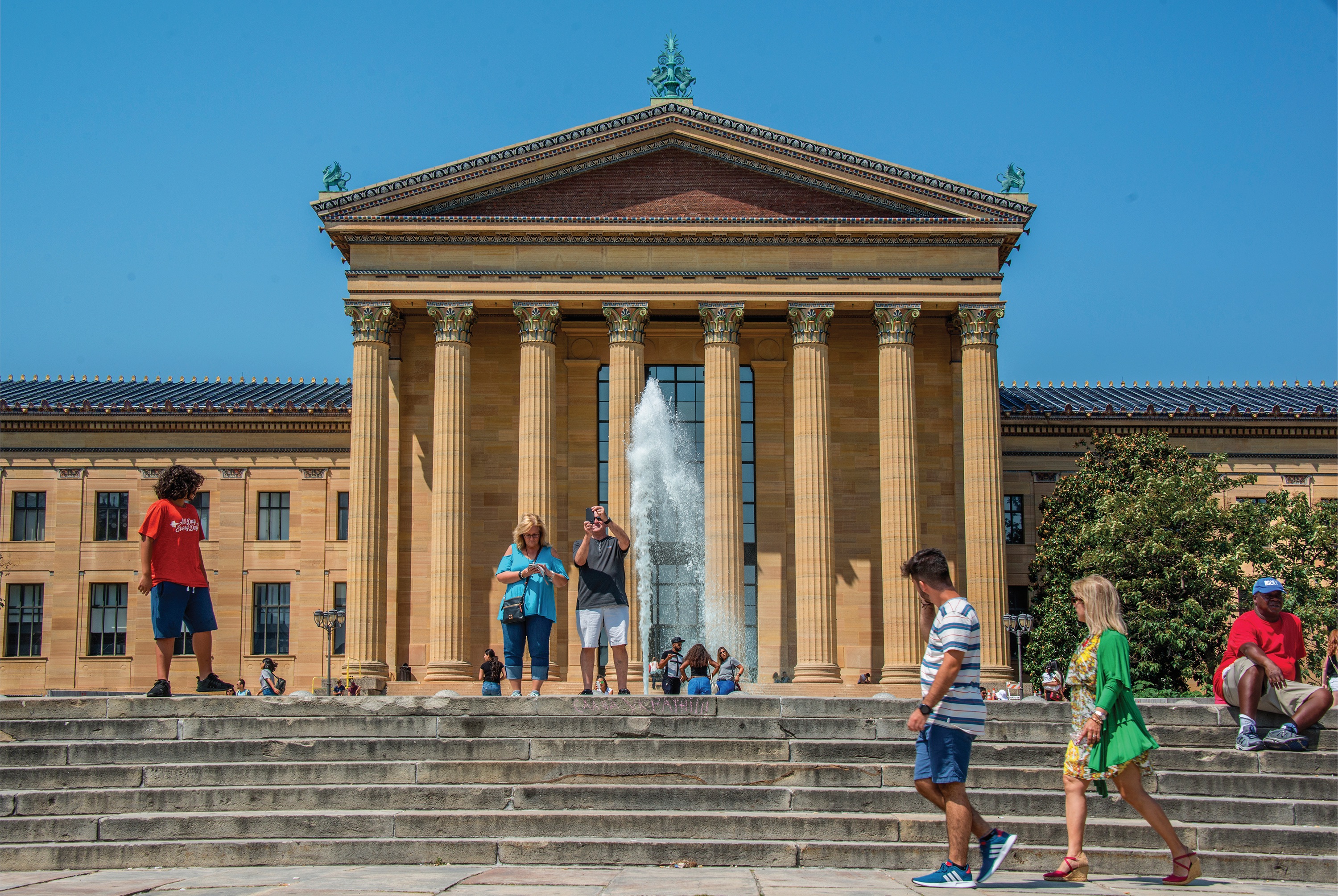
 

2 min read AUGUST 2019 — Greater Philadelphia experienced its ninth straight year of record tourism in 2018. Public and private organizations in the sector are making multiple efforts to elevate tourism to the city and maintain its record-setting pace. 

Enhancements to the city’s historical, cultural and dining options, such as the Pennsylvania Convention Center, the stadiums in South Philadelphia, the Philadelphia Museum of Art renovations and a number of new hotels on the horizon are some of the examples of improvements to the city’s offerings. 

“We’re working on a partnership to significantly grow our brand globally while also making a further commitment in Philadelphia with a new project that will dramatically enhance the architectural canvas for residential real estate,” Larry Korman, president of luxury extended-stay brand AKA Hotel Residences, told Invest:. 

Philadelphia’s weekend occupancy rate remains in the low- to mid-90%, also record highs, as the city of brotherly love attracts both business and leisure travelers. Local hotels, such as the Cambria Hotel Philadelphia Downtown, are committed to highlighting and complementing the communities where they operate through area-inspired decor and modern design.  

“We have locally commissioned art in our hotel, and since we sit on the Avenue of the Arts, our decor is themed with a nod to arts and music. We sourced most of the art and decor from local artisans, vendors and companies to ensure that we are supporting the community in every way possible,” Jerry Rice, General Manager at Cambria Hotel Philadelphia Downtown, said in an interview with Invest:.

To meet the demands of those who want a unique and intimate experience, some local brands are making the transition to boutique hotels. That is the case of former Courtyard by Marriott, which has been reborn as The Notary Hotel. According to the hotel’s general manager, Jim McSwigan, some of the elements of renovation include reimagined rooms, public workspaces for guests, a new shower experience in all rooms and a modern fitness center. 

“We have maintained an element of history with 1920s-inspired decor and furnishings, while introducing a modern feel. We offer the latest and greatest when it comes to providing guests with a great space, not only for business meetings, but for social events, weddings and any type of celebration,” McSwigan said.  

Another main driver for visitors and a key economic developer is the arts sector, and Philadelphia’s world-class music institutions are putting the city in the global spotlight. Such is the case of Opera Philadelphia and its Festival O, for example, which has had a  local, national and international impact. David Devan, general director and president of Opera Philadelphia, pointed out in an interview with Invest: the importance of the festival in creating local, enlarged artistic partnerships and developing a new, mostly young audience. “That is the biggest impact; we now have more customers than five years ago. We work with Visit Philadelphia, PHL Convention and Visitors Bureau, and other agencies that promote the city and create local pride,” he said.

“Because we do so much new work, what we are doing is affecting the field of opera nationally in terms of the field celebrating and participating in contemporary art activity. Internationally, we have become recognized as one of the most innovative opera companies in the United States,” Devan stated.

This year, Philly’s official tourism marketing agency VISIT PHILADELPHIA is focusing on opportunities in the multicultural market, specifically Latinx, LGBTQ and African American audiences. 


To learn more about our interviewees, visit:

AKA Hotel Residences: https://www.stayaka.com/ 

Opera Philadelphia: https://www.operaphila.org/ 

Cambria Hotel Philadelphia Downtown: https://www.choicehotels.com/pennsylvania/philadelphia

The Notary Hotel: https://www.marriott.com/hotels/travel/phlak-the-notary-hotel-autograph 

VISIT PHILADELPHIA: https://www.visitphilly.com/


Spotlight on: Gary Jonas, President & Principal, The HOW Group

Writer: Yolanda Rivas

2 min read AUGUST 2019 — Philadelphia’s real estate market has been growing steadily over the last few years. Many international and national investors are targeting the sector, where rents are affordable, when compared to surrounding markets, and there are numerous low-risk investment opportunities. This week’s “Spotlight On,” with Gary Jonas, president and principal of the The HOW Group, illustrates the landscape for the city’s real estate industry, including the most in-demand services, top neighborhoods and the trends in the sector.

What HOW Group business lines are seeing the most growth in Philadelphia today? 

The two divisions that are seeing the most growth are construction and real estate. We attribute that to the hole in the market between companies working for themselves and building a small number of units and companies building hundreds of units. There is a spot in the middle where people need contractors to build 50 to 100 units. It is hard to find companies to fill that space because of the labor shortage. It is also hard to find companies that are capitalized enough to work in that space. Because we are able to fill that gap, we have seen significant growth in our construction division over the last year. There is a huge need for that type of work.

Our real estate company does a lot of new construction sales, which speaks to the Philadelphia market. We expect this division to double its business this year. We made a big investment three to five years ago to launch this division, and now we are seeing significant growth. Between those two companies, we are going to do north of $100 million this year.   


What areas of Philadelphia are most in demand in residential real estate?

There is a huge growth opportunity in neighborhoods where you can provide housing that is in the $300,000 to $400,000 range. That is an underserved market and there is a lot of development starting to happen in that price range. For example, Mantua is a neighborhood right on the edge of Schuylkill Yards, education centers and the development going on in the area, and it is a great place for these types of projects. University City has a 17% to 20% homeownership rate, but it’s the second-biggest job hub and there is a need for affordable housing in the area. The edges of University City are primed for significant growth. There is a neighborhood next to Grays Ferry, known as the forgotten bottom, which is another great area for development because of its location and access to major highways. We also expect to see growth in south Philly. 


What are some trends in Philly’s real estate sector?

We are seeing people who want to do co-living spaces. We are seeing a lot more buildings that provide a product similar to Airbnb. We are also starting to see more micro units because affordability is starting to become an issue. As construction and land costs continue to rise, we are seeing unit size starting to decrease and become a popular option. Because of the inadequate labor pool, we are also starting to see more manufacturing stock like modular and prefab units being placed.

We are always looking to create advancements within the construction division. We are working with manufactured housing developers to figure out ways to use technology to build in a more efficient and cost-effective way. We are working with foundation companies that use proprietary systems and build foundation walls that are more energy efficient and cost-effective than concrete. We are doing these things to differentiate our products.


How does The How Group impact the community?

Our charity division, HOW Charities, supports underserved families with homeownership and financial literacy. We want to get people to financial freedom and this year, we are donating two houses. We are working with the Building Industry Association of Philadelphia (BIA) to figure out ways to duplicate this effort on a broader scale. Along with the BIA, we are looking at solutions with the private sector toward affordable housing and job placement within the industry. There is a lot of momentum because of how great the sector and the city are performing.


To learn more about our interviewee, visit:

The HOW Group: https://howgroup.com/ 

Top Philly Neighborhoods for Commercial Real Estate

by Yolanda Rivas


2 min read AUGUST 2019 — Philadelphia’s real estate sector has been in growth mode for a long time. Affordability, a strong economy and the city’s strategic location are some of the drivers behind investment. According to local market leaders, King of Prussia, Fishtown and Kensington are among the neighborhoods experiencing a high volume of commercial real estate activity.

“The construction and new development activity going on in the King of Prussia market is very attractive. Numerous businesses and baby boomers are moving to the area. There is more land available, beautiful housing stock, good school districts and less traffic congestion,” Sean Beuche, regional manager of Marcus & Millichap, said in an interview with Invest:.

King of Prussia’s proximity to a variety of interstates, strategic location and the emerging growth and development going on in the area, makes it an attractive destination for real estate investors. In addition, King of Prussia is home to the largest mall in America by leasable space, which is another major driver for retail activity. 

Another area of high activity is the I-78/I-81 Corridor, especially in the industrial and logistics space. 

“The shift to e-commerce and modernized supply chains have not only created one of the largest warehouse distribution markets in the world in our backyard, the Pennsylvania I-78/I-81 Corridor, but demand continues to be robust for Philadelphia industrial properties. A variety of users, including retailers and third-party logistics companies, are driving demand so they deliver goods to consumers more efficiently than ever before,” Adam Mullen, market leader for the Greater Philadelphia Region at CBRE, told Invest:.

CBRE’s Pennsylvania I-78/I-81 Corridor Industrial MarketView Q2 2019 report showed that the corridor saw occupancy gains of 1.9 million square feet and observed a total of $135 million in capital investment. 

Other areas attracting interest are Point Breeze, which is gaining value, while Fishtown and Kensington have been hot for some time. According to Beuche, areas further along the Main Line region are also seeing numerous investments. Lehigh Valley and Central PA markets, for example, are driving many new investors into Pennsylvania

“As the yields continue to deliver in some of these secondary and tertiary markets, investors want to move outside of areas where they’re getting squeezed by some popularity. There is a bit of a ripple effect being created by the economy being strong for a long time, and many of the investments that have been made or taken in these core markets are pushing investors further out,” Beuche said. 

Opportunity Zones are also an attractive area to build market rate, workforce housing and to expand commercial development. 

“In Philadelphia, land is still relatively cheap compared to other getaway northeastern markets. Some of the most attractive undeveloped parts of the city are in Opportunity Zones. For example, in Center City East, on the west side of University City, on North Broad Street and in South Philadelphia,” Managing Partner at Alterra Property Group Leo Addimando told Invest:.  


To learn more about our interviewees, visit:

Alterra Property Group: https://alterraproperty.com/ 

CBRE: http://www.cbre.us/people-and-offices/corporate-offices/philadelphia 

Marcus & Millichap: https://www.marcusmillichap.com/about-us/offices/philadelphia-pennsylvania 


Spotlight on: Chad Dobbs, General Manager for Pennsylvania, Uber

Writer: Yolanda Rivas

2 min read JULY 2019 — Ride sharing is here to stay. Although the concept is not new, it has gained significant popularity over the last few years. According to Statista, a survey indicated that 36% of 11,000 participants in the U.S. used ride sharing services in 2018, an increase from 15% in 2015. Our ‘Spotlight on’ for this week, Uber’s general manager for Pennsylvania Chad Dobbs, shared with Invest: Philadelphia the latest highlights and growth areas for the company in the region. 

What were some highlights that Uber saw in the region during the past 12-18 months?

We rolled out Express POOL, which is a new version of Uber POOL. This new shared ride option allows passengers to get more affordable rides by taking a short walk to a spot along the route to meet their Uber, and joining other users with similar routes — which makes ridesharing more efficient. We also made significant progress on our wheelchair accessibility, through a partnership with MV Transportation, to get more wheelchair accessible vehicles on the road and massively improve the reliability of that service. Finally, we launched Uber Rewards in late 2018, which is a loyalty program for riders. Whether you’re using Uber as a rider or to get food you can accumulate points and unlock special features on the Uber app.

What are the main growth drivers for Uber in Philadelphia?

In Philadelphia and other similar-size cities, our fastest growth areas are typically outside of the core. We’re excited to bring portable options to places that are not traditionally served by public transportation, and need a quick, reliable and cheap alternative. Outside of our ride program, we’re expanding the Uber concept as a platform and joining other transportation modes. For example, we recently launched a transit planning pilot program in Denver with the local transit system. The biggest opportunity for growth is around this concept that Uber is a platform and a way to get from point A to point B, but not necessarily in the back of a car. That part of the business has grown substantially over 2018 and is continuing to grow.

What are you doing to grow and improve the driver side and experience in the city?

We’re sitting in our Greenlight Hub facility, which is a physical location where drivers can come to receive in-person support with the on-boarding process. It’s very important for us to make sure the drivers have the support they need. We have also launched a number of different tools over the last 18 months to improve the drivers’ experience. For example, we had our 180 Days of Change campaign to make substantial improvements to our product based on the feedback of our local and national drivers. 

To learn more about our interviewee, visit:

Uber: https://www.uber.com/