Maintaining unity through webinars and industry-specific virtual talks

Maintaining unity through webinars and industry-specific virtual talks

By: Felipe Rivas

2 min read April 2020The novel coronavirus forced a global halt to major international, regional and local events. From the NBA season to networking conferences, all gatherings of any size stopped abruptly in an effort to flatten the curve and prevent COVID-19, the disease caused by the coronavirus, from spreading further. However, as the population at large becomes accustomed to social distancing, stay at home orders and self quarantining, many events went from a hard stop to full speed ahead virtually. As the business community adjusts to the challenges of the disruption caused by the coronavirus, many institutions are building value and maintaining relationships with patrons by maximizing the use of webinars, online classes, video conferences and even virtual happy hours. 


In South Florida, a region known for its events and conferences, different institutions have embraced virtual meetings to build value and maintain close relationships with clients in the midst of social distancing. For the Coral Gables Chamber of Commerce, a chamber known for its networking events focused on covering top-of-mind issues for its members, virtual meetings and webinars have become the go-to instrument to stay connected to its members and coach them through this new business landscape. “At this point in time, in an era of social distancing, we are gearing our efforts toward creating webinars that give our membership and beyond a chance to find out what resources are available to them, how to maintain their business in this socially disconnected economy and coaching them on how to bounce back when that time comes,” Spokeswoman Morgan Mongelia told Invest: Miami. “All our regularly scheduled monthly programming had to be moved to a virtual platform and format,” she said. As part of its virtual offerings, the chamber has a full slate of virtual webinars, in addition to industry-specific teleconferences. “We are also using this time to support fellow community organizations and businesses via personal phone follow-ups to ensure the long-term success of the Coral Gables business community as a whole,” Mongelia said. 

The video conference platform, Zoom, has quickly become ubiquitous across the virtual events space. Across economic sectors, different institutions are taking advantage of Zoom and similar platforms. To host a successful virtual event, event planners must decide between hosting a virtual meeting or a webinar. “If you expect attendees to mostly just listen,” the best option is a webinar, Zoom advises as part of its digital event best practices. “When you need more back and forth between the audience and the host,” planners should choose a virtual meeting, the platform advises. 

Once the type of digital event has been narrowed down, hosts should hardwire the internet connection to prevent any Wi-Fi-related hiccups or virtual lag. In terms of audio, hosts should test speakers and audio prior to the meeting and minimize any background noise, according to Zoom. Additionally, hosts should dress to impress and make sure to start the virtual event on time. It is important to set the tone of the event and encourage Q&A’s during the virtual meeting or webinar. As a best practice, Zoom recommends the use of the Chat function to keep track of questions and comments. For larger webinars, Zoom offers a PayPal integration to charge the registration fees seamlessly. 

Social distancing will be part of the mainstream business landscape until at least May. However, many institutions are adjusting and pivoting more and more to the virtual hosting model to build value, share information and regain a sense of community in a time where residents are being asked to self-isolate as much as possible.  

To learn more visit: https://blog.zoom.us/wordpress/2020/03/04/best-practices-for-hosting-a-digital-event/

https://www.facebook.com/CoralGablesChamber

https://site.coralgableschamber.org/events

https://coralgableschamber.org/


Spotlight On: Mike Allen, President, Barry University

Spotlight On: Mike Allen, President, Barry University

By: Max Crampton-Thomas

2 min read March 2020 — Higher education must consistently and constantly look to innovation and diversification in order to differentiate and remain a top option for incoming students. Mike Allen, the first lay president of Miami’s Barry University, discusses how the school fosters a more diverse environment by attracting students from many different backgrounds, as well as working closely with the private sector to insert its students naturally into the workforce.


 What are Barry University’s top near-term priorities?

 If there is one area that’s really driven my time, energy and priorities, it’s our external presence as a university. This is a really impressive university in terms of our faculty, what we teach, how we teach it and the quality of experience that our students have, but not nearly enough people know about us, about how special this place is.

We have 65,000 living alumni, and they are not nearly as connected to the university as we would like them to be. That is unusual, because every time I meet some of these alumni, they are so passionate about their school, they more than like it, they love it. They had a great experience and they are excited and want to be involved, but we just haven’t had that presence out there.

Another aspect of that is our role in South Florida. Barry University is a really important part of the South Florida community. The educational institutions are pivotal to South Florida’s economy and to its families. We are working hard to increase our visibility in the South Florida community. 


How does Barry University insert itself into South Florida’s larger higher education environment?

One of the big misperceptions about Barry University and other schools like Barry, particularly in South Florida, is who we serve. People tend to think that, because we are a private institution, our students tend to be very well off financially. Certainly, some of them are, but by and large, we serve some of the most financially disadvantaged students in South Florida.

That does not say anything about their abilities. They are talented and prepared, eager to learn and bright students, but they don’t always have the financial means to fund college for themselves. We’ve become very affordable as an institution. One of the most irrelevant figures out there these days is the sticker price of admission. One hundred percent of our students get some degree of financial aid. In fact, a heavy majority of our students receive a substantial discount on their tuition, and it has become very affordable because of that.

With that, we are also able to serve one of the most diverse populations of college students that you’ll see anywhere in the country. That is a source of great pride for us. As a result, our students learn so much more than just what we teach them in the classroom. They learn from the person to their right and their left, from their roommates, because everyone is coming from such a different place.


How is Barry preparing students to enter a more demanding workforce?

One of the things that we really try to emphasize here is experiential learning. Here in Miami, I’ve been really impressed with the intentionality by which the universities and business leaders work together. I give a lot of credit to the Greater Miami Chamber of Commerce, the Beacon Council, the Executive Roundtable, among others, for a great dialogue between higher ed, industry and nonprofits about universities doing a better job in meeting the needs of employers. That is really critical to what we do.

We have a program called SMIF, the Student Managed Investment Fund, which is a group of students, led by one of our faculty members, that invests a portion of the university’s endowment. They invest almost a million dollars of our endowment every year, working alongside our investment committee and our board of trustees, as well as our professional advisers. Their earnings have mirrored or have been better than our professional advisers and this year we allocated them another $100,000 because it fits our needs in every way possible. 

We also have a really impressive media lab. The field of communications is another example of people in a liberal arts setting who want the foundations of theory but at the same time they want to be broadcasters, they want to be on the radio, on TV, reporting the news. Our media lab has a live studio, and it serves not just the “talent” folks, but also the control-room folks, putting programs on the air.

We also received a $650,000 grant from the National Science Foundation for STEM education. It provides scholarship support for students to major in STEM areas here, with the goal of increasing degree completion for low-income, high-achieving undergraduates.


To learn more about our interviewee, visit: 

https://www.barry.edu/


Face Off: Understanding Unforeseen Change

Face Off: Understanding Unforeseen Change

By: Max Crampton- Thomas

4 min read March 2020 With the global economy in a state of flux caused by COVID-19, it is important that both the community and industry leaders work together to not only flatten the curve of coronavirus but also help to understand its impact on the various sectors of the economy. It is just as vital to continue looking to the future, post-COVID-19, at what other continuing or emerging trends could have an impact on a specific industry throughout 2020 and beyond. In regard to real estate, Invest: Miami spoke with two of the region’s industry leaders in real estate, David Diestel, regional president, south for FirstService Residential, and Michael Fay, principal and chairman of the U.S. Capital Market Executive Committee for Avison Young. While they work in two seperate areas of real estate, both discuss how the coronavirus has affected their industry, other factors that will continue to spur change and trends they are keeping a close eye on in 2020. 

David Diestel 

How is the coronavirus outbreak impacting your industry?

Dave Diestel: The outbreak of the coronavirus has brought the country to a screeching halt. I don’t know if anyone was prepared for something of this magnitude that has impacted basically every industry. As the leader in property management in North America, it’s our job to provide support to the board members and residents of the communities we manage. We immediately formed task forces throughout the organization, continuously monitored reliable information from the CDC, World Health Organization, as well as local authorities and health agencies. And the key to our support: communication. On everything from preventing the spread of the virus to working with boards to enhance cleaning and sanitation at our properties to working with attorneys to discuss any change in community rules and regulations. This situation has helped cement the importance of communication during a crisis – to report facts and to keep people calm. And to let our customers know that we’re in this together.

Michael Fay: We are such an international city at this point that we need to look at how we fit on the geopolitical stage, as well as how the virus will shape how we live in the future. We are always looking at the Latin-American influence within our market, as well as the European, Asian and Canadian influences, given Miami has become such a major, global city. When I first did this interview, the COVID-19 virus was just an Asian problem and not a global pandemic.  I truly believe the two asset classes that will provide opportunity and stability as we move through this will be real estate and well-positioned stocks. With Miami being such a global city, and having been through many other crises, we tend to bounce back quickly with resilience. We will continue to see strength in the multifamily sector as well as the industrial sector as we understand new, global supply chain issues. Retail and hotel will see weakness as we move through this pandemic and new way of life for the foreseeable future. There is more capital in the marketplace overall, outside of opportunity funds, with lots of mezzanine equity, loans and regular equity creating a sizable amount of capital. The interest rate environment we are in is the lowest we have seen in the United States. Distressed will have a new meaning.  

Michael Fay

What other factors will continue to spur or change your market’s growth? 

Diestel: The demographic shift in this region is challenging our communities to keep up with the times. New owners and residents are challenging those communities to invest more in technology and in amenities. People are looking for investment back into their community,  and also looking for investment into community spaces. These demographics do not just want the standard gym or card room, they want thoughtful programming, focusing on wellness and convenience. One of the drivers of real estate values ultimately comes down to a building’s reputation. When people feel good about living where they live, realtors know people feel good about it and there is a great sense of community. This all drives property values up.

Fay: I’ve been in this business for 36 years. When it’s good, it’s good for everybody, but when it’s bad, it’s great for us. We are highly cognizant of inflexions and disruptions in the marketplace. We built a major business on understanding the bad times better than the good times. We understand how to operate in a bad market better than others. Anybody can be good in a winning streak. Year in, year out, decade after decade, issue after issue, we spot early, watch early and see how things are going. In my own opinion, we will be seeing a recession; however, I believe it will be short-lived because of the strength of the economy going into the crisis.  On the negative side, we saw a 14% rise in the homeless population in 2019. The lion’s share of this increase is coming in from other cities in the Midwest. Absent thoughtful solutions, it can really hurt the city. Also, we need to take care of our environment. Global warming is a slippery slope if we do not understand it and deal with it by making rash decisions. Sea rise needs to be studied further. If we have any narrative of investors, owners or companies leaving Miami due to sea rise, our city will have a major issue. We need to think about ways to mitigate it and work around it. 

What is a trend in your industry that you are keeping a close eye on moving forward? 

Diestel: Short-term rentals are a hot topic throughout Miami, especially in Miami Beach. It’s also constantly talked about in the Florida legislature. Investors are looking to own real estate with the purpose of using it as a short-term rental. Innovations like Airbnb aren’t going away. In fact, communities built for short-term rental are starting to pop up. We are actually in talks to manage two of these types of properties. This is a trend that will continue to evolve. Some cities are not quite there yet in terms of understanding it. We are very active in Tallahassee because there are bills being introduced in regard to short-term rentals. Our position, as both FirstService Residential and as the industry, is to allow the homeowner association the right to govern as they were set up to do. We are educating the legislature and are working to help protect the rights of an individual community.

Fay: The Opportunity Zones will come into much more focus in 2020, and we will gain a real understanding of how it fits into the market. In 2019, many guidelines and an interpretation of the tax code were not available. When Opportunity Zones were laid out initially, they were based on basic census tracking, with governors approving wherever that might be. Several developers were left in the dark and as a result, lots of Opportunity Zone funds slowed raising capital given the uncertainty. There is a lot more clarity now, which is key. The new guidelines issued will have much more effect going forward and an increase of funds and transactions.

To learn more about our interviewees, visit:

https://www.fsresidential.com/corporate

https://www.avisonyoung.com/

Spotlight On: Michael Chin, General Manager and Regional Director for Eden Roc Miami Beach/Nobu Hotel Miami

Spotlight On: Michael Chin, General Manager and Regional Director for Eden Roc Miami Beach/Nobu Hotel Miami

By: Max Crampton-Thomas

2 min read March 2020 — The hospitality market in Miami-Dade may have started to feel a level of oversaturation but the market overall is still at an advantage in comparison to other large markets across the nation due to location and a friendly tax environment, Michael Chin, general manager and regional director for Eden Roc Miami Beach/Nobu Hotel Miami Beach, told Invest:. He also discussed embracing the sharing economy as an alternative rather than increased competition in the market and the difference in demographics that options like this attract. 


With new entries into the region, do you believe the hospitality market in Miami-Dade is nearing a level of oversaturation?  


Miami is in a position where some hospitality entities feel a level of oversaturation, but I don’t think we are in that kind of market yet, especially when compared to markets like New York, Chicago, Los Angeles or Las Vegas. We have a mix of boutique and local hotels, and we are starting to see developments for the larger hotels coming into the area. This includes the expansion of some larger properties in the Downtown  and Brickell areas. The demand is still there in regard to new hotels in Miami-Dade.


What is the biggest advantage to your location in Miami Beach? 


Our biggest advantage in regard to where we are located is right out our back doors: the beach. The number of properties that have direct beach access is what people come to South Beach for. Right now, some of the hotels, like in Downtown Miami, aren’t as attractive to certain visitors coming to Miami because they don’t want to be in an urban area. They do not want to just see the water, they want to be at the water. This is why our location on the beach is probably our biggest attraction for new guests. We also have an advantage thanks to our offerings in comparison to our neighbors. We thrive off of the proximity to the Fontainebleau. We may not have the capability to have a nightclub on our premises like the surrounding hotels, but the people who come in here and visit us prefer us as an alternative place to go to eat and have a different type of experience.


How do you view newer entries into the hospitality market like Airbnb and the sharing economy? 


My background comes from a corporate hospitality structure and we addressed the issue of the sharing economy on a corporate level years ago. Since then, my stance really has not changed. We cannot view services like Airbnb as competition, they are simply just an alternative. The consumer is going to stay where they want to stay. If their preference is to have longevity and a lot of space, then they are going to choose an option like Airbnb because it is something that they will not get in a hotel. People who stay at hotels, stay based on what they are looking for. Today, the demographics related to age, income and food preferences are going to determine where a person stays more than the price of a hotel or its location. The hospitality industry has corporate executives who sit in a room and  determine how they are going to capture every type of traveler out there and how they are going to define every generation, demographic and region to find a suitable hotel choice for them. At a hotel like ours, travelers are going to stay here because they want the features of convenience in regard to housekeeping, room service, amenities and entertainment. Hotels have the consistency value. You have expectations when you stay in a hotel. There are a lot of factors that go into why a person picks and chooses where they want to stay but it all comes down to preference. 


How does the hospitality sector in Miami have an advantage over other large markets across the nation? 


People still want to go to places like Orlando, Dallas or Las Vegas, but every city has its issues, whether that’s overtaxation like in California or overpopulation like in New York. We have the opportunity to attract those tourists to a new market like Miami that doesn’t have these issues. It is about us getting out there to advertise Miami as a viable option to host both tourists and business travelers. Events like the Super Bowl help strengthen this idea.


To learn more about our interviewee, visit: 

https://www.edenrochotelmiami.com/


Miami’s Top 5 Fantastic Food Festivities

Miami’s Top 5 Fantastic Food Festivities

By: Max Crampton Thomas

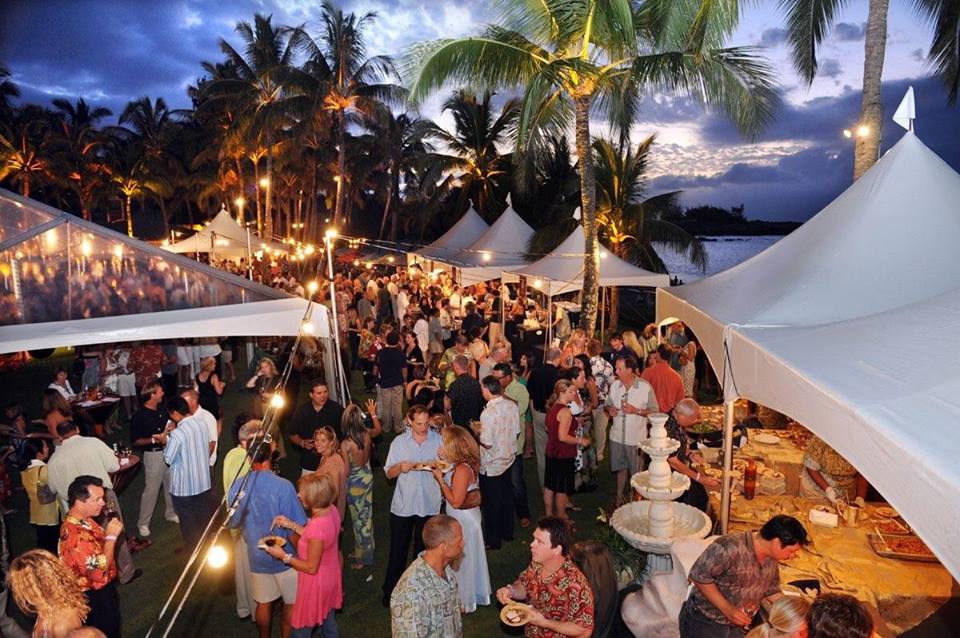
4 min read February 2020 This weekend on Miami Beach there are guaranteed to be three things – food, wine and good times. While this is the recipe for most memorable times had in one of Miami’s top tourist destinations, this weekend in particular is heightened by the annual The Food Network & Cooking Channel South Beach Wine & Food Festival. In most markets, a festival like this would be an outlier as the premier food and beverage event for that year, but Miami is not most markets. The fact is, Miami-Dade is home to an onslaught of premier food and beverage festivities that would make any culinary connoisseur’s mouth water. Invest: explores five of the top foodie festivities in the Miami-Dade region. 

South Beach Seafood Festival  

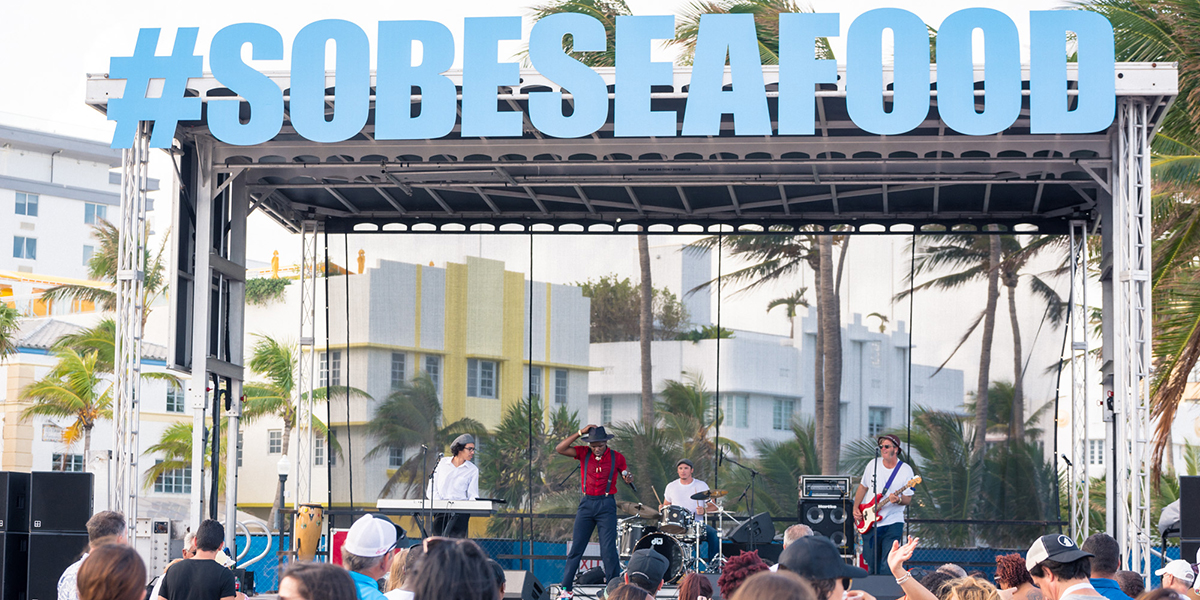
To be considered a Top 5 Speciality Festival by USAToday, listed by Forbes as a Top 5 thing to do in fall and recognized by Travel Channel as the best seafood festival in the United States is no small accomplishment. This four-day festival features three nights of culinary events that lead up to the ultimate seafood festival experience. These preliminary events include an exclusive VIP experience, An Evening at Joe’s, brought to life by food from the historic Joe’s Stone Crab, a cocktail hour-type event called Crabs, Slabs and Cabs featuring Surf N Turf favorites paired with various cabernets, and finally the VIP Chef Showdown, which showcases 14 of the best local chefs cooking up their greatest culinary creations. All of these lead into the big event on the fourth day that spans over four blocks of Miami Beach, features 30 bars, music, culinary demonstrations and enough delicious seafood to please the over 15,000 attendees. This event takes place from Oct. 21-24, 2020. 

For more, visit: https://sobeseafoodfest.com/


Seed Food & Wine Week 

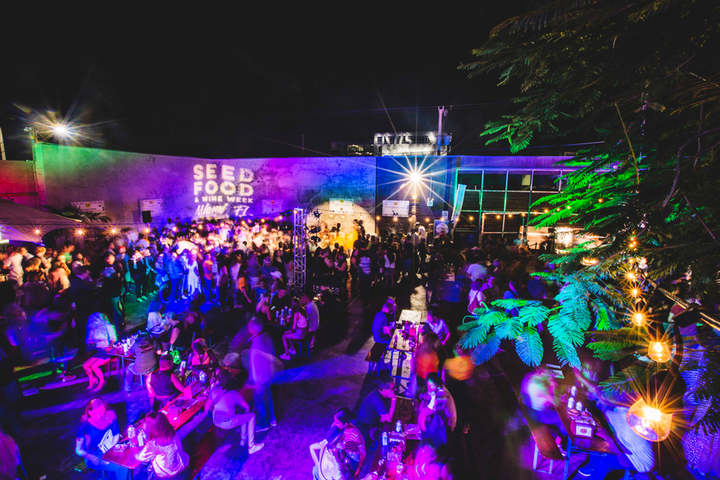
Plant-based diets may not be for everyone, but this four-day event features culinary dishes and experiences that could make even the most devout carnivores consider incorporating more meat-alternatives into their meal plan. Spanning the course of four days, this event touts itself as more of an experience than just a festival as it features a plant-based burger battle, a plant-based pitch off, taco tailgate party, rise and shine yoga experience and meditation, and finally the big event: Seed Festival Day Tasting Village. This vegan-inspired week is also unique in that its events are not centralized and take place in various spots around Miami-Dade, including Wynwood and Downtown Miami. The event runs from Nov. 7-10. 

To learn more, visit: https://www.seedfoodandwine.com/

Doral Food & Wine Festival 

This food and wine festival is going on its fourth year, and while the event has grown significantly since its inception in 2016, this year promises to be bigger, better and even tastier. Over the course of two days, families are encouraged to come out to Doral Central Park and experience live entertainment and live cooking demonstrations. While wine may be in the title, the event is geared toward the entire family, with free entry for kids and an entire area, referred to as the Kids Zone, dedicated to fun activities and games for the little ones. Taking place over March 21 and 22, this year’s event looks to attract over 10,000 people. 

For more, visit: https://doralfoodandwinefestival.com/

South Florida’s Taste of the Nation

This culinary adventure is a one-night experience that is not only delicious and fun, it also supports a great cause. Described as an elegant evening with some of South Florida’s greatest chefs and mixologists, Taste of the Nation offers guests a chance to try food and drinks from over 50 different South-Florida based restaurants and bars. While normally the best parts of these events are the food and drink, it is actually the impact of dollars collected from the night that is most significant as 100% of local proceeds support the No Kid Hungry campaign’s work to bring an end to childhood hunger in Florida. The event takes place the night of May 16, 2020. 

For more information, visit: https://events.nokidhungry.org/events/south-floridas-taste-nation/

The Food Network & Cooking Channel South Beach Wine & Food Festival (SOBEWFF) 

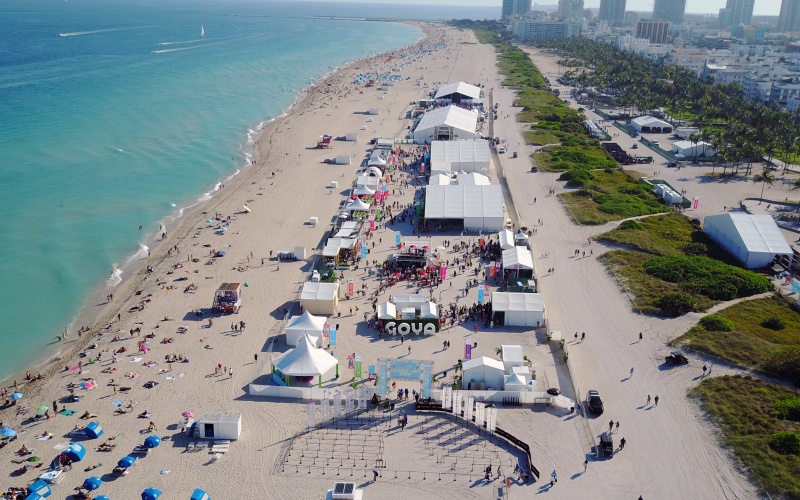
SOBEWFF is a five-day gathering of “who’s who” in the culinary world, over 100 different festival events and over 65,000 people in total attendance. This world-renowned festival has an event for everyone, from the casual food and wine fan to the highest class of food critic. While many of these events could be considered the “big event,” perhaps most well-known is the Goya Foods’ Grand Tasting Village showcasing offerings from more than 50 restaurants and a variety of wines and spirits as well as a closing cooking demonstration by well-known celebrity chef Guy Fieri. The festival is in full swing Feb.19-23. 

To learn more, visit: https://sobewff.org/

Solar: The Ray of Light in Miami’s Clean Energy Bid

Solar: The Ray of Light in Miami’s Clean Energy Bid

By Sara Warden

2 min read October 2019 — This month, youth climate advocates came together around the world to highlight the global climate emergency, and Miami Beach listened. The city declared its own climate emergency in response and vowed to prioritize climate change on its agenda.

“We are so proud of the youth leaders and their allies who worked hard to make this declaration a reality. We hope the city of Miami Beach will continue this leadership trend by taking concrete action to reduce emissions, like transitioning to 100% clean and renewable energy,” Emily Gorman, a representative for environmental group Sierra Club, told the Miami Herald.

The city has dabbled in renewable energy over the years but certain technologies, like wind, are simply not viable. Land is becoming more expensive, meaning there are few options for wind power developers to install turbines in a cost-effective way. Miami Beach has access to the sea, but offshore wind turbines would be vulnerable to hurricane activity off the Gulf Coast, which could ultimately be more costly for the city. Hydro energy has been generated by Florida for decades in the city of Tallahassee, but now solar power undercuts it economically and the city proposed the closure of one of its two plants in 2017 due to inefficiencies.

Now, developers in The Sunshine State, are focusing on the shining beacon of hope for renewable energy policies: solar power. Initial outlay for solar energy in Miami-Dade is still relatively expensive, coming in at between $11,645 and $15,755, equating to around $2.74/W. But Miami’s privileged position means it has on average 248 sunny days per year, compared with the national average of 205, meaning its residents can reap greater rewards from solar power.

Major U.S. utility Florida Power & Light Company (FPL) is taking advantage of the opportunity to transition to renewables by launching the FPL SolarTogether initiative. “Based on the substantial interest and support that we’ve received on this innovative, voluntary and affordable program from such a diverse array of customers, community partners, businesses, local governments and national clean energy advocacy groups, we’re confident that the time is right for this program,” said Eric Silagy, president and CEO of FPL, to Renewable Energy Magazine.

In the largest community solar program nationwide, FPL SolarTogether will expand solar energy access across Florida by investing in the installation of almost 1,500MW of solar energy across 20 solar plants. FPL will offer access to its solar energy at a fixed monthly subscription cost and credits will be added to bills over the life of the plants. The utility expects most customers will receive a higher bill initially, which will reduce over three to five years and a full payback will be seen within seven years. 

The program could generate up to $249 million in net savings for FPL customers, according to the utility. But the main benefit of the program is democratization of access to solar energy, since not all citizens have the resources to install their own solar panels given the still-pricey initial outlay. “FPL SolarTogether is designed to remove many of the financial burdens associated with private solar generating systems while also providing direct savings in the form of bill credits, making it an affordable option for any customer. Participants could also utilize the program to meet state and federal sustainability goals,” said the utility in a press release.


To learn more about our interviewees, visit:

https://www.fpl.com/

https://www.sierraclub.org/


Miami BIDs Put Customer First, Profits Later

Miami BIDs Put Customer First, Profits Later

By Sara Warden

2 min read October 2019 — As commercial real estate evolves and retail stores move online, Miami’s authorities are addressing vacancy rates with an innovative business improvement district (BID) program that unites private business and local store owners to take back Main Street.

A BID is a legal mechanism that has successfully been put in place in Miracle Mile, Coconut Grove, Lincoln Road and Wynwood, and most recently was established in South Miami. The South Miami BID provides a budget of $200,000 annually to provide services to businesses and commercial properties that include “enhanced safety, marketing, advocacy, promotions, and maintenance,” which are provided by the City Commission in addition to basic services.

Lincoln Road is one BID that, rather than focusing on vacancy rates, is focusing on creating a community for the public to attract foot traffic to the area. “I look at Lincoln Road differently,” said Lyle Stern, a member of the Board of the Lincoln Road BID to RE: Miami Beach. “I’m trying to encourage all of us who live in Miami Beach to look at Lincoln Road differently.” He believes that vacancy rates are the concern of individual property owners and that by creating an attractive environment, people will come.

Despite a significant hole being created right in the middle of Lincoln Road by the collapse of shopping giant Forever 21, the BID is planning a $67 million makeover, with Miami Beach authorities contributing to the cost of construction. The private business owners in the area will foot the bill for the promotional events by increasing their own taxes.

The idea behind the BID is not directly to attract investment to a given area, but to nurture the area so that investment comes as an added bonus. The Wynwood BID has taken a look at what the public really wants, and one of its priorities was to re-open the beloved shuttered O Cinema. “O Cinema is a cultural icon in South Florida and a home for independent cinema,” said Albert Garcia, chairman of the Wynwood BID to the Miami Herald. “We were just as blindsided by the news of their closing as everyone else. As a long-time property owner in Wynwood as well as a member of the BID, it was important to me to see how we could keep O Cinema here.”

As the age of e-commerce dawns, BIDs are a way for traditional store owners to tune into the desires of the public, who now want more than just a traditional shopfront. Not only is investment being made in the community, but new business models are emerging that evolve with real demand.

“Nespresso has a very successful store on Lincoln Road,” Stern said to RE: Miami Beach. “As a company they’ve decided they don’t need cafés in the stores. They’re expensive and you have to maintain employees.” Instead, Lincoln Road’s Nespresso is downsizing from 4,500 square feet premises to 2,500 square feet, but staying on the same street, allowing it to maximize its value and provide its customers what they really want.


To learn more about our interviewees, visit:

https://www.southmiamifl.gov/563/Business-Improvement-District-BID

https://lincolnrd.com/lrbid/

https://wynwoodmiami.com/

It’s Go Big or Go Home for Miami’s OZs

It’s Go Big or Go Home for Miami’s OZs

Writer: Sara Warden

2 min read October 2019- When the Opportunity Zones (OZs) were created by the federal government in the 2017 Tax Cuts and Jobs Act, they were focused on 8,764 across the 50 states covering almost 35 million Americans. The program was designed to direct investment to regions with an average poverty rate over 32%, compared with the national average of 17%.

“We anticipate that $100 billion in private capital will be dedicated toward creating jobs and economic development in Opportunity Zones,” said US Treasury Secretary Steve Mnuchin in a press release. “This incentive will foster economic revitalization and promote sustainable economic growth, which was a major goal of the Tax Cuts and Jobs Act.”

Florida is home to 427 of these OZs and Miami-Dade houses 68 of them. “The creation of these new Opportunity Zones provides new investment opportunities for some of Miami’s economically distressed areas,” said Michael Finney, president and CEO of the Miami-Dade Beacon Council, in another press release. “This means greater consideration will be given to investing and providing jobs in areas of the county where they are needed most.”

The program works on the basis of deferral of taxes until either the property is sold or Dec. 31, 2026, whichever comes first. Investors can claim a 15% tax reduction if they invest over the entire 10-year period.

But the program is still new, and many investors are struggling to work out the best way to obtain returns. “Every real estate developer in the country is trying to figure out their Opportunity Zone strategy,” Reid Thomas, principal at NES Financial, told the Miami Herald. “Some are deciding it’s not worth the hassle, (and) that they’re not going to bother doing this kind of development.”

But those that do bet are betting big. Developer Russell Galbut closed a deal for the final piece of acreage from Northeast 29th to 32nd streets, and Northeast Second Avenue to Biscayne Boulevard. The $4.9 million purchase of 2901 Northeast Second Avenue brings Galbut’s total investment in the project to over $37 million. The site will house a major mixed-use development built by Galbut’s company Crescent Heights. It plans to build 800 residential units and use over 600,000 square feet for retail and office space.

Galbut told Miami-based real estate magazine The Real Deal that the OZ incentive was “some of the smartest legislation that has come out of Congress in a long time,” adding that his company is buying properties in all markets across the OZs.

But some investors saw the virtues in the Miami real estate market before the OZs arrived, and now there’s an added bonus to their investments. Developer BH3 invested $60 million in a retail and showroom and the space happened to be placed in one of Miami’s OZs. “The fundamentals, economics, and merits must stand on their own, whereby the tax benefits are purely an added bonus. A bad deal with good tax benefits is still a bad deal,” Greg Freedman, principal and founder of BH3, told the Miami Herald.

Although some are sceptical that the OZs will provide tangible benefits to anyone other than the investors, Neisen Kasdin, managing partner at law firm Akerman LLP, told the Miami Herald the zones are still in their infancy. “At the end of the day, these neighborhoods will benefit the most when people invest money in them,” he said. “Whether it’s a real estate development, or a capital-intensive project or businesses…You have to start with the assumption that investment in neighborhoods [that have] only seen disinvestment is a good thing.”


To learn more about our interviewees, visit their websites: 

https://www.miamigov.com/Home

Miami A Bridge for US-Latam Tech Investment

Miami A Bridge for US-Latam Tech Investment

Writer: Sara Warden

2 min read SEPTEMBER 2019 — It seems that more and more US cities are being labeled tech hubs every day, but Miami-based companies see a unique opportunity in the state that cannot be provided elsewhere. Instead of locking themselves into one market, Miami can provide startups a launch pad into the vast untapped Latin American market, and tech startups are flocking to the city in droves to take advantage of these opportunities.

Possibly the most famous is SoftBank Group, a Japanese investment firm that has set up roots in Miami to gain access to Latin America’s infant venture capital market. SoftBank has pledged $5 billion to the Latin American market, with some of that amount already invested to date. In fact, by the first half of 2019, these kinds of investments in Latin America have almost reached the $2.4 billion invested in all of 2018 – and it could not be done without Miami.

“This is the kind of capital that has never been seen before in Latin America,” Andre Maciel, a managing partner at SoftBank Group told Bloomberg.

About 70% of Miami’s population is composed of Latinos, providing the city with a unique workforce that can capture the attention of untapped Latin American entrepreneurs from a US base. “Part of our secret sauce is that we’re a city built by immigrants. Miami is a very young city, but we have the grit and resiliency of those people. Miami is a startup in and of itself. If you’re willing to roll up your sleeves, you can make it here,” Felice Gorordo, the CEO of eMerge Americas told Forbes.

But Miami is not just a base for investment in other regions. It also has the credentials that make it one of the best places to invest in the US. It comes seventh nationally for venture capital investments and in the first half of 2019 alone, around $1.54 billion was invested in South Florida tech companies.

SoftBank also made a multimillion-dollar investment at the end of 2018 in ParkJockey, making the company Miami’s first unicorn and one of the most valuable parking companies in the world. Building on the sharing economy model, ParkJockey allows landlords to rent parking spaces to large-scale companies like Uber and Lyft. The reception to this technology says “a lot about the ability to build a business in Miami and take it to significant size,” founder Ari Ojalvo told the Miami Herald.

“Miami has a tremendous tech talent pool, and we’re fortunate to be located in this burgeoning tech market,” said Taunia Kipp, says Executive Vice President of Corporate Marketing & Communications at Kaseya, an IT management software company, on Refresh Miami.

Kaseya is one of the most recent success stories for a Miami-based tech firm. Last month, the company attracted a $500 million investment from San Francisco-based investment firm TPG. Kaseya CEO Fred Voccola said in a press conference that the Miami growth will not stop as the company heads for an IPO within the year. “We want to open up people’s eyes to the talent that is here—and that it can be scaled,” Voccola said.

Another IPO that’s on the cards could be Buenos Aires-headquartered firm Technisys. In May, it closed a $50 million funding round. And when it wanted to establish a footprint in the United States, Miguel Santos, one of the three founders told Forbes that there was no question that Miami should be the location. “We are here to stay and the plans are big. The next stage is probably a public offering in say, three to four years,” he said.

To learn more about our interviewees, visit:

https://group.softbank/en/

https://www.technisys.com/

https://www.kaseya.com/

https://www.parkjockey.com/

https://www.emergeamericas.com/insights/