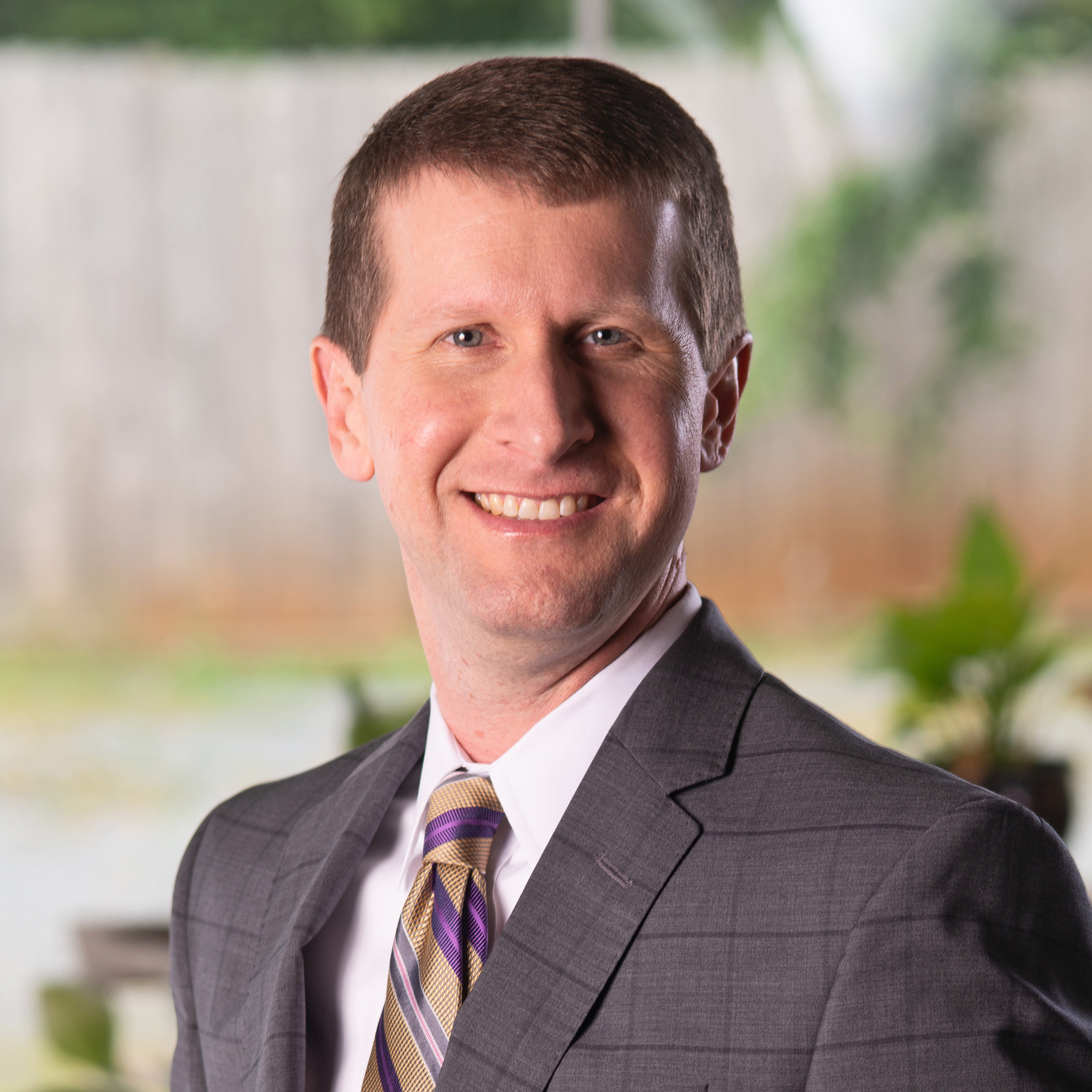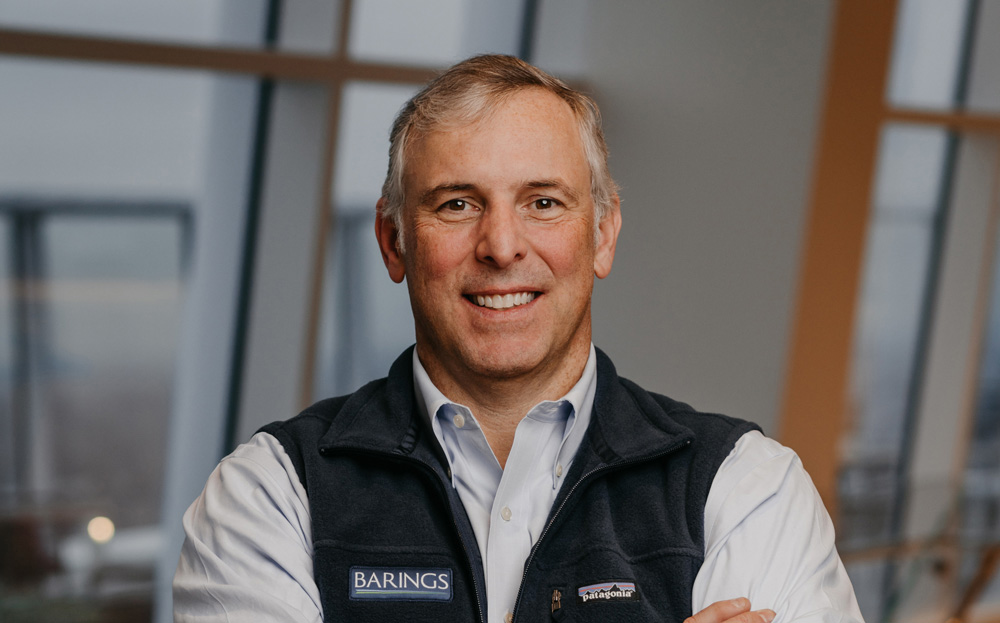
Spotlight On: Tom Finke, Chairman and CEO, Barings

Spotlight On: Tom Finke, Chairman and CEO, Barings

By: Felipe Rivas

2 min read May 2020 Charlotte is strongly positioned to capitalize on the investment diversification push from both local and foreign investors to keep its growth sustainable. Tom Finke, chairman and CEO of Barings, walks Invest: through the key features and challenges of the Queen City’s financial landscape.


What is your assessment of the Charlotte market?

Charlotte is a great story. It has grown dramatically since the 1980s, fueled by the growth of the two big banks headquartered here at that time, as well as Duke Energy. It also enabled the expansion of the city’s hospital system and other important institutions, along with other companies growing contiguous to that ecosystem. Today, companies such as Honeywell have chosen Charlotte as their corporate HQ, along with a number of business startups, not necessarily tied to the financial industry but related to either the energy industry, the healthcare sector, education and high tech, to name a few. The Queen City benefits from the fact that through its growth was launched by the financial sector, over the years it has become much more diversified, making it a highly attractive city to any company and industry looking to grow.


What challenges are looming in Charlotte’s financial sector?

Asset management, like the rest of the financial sector, is dealing with the ongoing economic and market crisis stemming from the COVID-19 pandemic. It is hard to predict the long-term effects and trends. At Barings, we are primarily focused on the short-term situation, managing risk appropriately for our clients through this crisis. It is likely that the financial markets will change after the crisis subsides, much like they did after the 2008 financial crisis, which ushered in an unprecedented decade of lower rates. The macroeconomic picture remains uncertain in terms of the downturn’s length, albeit clearly severe. Looking ahead, investment decisions will be impacted not only by macroeconomic factors but also by understanding which businesses will survive, grow and thrive, which among them will need restructuring, with inherent opportunities to invest on a distress basis and how it affects different asset classes.


How have tax reform and low tax rates impacted your side of the business?

The most recent tax reform enabled corporations to bring capital stranded overseas back into the United States, leading to reinvestments in the home market. It had a positive stimulus effect in terms of growth rates coming into 4Q19, contributing to the strength of the U.S. economy. Over the longer term, lower rates are also an indication that the Fed and other central banks are set on stabilizing inflation at a reasonable level, tangentially worried about deflation. Rates are going to remain low in part because there is a lot of stimulus, both fiscal and monetary, injected into the crisis situation.


How would you rate Charlotte’s attractiveness for national and foreign companies?

Charlotte has been on the radar of several international companies for a long time. The large number of multinational European firms that have operations in Charlotte or nearby in the general region between western North Carolina and into South Carolina, demonstrates that it is definitely a place that attracts business. The next level is to not only continue to attract growing businesses such as technology companies, but also attract Foreign Direct Investment (FDI). We work with several asset owners, such as sovereign wealth funds and foreign pensions. We direct our discussions toward Charlotte and its inherent opportunities, whether it is investing in real estate or in local companies. Charlotte is in a strong position to continue to attract global investment. Since the financial crisis of 2008, the investment market has further globalized. Several investors, such as the superannuation funds in Australia, are investing in U.S. markets. This diversification push from home to foreign markets is a sizable opportunity for cities such as Charlotte to tap into. 


What strikes you most about the growth of Charlotte’s real estate market?

Barings was the first company to break ground on a new office building post-crisis in Charlotte in 2014. We have seen a significant number of new developments up and down Stonewall Street and other parts of the city since then. It primarily reflects demand coming from within and outside of Charlotte. Coming out of the financial crisis, developers have shown more discipline around ensuring there is demand to support specific types of development.


What impact do you anticipate COVID-19 will have on the economy?

The virus outbreak is unlike anything we have experienced in our lives. It is indiscriminately impacting communities across the world. From a business perspective, we anticipate a high level of defaults and bankruptcies, as well as companies that may thrive in terms of the demand for their products and services. Anytime we go through a significant recession of this sort, there is an initial shock that we are still reeling from, as evidenced by overall economic weakness and the erratic stock market. 


What is your outlook for 2020?

It will take a period of time for economic growth to get back to where it was in the United States and globally, well beyond 2020. It is a question about the severity and the length of the impact on the economy of this shutdown state and how we start getting out of it so companies can again start building revenue. 


To learn more, visit: https://www.barings.com/us/guest

 

2020 Hurricane season in the face of coronavirus

2020 Hurricane season in the face of coronavirus

By: Felipe Rivas

2 min read May 2020—A few days shy of the official start of the 2020 hurricane season and the Southeast has already seen two named tropical storms. Tropical Storm Arthur brought inclement weather to the Carolinas a full two weeks before the June 1 start date and on Wednesday Tropical Storm Bertha formed quickly in the morning and drenched South Carolina before dissipating to a depression, all in a day’s notice. 


As the country reels from the devastating effects of the coronavirus, states on the East Coast can expect an above-normal Atlantic hurricane season, according to forecasters with the National Oceanic and Atmospheric Administration’s Climate Prediction Center, a division of the National Weather Service. States like Georgia, Florida and the Carolinas can expect a 60 percent chance of having an above-normal hurricane season with a likelihood of three to six major hurricanes making landfall. The Atlantic hurricane season runs from June 1 to Nov. 30, peaking in August and September.

The 2020 Atlantic hurricane season is expected to have 13 to 19 named storms, six to 10 hurricanes, and three to six major hurricanes, according to the National Weather Service. As states juggle coronavirus-related safety concerns with the reopening of their economies, state leaders urge residents to begin their preparation and evacuation plans early while emphasizing the importance of hygiene and keeping in mind social distancing measures. “This early season storm reminds us that we always need to be prepared for severe weather,” North Carolina Emergency Management Director Mike Sprayberry said during the formation of Tropical Storm Arthur, which set off tropical storm warnings along the North Carolina coast from Surf City north to Duck. “The time to prepare is now,” Sprayberry said.  

COVID-19 may put a damper on the way residents traditionally prepare for the months-long season. “Social distancing and other CDC guidance to keep you safe from COVID-19 may impact the disaster preparedness plan you had in place, including what is in your go-kit, evacuation routes, shelters and more. With tornado season at its peak, hurricane season around the corner, and flooding, earthquakes and wildfires a risk year-round, it is time to revise and adjust your emergency plan now,” said Carlos Castillo, acting deputy administrator for resilience at FEMA, according to the National Weather Service. “Natural disasters won’t wait, so I encourage you to keep COVID-19 in mind when revising or making your plan for you and your loved ones, and don’t forget your pets.”

In Florida, a magnet for constant hurricane activity throughout the season, leaders are strategizing on how to contain the spread of COVID-19 in the midst of a hurricane threat.      “We don’t know how the virus is going to react as we move into these various stages,”Gov. Ron DeSantis said at a news conference in Sarasota, according to the U.S News & World Report.  “We don’t know what it’s going to look like a month from now, three months from now, but we have to assume that it’s going to be with us in some capacity, so how do you deal with hurricane issues?” he said. 

Days before the official start to hurricane season, Florida has reported more than 52,000 cases of the coronavirus and more than 2,300 deaths, according to the Johns Hopkins University & Medicine’s Coronavirus Resource Center. “This virus really thrives and transmits when you have close sustained contact with people inside an enclosed environment,” DeSantis said. “As you’re looking at sheltering for a hurricane, you have to keep that in mind. If you pile people into a place, under normal circumstances that may be fine, but that would potentially allow the virus to really spread if somebody is in fact infected,” he said.  

Florida leaders are working with the Federal Emergency Management Agency on changes to sheltering and evacuation procedures to account for the coronavirus implications. Florida emergency management Director Jared Moskowitz said those changes could include shelters that only accept people infected with the coronavirus, or shelter in place orders depending on the strength of the building and magnitude of the storm. “We’re going to do more non-congregate sheltering instead of mass congregate sheltering,” Moskowitz said.

In similar fashion, Georgia leaders and the Georgia Emergency Management Agency urged all Georgians to prepare and follow activity in the tropics. Tropical Storm Arthur did not cause too much impact as it curved away from the Peach State while traveling through the Atlantic Ocean. Though unfazed by Tropical Storm Arthur, Georgia has dealt with severe weather conditions since the start of the spring. In March and April, Georgia experienced heavy rainfall and severe flooding in more than 100 counties while also dealing with the aftermath of the coronavirus. In March, Gov. Brian Kemp signed an executive order declaring a state of emergency for 120 Georgia counties south of I-20. “The state is working to ensure counties impacted by flooding across Georgia have access to all the resources necessary to respond,” Kemp said at the time. “I encourage residents to listen to their local officials and news sources and heed the directions of their local emergency management officials,” he said. 

To learn more, visit: 

https://www.noaa.gov/media-release/busy-atlantic-hurricane-season-predicted-for-2020

ReadyNC.org

https://gema.georgia.gov/

https://floridadisaster.org/

https://www.fema.gov/media-library-data/1589997234798-adb5ce5cb98a7a89e3e1800becf0eb65/2020_Hurricane_Pandemic_Plan.pdf


Immigrants have another worry on top of COVID-19

Immigrants have another worry on top of COVID-19

By: Felipe Rivas

2 min read April 2020As the COVID-19 virus spreads from state to state, one demographic is experiencing a double layer of fear. Immigrants in the country not only worry about contracting the virus, they must also contend with the public charge rule. In February, as the coronavirus crept its way to North America, policy changes to the public charge rule made it easier for the U.S. government to deny Green Cards on a range of factors related to public benefits. 

Public charge is a term used to describe an individual seeking legal immigrant status who cannot support himself or herself through employment, assets, or family members, and instead depends on government benefits and assistance programs. While the public charge rule has always been part of immigration mandates to obtain a Green Card, it used to be based on past receipt of benefits. However, this February, after the U.S. Supreme Court ruled 5-4 in favor of the Trump administration, the law will look at the future need of further benefits to determine the status of illegal immigrants in the country. The changes to public charge allow immigrant caseworkers to deem a person a public charge if they believe they are likely to need government assistance in the future.

“There are numerous immigration policy changes taking place across the nation. The most recent is in regard to public charge, in that anyone who applies for a residency or Green Card is going to have to prove that they are not likely to be a public charge to the United States,” Brown Immigrant Law Partner Erin Brown told Invest: Orlando.“That requires an in-depth inquiry into the person’s financial background and opportunity to earn.”  Immigration caseworkers will look at factors such as age, income, and English proficiency, among others to determine if immigrants are likely to use public benefits. 

The impact of the coronavirus has already laid off millions of U.S residents across sectors, many of whom will likely apply to different unemployment and government assistance programs. For immigrants without legal status, the changes to the public charge rule will breed further uncertainty. However,  United States Citizenship and Immigration Services encourages all those, including aliens, with symptoms that resemble COVID-19 to seek necessary medical treatment or preventive services. Such treatment or preventive services will not negatively affect any alien as part of a future public charge analysis, the agency wrote on its website. 

To learn more, visit:

https://www.brownimmigrationfl.com/

https://www.uscis.gov/news/fact-sheets/public-charge-fact-sheet

Spotlight On: Kevin Poet, Charlotte Vice President of Operations, Siemens

Spotlight On: Kevin Poet, Charlotte Vice President of Operations, Siemens

By: Felipe Rivas

2 min read AprilCompanies across sectors are fervently working to reduce emissions, switch to renewable energies and use technology to create a cleaner, greener future for the next generations. The same is true for companies directly involved in the energy industry. This year, Siemens AG. announced it will create a new company, Siemens Energy, focusing on conventional power, oil and gas, power transmission and renewable energy to position itself for the future of the industry. In an interview with Invest: Charlotte, Vice President of Operations Kevin Poet talks about the decision to create the new power and gas company, some of the challenges and opportunities in the energy industry and the near-term outlook for the industry. One of the challenges is balance, as it relates to balancing the needs and the drive to go as fast as we can to clean energy, with the need to continue to supply the demand today with the technology available

 What will be the focus of Siemens Energy?

The operations in Charlotte and Winston-Salem will be part of the new company. The largest manufacturing site in North America is in Charlotte and gives us the opportunity to focus on growing the business in new areas and markets that we have not traditionally been in. Our legacy work at the Charlotte plant is primarily large-scale, fossil-power generating equipment, and that market and demand is going down, mainly due to renewables and energy efficiency, as well as the push for decentralization and new technologies. We believe this trend will continue, and for us to thrive in a new market we have to get into different businesses and expand our portfolio. In the short term, we are looking at smaller, industrial-sized units that companies use to decentralize their power needs. In the future, we will see these units move toward hydrogen-burning technology, and potentially into new businesses altogether in the mobility, or renewables and wind areas. As a manufacturing center, we have the installed capability necessary to manufacture any of the components, products, and systems along the whole value stream. Our growth initiative aims to reshape what the future looks like as far as engineering and manufacturing.


What will the future of clean energy look like?

One of the challenges is balance, as it relates to balancing the needs and the drive to go as fast as we can to clean energy, with the need to continue to supply the demand today with the technology available today. For Siemens, we are the only site in North America that can service the large, traditional generating units that are in power plants. It will be critical for our business going forward, and for our customers, to continue to supply components and provide service for those units until they are transitioned into a cleaner form of energy, or retired altogether. Investment in the energy business is a huge challenge because of the size and scope, the length of the investment and payback. Typically, investing in a power plant is a 20- to 30-year investment. The changing landscape around technology, and what the future of energy will look like, and the volatility when it comes to policy, has a lot of people nervous about making large investments. There is a tug of war between the need to invest and innovate and concern with what the future could look like.   


How can companies take advantage of the talent based in the Charlotte region?

The Charlotte region has a developed ecosystem around providing talent. The university system in the region is superb. There is an abundance of opportunities for university partnerships in research, development and workforce training. For example, we do our apprenticeship program through Central Piedmont Community College. They helped develop the curriculum and advised on the training courses, length of time and certifications. They really helped put together a good structured approach to the needs we were trying to fill, and this is happening with other universities across the region as well. For companies looking to relocate to the region, those kinds of available relationships are a selling point.


To learn more about our interviewee, visit: https://new.siemens.com/us/en/company/siemens-in-the-usa/charlotte.html


Face off: How Concord is planning for sustained growth

Face off: How Concord is planning for sustained growth

By: Felipe Rivas

2 min read March 2020The city of Concord is setting its sights on securing high-quality life standards for its residents via a three-pronged approach: diversification, infrastructure and affordable housing. In an interview with Invest: Charlotte, Concord Mayor William Dusch and City Manager Lloyd Payne talk about the city’s growth, infrastructure developments and its ambitious plans for the future.

William Dusch

How is housing and development growing?

William Dusch: We have had a tremendous amount of growth in the housing sector, especially with apartments. The challenge lies in working with the school system to ensure the population is evenly distributed in a growing community. We have a relatively small Downtown, but we are beginning to grow. The county is building a new courthouse, our main street, Union Street, is becoming a plaza, and sidewalks are being widened to provide a better outdoor dining and shopping experience. The 1926 Hotel Concord was completely refurbished to create 40 market-rate apartments. Loft 29 is just behind it, providing about 25 more apartments Downtown. Right next door, 166 apartments are in the planning process, with 10 percent being affordable housing. An old cotton mill is being converted into 144 affordable homes where we will take the profit and roll it back into development. We are working on tying neighborhoods together by building new parks and walkways. Our goal is to connect the city without residents having to get into a car.

Lloyd Payne: Through our housing authority, we have developed and either sold or leased entire neighborhoods for several years. We are determined to take it to another level. We want to ramp up our yearly house construction capacity. In 2019, we created a nonprofit entity under the guise of affordable housing to open the city to a wider array of funding options from the private sector. For 2020, I will request the city council to obligate from this point forward that a portion of our tax funds be set aside to build affordable housing, whether it be apartments, townhomes or single-family homes. We want to build additional neighborhoods throughout the city, not just in low to moderate income areas. The main goal is to provide workforce housing. It is designed to consider young men and women with a fresh four-year degree in hand who come back here with a modest income and are looking for an opportunity to start building equity and have something they can call their own. We want to provide housing that accommodates everyone’s needs. 

Lloyd Payne

What infrastructure developments are laying the groundwork for Concord’s future growth?

Dusch: There are over 1,600 acres of industrial land available that has an industrial water sewer and power coming in from Duke Energy and Concord Electric. It’s also bordered by two four-lane highways, so it’s a perfect location. There has been a lot of interest from high-quality operations looking to base a potential headquarters here. We also have Concord-Padgett Regional Airport, and in 2013 Allegiant airlines started flying out of there. Last year, they served six locations across Florida and New Orleans, making over 1,500 flights. The airport is planning on expanding again because they have been so pleased with all of the business they have received. Nascar also bases a lot of their planes there, so it is a viable and growing airport. Allegiant Air has just announced that a new operation base will be built in Concord. Concord Mills is the largest tourist attraction in North Carolina. It attracted over 12 million visitors last year, which was even more than the Smoky Mountains. Since there is such a high volume of traffic in Concord Mills, we have been working with the NCDOT to build a flyover to more easily reach the location off the interstate. They started the construction just after Christmas this year. Just down the road from Concord Mills is the Charlotte Motor Speedway, located in Concord, which is another large Nascar facility.

Payne: In North Carolina, all roads are either owned by the city or owned by the state, meaning counties have nothing to do with roads and cannot tackle congestion issues. The same applies to schools, with the difference that they fall under the control of the county. This does not prevent us from establishing functional coordination mechanisms with involved parties to improve our roads and schools. We have also consolidated a great working relationship with our business community, including the Chamber of Commerce and Economic Development. We also work with large landowners, especially those with undeveloped assets. We encourage and entertain public-private partnerships (PPPs), whether they are for infrastructure, development or speculative buildings. We are all about working with others, knowing that we do not operate in a vacuum ourselves. It takes others in the private, public and nonprofit spheres. 

What industries or companies are you targeting to introduce to the region?

Dusch: We are working hard to attract higher-tech, higher-paying jobs. We are incentivizing those kinds of operations to move here, and I have been closely talking with large companies as they begin to show more interest. Within the city of Concord, we have run over 100 miles of high-speed fiber, connecting all of our buildings over the past 15 years. To watch the city go from having 100 megabits to 100 gigabytes is really amazing. Other entities have been putting in their fiber infrastructure, especially with the introduction of 5G, which will be coming in a matter of time.

Payne: We work with Rowan-Cabarrus Community College, the mainstay for the lion’s share of our workforce development. It specializes in tailored programs on a whim if need be, based on the needs of the corporate landscape. The state of North Carolina has been generous in providing funding to accommodate those training needs.

To learn more about our interviewees, visit: https://www.concordnc.gov/

Spotlight On:  Bill Simerville, Managing Director, Foundry Commercial

Spotlight On: Bill Simerville, Managing Director, Foundry Commercial

By: Felipe Rivas

2 min read March 2020 — Charlotte’s construction industry has boomed in the last few years as evidenced by the cranes that adorn the Queen City’s skyline and the region’s budding headquarter relocation culture. Though capital is a constant in the region, construction firms are pressed to find deals and subcontractors in a tight labor market. In an interview with Invest: Charlotte, Foundry Commercial Managing Director Bill Simerville talks about the challenges facing the region’s construction industry and the growth of Charlotte’s industrial real estate market. 


How has the industrial real estate sector evolved in the last few years?

WestPark 85 is an example of a development and investment deal. The site was selected around 2008, before the ramp-up of the industrial frenzy that we find ourselves in now. We partnered with Principal Financial and acquired the land from MetLife. The industrial market, and industrial capital appetite, has moved to the Southeast, and particularly to the Charlotte region. WestPark 85 is close to I-85 and I-485, as well as the airport, which gets capital and tenants excited about the location. That capital has poured into Charlotte. There are more development deals and projects in the pipeline than we have seen in years. With the labor markets the way they have been, we are seeing Charlotte turn into a regional distribution center, primarily because of the intersection of I-77 and I-85. You can get to a large percentage of the U.S. population in a day’s drive because of proximity and population concentration. Labor is tight in markets like Atlanta, and as a result, many people are moving up the I-85 corridor. This corridor sits between Raleigh and Atlanta and is called the “mega corridor.” Capital, jobs, people, employers, talent, manufacturers — everyone wants to be here.    


What are some challenges facing Charlotte’s business landscape?

The “Bathroom Bill” hurt company relocation in the area. There is no telling where we would be if it were not for that. I think that we have made great strides with our incentive programs. We have to continue to pay attention to infrastructure and continue to diversify our employment base. Our infrastructure is our biggest challenge, in my opinion. Commute times are getting longer, and property taxes are now similar to those in bigger markets. 


How are developers navigating the rising costs and a tight labor market?

At one point, we had an unsustainable demand for construction services, both commercial and residential. We had rising labor and material prices. The initial talk of tariffs, and the spike in steel and concrete prices, made new construction very difficult to price. That has now stabilized, and even come back a little bit. However, the labor has not. Fortunately, in the same way that capital has flocked to Charlotte, so has everyone else looking for work, and that is across the board, virtually in all trades. The new general contractors that show up and do not bring subcontractors with them are contributing to the problem. They are aggressively pricing projects based on being able to hire subcontractors that they do not have relationships with, and winning bids and then re-trading them or not being able to execute. This erodes confidence. Then there are the new-to-market general contractors that show up with subcontractors and will complete a project quickly. It is similar to 2007-2008, when the residential housing boom was at its peak and out-of-market subcontractors caused our workforce to spike by tens of thousands of people to perform those trades. When the projects stopped, they all left to find work elsewhere, and it took a long time to get them back. We are there again. The last time it was just residential, now it is residential and commercial. We have more capital, more vendors, and more competition now. But the fundamentals have never been as sound. Lenders remain disciplined. We are not looking at see-through office buildings. It is harder to get deals done and there is a lot of competition, but I have never been as bullish on Charlotte as I am now.    


To learn more about our interviewee, visit: https://www.foundrycommercial.com/


Spotlight On: Richard Battle, Shareholder, Elliott Davis

Spotlight On: Richard Battle, Shareholder, Elliott Davis

By: Felipe Rivas

2 min read March 2020—Technology and the changing economic landscape is forcing accounting firms to look beyond traditional accounting solutions for their clients. Rather than focusing on products and conventional solutions, customized client experiences drive the success for accounting firms and the clients they advise. In Charlotte, Elliott Davis has the same technical experience and capabilities as the larger, national firms, said shareholder Richard Battle. The middle market is the firm’s sweet spot and where it wants to be, Battle said. In an interview with Invest: Charlotte, Battle highlights the impact of tax reform on the firm’s clients, the importance of providing exceptional customer experience, and the local interest in Opportunity Zones.     


How has the accounting landscape evolved in the last few years?

The biggest challenge accounting firms experience is staying relevant and on the cutting edge. The landscape is changing quickly in terms of what our customers want. Everything is happening at an accelerated pace. Being really in tune with our customers is important for us. We want to provide an exceptional customer experience, not just products and solutions, but an overall experience. Implementing transformational change in our culture and our people will allow us to provide our customers with more than just the traditional accounting and tax services.

What is Elliott Davis’ competitive advantage?

Our value proposition for our customers is that they receive a tailored experience, with deep  relationships that look to add value to their businesses. We go beyond traditional accounting solutions. It is more about understanding our customers’ businesses as a whole and providing solutions to get them where they want to be. Our technical capabilities and service offerings match that of the large, national firms. The middle market is our sweet spot and where we want to be. We know how to serve those customers very well.   

How is Elliott Davis adapting to technology innovation?

Technology is improving and disrupting at the same time and it is only going to increase. We are really focused on this and the change management of integrating new technologies. We are changing service offerings to our clients based on these advancements. We are integrating these changes in how we do business everyday. But probably the biggest change outside of that is retraining and resetting the behavioral expectations of our employees. Our big focus is changing behavior to get employees more focused on advisory services. There is more information at our fingertips, which allows us to effectively provide solutions and advise our clients. This has been the biggest disruption as we hire and train different skill sets, but it is also a big opportunity for us, and accounting firms in general, as we think about how we will operate heading into the future.        

What impact has tax reform had on your customers?

Taxes are a big part of any business. The tax reform bill was a huge disruptor in how service providers deliver solutions to customers. It forced us to retool ourselves and how we advise our customers. We work with companies with both domestic and international operations. Because of this, we are seeing customers make different decisions. Opportunity Zones, FDII, GILTI, expanded capital investment depreciation, among others, are examples of new provisions that companies are analyzing and keeping in mind as they make decisions. Certain operational and financial decisions are being made slightly differently because of the new provisions.       


What impact have Opportunity Zones had on the region?

Our firm is working closely with individuals and companies looking to push Opportunity Zones forward. We have experts who are well-versed in the Opportunity Zone provisions. There is a lot of interest and intrigue about them. We are seeing some investments being made in Opportunity Zones that likely would not have been made without the new provisions. We are seeing some increased activity in this arena and would expect this to continue. For example, final regulations came out in December that provided more clarity on the ins and outs of Opportunity Zones and I think we will continue to see piqued interest in them.    

To learn more about our interviewees, visit: https://www.elliottdavis.com/


Spotlight On: Darryl Dewberry, CEO, The Spectrum Companies

Spotlight On: Darryl Dewberry, CEO, The Spectrum Companies

By: Felipe Rivas

2 min read March 2020 Charlotte has recently become the new headquarters for several national corporations, with tech giant Honeywell and online lender Lending Tree among those moving into the city. Goodwill on the part of the city’s officials and private sector leaders has allowed the city to promote itself more aggressively in recent years. In an interview with Invest: Charlotte, The Spectrum Companies CEO Darryl Dewberry talks about infrastructure challenges and reimagining affordable housing to make it happen.

What is making Charlotte a more attractive city for company relocations?

Over the last few years, several elements have come together to make Charlotte an even more attractive city to live and work and to help promote Charlotte in a more powerful way that includes surrounding counties as one unified region. The Charlotte Regional Business Alliance brings the region together in a new way from an economic standpoint. Charlotte Center City Partners has made changes that expanded its reach outside the CBD to both the south and north. The latest game-changer was the city creating a group headed by Tracy Dodson as an assistant city manager to focus on coordinating the private and public sectors in the recruitment of new companies to our city. 


How do you work the mixture of new-from-scratch to refurbishing older structures when looking at one of your projects?

It depends on where you are. Charlotte is not blessed with a lot of what I call the “brick and beam” stock, those older industrial buildings such as in south of Market in San Francisco that have been reimagined without being torn down. Charlotte’s South End has some of those authentic buildings, but most of what we’ve had to do as a community is create that. It takes a lot of imagination and a commitment to quality, but we are creating environments that have a soul, even without the benefit of those original brick-and-beam buildings. And while this poses some unique challenges, we’ve been successful in developing mixed-use neighborhoods and projects that have a great energy and synergy that attracts people and companies. 

Spectrum is in the mixed-use, multifamily residential and office business. We also do some hospitality. What we have found to be most powerful is bringing together multiple uses such as hospitality, office, retail, multifamily and other combinations. It makes it more complex, and it takes longer, but if you do it right and create synergies, you create soul. The projects change lives by creating special places, which is the mission behind everything we do.


What strategies are being put in place in the city to promote affordable housing?

We need a more comprehensive plan that brings together the public and private sectors locally and at the state level to address our critical lack of affordable housing. We’ve been talking as a community about building 300 truly affordable housing units a year, but we need more supply than that. The public-private effort that has raised more than $100 million for affordable housing is a good start, but it is not going to go that far.


What challenges could Charlotte start facing as it continues to grow?

Charlotte has to make sure it does not become complacent. We have transformed our public sector, adding a lot more perspectives than we had 10 years ago. It causes some friction, but overall, everybody works together really well. There is a lot of collaboration and different perspectives coming together as the community becomes more diverse, and this is producing ideas and developments that are more dynamic and attractive long term.

One of our biggest challenges is to make sure that we have the infrastructure in place: water, sewer service, electricity, and services in general. That is an area where our community has done a great job relative to competitor locations.

Another challenge, on a regional basis, is transportation. People talk about affordable housing, which is a serious need in every community, but you have to be able to get people to and from their jobs as well. We really need to step on the accelerator on developing the east-west light rail Silver Line, which would dramatically increase access to jobs. We also want to make sure that we continue to invest in our airport, which continues to be one of Charlotte’s primary economic drivers because it can easily take people anywhere in the world. 


To learn more about our interviewee, visit: https://www.spectrumcos.com/


Coronavirus: Gov. Roy Cooper declares state of emergency

Coronavirus: Gov. Roy Cooper declares state of emergency

By: Felipe Rivas

2 min read March 2020 — There are now seven confirmed coronavirus cases in North Carolina, prompting Gov. Roy Cooper to declare a state of emergency as leaders and health officials deal with the coronavirus outbreak. Of the seven people who have tested positive for COVID-19, six are from Wake County and one is from Chatham County, according to health officials. The declaration activates the Emergency Operations Center to facilitate the purchase of medical supplies, protect consumers from price gouging, and increase county health departments’ access to state funds. 

“The health and safety of North Carolinians is our top priority. We are taking the necessary steps to ensure that North Carolina is prepared and responding to this virus, and this order helps us do that,” Cooper said in a press release. “Though we are still in the early stages in North Carolina, time is a valuable resource and we must work together to slow the spread while we can.”

There are 120,944 global COVID-19 cases as of Wednesday morning, with 1,039 cases reported in the United States, according to the Center for Systems Science and Engineering (CSSE) at Johns Hopkins University. However, at this time, the risk to the general public in North Carolina is low, Mecklenburg County reported. 

As of Wednesday, Charlotte-Mecklenburg Schools is suspending all travel. The travel limitations apply to district-sponsored trips of any kind for staff or students. “The safety and care of our school family is my top priority as superintendent,” said CMS Superintendent Earnest Winston in a press release. “In situations like these, we come to a deeper understanding of how closely connected we are, and I thank you for your help in our efforts to be prepared.” 

Cleaning standards are being reinforced at schools and office buildings, while families are encouraged to keep children at home if they are sick, the school system reported. 

Similarly, American Airlines, the main carrier at Charlotte Douglas International Airport, also implemented travel limitations, cutting domestic and international flights due to decreased travel demand following the proliferation of COVID-19 cases globally. American Airlines will reduce domestic capacity in April by 7.5 percent and reduce international capacity for the summer peak by 10 percent, including a 55 percent reduction in trans-Pacific capacity. The airline is also suspending flights from CLT to Rome (FCO) and Milan (MXP), as there are over 10,000 confirmed COVID-19 cases in Italy, according to the Center for Systems Science and Engineering. 


To learn more, visit:

 https://www.mecknc.gov/news/Pages/Update-on-Novel-Coronavirus.aspx

https://governor.nc.gov/news/governor-cooper-declares-state-emergency-respond-coronavirus-covid-19

https://www.arcgis.com/apps/opsdashboard/index.html#/bda7594740fd40299423467b48e9ecf6

http://news.aa.com/news/news-details/2020/American-Airlines-Update-on-China-Flights-OPS-DIS/default.aspx