Spotlight On:Bruce Cohen, CEO, OrthoCarolina

Spotlight On:Bruce Cohen, CEO, OrthoCarolina

By: Felipe Rivas

2 min read March 2020 Shifting from the traditional fee-for-service environment prevalent in the U.S. healthcare system to value-based care programs requires innovative processes and outside-the-box thinking, all to the benefit of the patient. Bruce Cohen, CEO of OrthoCarolina, shares how the company is spearheading this transition.

What are the drivers of OrthoCarolina’s success and what does that entail for 2020?

OrthoCarolina is a large, independent musculoskeletal group. Our geography stretches outside of Charlotte, all the way up into the Piedmont Triad and Winston-Salem, including Hickory, Shelby and Laurinburg, with our hub in Charlotte. What makes us different is that we are on the cutting edge, embracing value-based care, seeking to lower care costs for our patients, getting them to the right facilities and providers. Our No. 1 goal is to increase access. Historically, healthcare has lacked transparency, leading to poor access and communication and resulting in high costs. We had close to a million patient visits in 2019. OrthoCarolina has 40 locations, including offices, physical and occupational therapy. We are also involved in outpatient surgery centers, which are critical for orthopedic care. 


How is OrthoCarolina bolstering accessibility from a business standpoint?

The transition from the traditional fee-for-service environment into an innovative, outside-the-box, value-based care program is complex. Physicians are resistant to change so empowering and engaging them, promoting the fact that this transition comes out of a true necessity and obligation is a lengthy process. We are on the forefront at the national level in that regard. The first step is to educate people that this new option translates into better care and better access, providing different choices for our patients. We have to look at our patients as consumers, inject transparency over treatment costs and inform them what their options are. Wait times at doctors’ offices or hospitals that go for hours on end, for instance, are no longer acceptable. The challenge is to provide quality care and service without the patients feeling like a commodity or that they are on an assembly line. We developed a set of benchmarks relating to patient satisfaction, which we published online and internally so our doctors know where they stand.


How can your success move to the larger healthcare systems?

North Carolina is a Certificate of Need (CON) state, which has attracted powerful healthcare organizations that we work with closely. It is difficult from a regulatory standpoint because they often have much more control over the healthcare dollar than the rest of us do. That is all changing, however, with much more ongoing collaboration than there used to be. The systems are open to it and Charlotte is a great example. Healthcare systems are starting to embrace and acknowledge the fact they have to look at costs and stress quality and state-of-the art facilities and offer all services. Charlotte is one of the higher-cost healthcare markets in the country. It is not a sustainable model. 


What health trends have you identified in Charlotte?

Our community has a primarily young component to it parallel to an aging population. On the one hand, it is healthy but more active, which creates the need for orthopedic services given the training-related injuries and other issues related to an active population. On the other hand, we are witnessing big retirement communities coming to town. Those needs, especially on the musculoskeletal side, are growing. The technology and advances in orthopedic care have enabled people to do well and be more active. 


How is OrthoCarolina tackling the talent issue?

It is a competitive field. As we expand and look to provide more access, we are facing two large healthcare systems in town that make their presence felt when they open a new facility and launch a hiring campaign. Charlotte’s workforce is also highly competitive. Unemployment rates are low, it is a nice place to live, people want to be here. On the provider side, 2018 was the first time in orthopedics that more professionals finishing their training went into hospital employment positions rather than joining an independent practice.  


What is on the near-term horizon for OrthoCarolina?

We are leading the charge particularly on joint and spine replacements. We launched our coordinated care program to tackle episodic care, which up until 2019 had amounted to 150 patients a year, and we are looking at potentially 1,000 cases for 2020 to become a part of this program. It includes a care navigator that checks on our patients throughout the whole episode, preoperatively and postoperatively. Our outcomes have shown close to zero complications or readmissions for program participants. 

The next step is population health. This revolves around developing a program to manage the entire health of the population in coordination with different stakeholders: physicians, hospitals, insurance companies. For us, it means focusing on the musculoskeletal aspect of the program. That is when algorithms and protocols come into play to avoid redundancies, unnecessary tests and undergoing procedures at the right time and for the right patient. Our priority is to serve our community. 


To learn more about our interviewee, visit: https://www.orthocarolina.com/

A look at American Airlines’ Charlotte operations: 700 daily departures and counting

A look at American Airlines’ Charlotte operations: 700 daily departures and counting

By: Felipe Rivas

2 min read Feb 2020From its strong headquarter relocation culture to its growing population and access to both capital and high-skilled talent, the Queen City has been flying high for several years. Undoubtedly, much of the region’s success can be directly attributed to the Charlotte Douglas International Airport (CLT) and the American Airlines hub that now serves more than 700 daily departures. 

The airport is undergoing a $3 billion makeover, modernizing and expanding its infrastructure with American at the center of the renovation efforts. In this process, the airport and American are helping recruit companies to Charlotte and training the next generation of the aviation workforce.  

This past holiday season, the airport renovation projects began to materialize as American added four gates on Concourse A to its Charlotte operations. “Charlotte 700” refers to American’s growth strategy in the Queen City and aims to serve more than 700 daily flight departures, a figure which Vice President of Operations Dec Lee said the airline surpassed. “Charlotte 700 refers to our original plan to have 700 flight departures a day, but we are actually over 700 departures a day now,” Lee told Invest: Charlotte. “Every time you want to add options for customers, you have to make sure that you can handle that and still have a great operation. We have a great collaboration with our network team and with the airport to build the right flight schedule,” he said.


The airport and American have been a vital part of the region’s economic diversification success and thriving headquarter relocation culture. “When you listen to some of the corporate announcements explaining why companies have moved here, you often hear about the ability to fly out of the hub. It is a great experience, particularly for business travelers, to be able to fly out in the morning and come back in the afternoon,” Lee said. Charlotte Mayor Vi Lyles echoed Lee’s sentiments. “We have invested heavily to make our airport a transport hub for the region with access to global businesses,” Lyles told Invest: Charlotte. 

Charlotte government officials and business leaders have been working in tandem to promote the Queen City as a business destination to local and international companies. One major target sits across the Atlantic. “This year, we will make a concerted effort to reach out to companies in Europe to let them know that Charlotte, thanks to its strong travel infrastructure, is a viable destination for their U.S. expansion,” Lyles said. 

For those interested in aviation, mechanics and engineering, American could be a potential job destination. The airline is coming to the end of a labor cycle, meaning opportunities will open for young workers. “We have a population of mechanics and pilots who are beginning to reach retirement age. That is unfortunate for us, but it is a fantastic opportunity to bring new folks into an industry that is doing so well compared to the early 2000s,” Lee said.  Overall, the future looks bright for the next generation of pilots, mechanics, and flight attendants. “You are bringing people into an industry that is growing and vibrant, and these jobs are exciting jobs.”


To learn more about our interviewees, visit: 

https://www.aa.com/homePage.do https://www.cltairport.com/

https://charlottenc.gov/Pages/Home.aspx

Spotlight On: Tom Mitchell, Managing Partner, Moore & Van Allen

Spotlight On: Tom Mitchell, Managing Partner, Moore & Van Allen

By: Felipe Rivas

2 min read February 2020 — Diversity encapsulates the evolution of Charlotte’s legal sector. Diversity in legal practices and attorneys are a direct result of the growth the region is experiencing. Large, national firms like Moore & Van Allen have benefited from the diversification of the local economy and talent coming to the Charlotte region. From a revenue standpoint, 2019 was a record year for the firm, Managing Partner Tom Mitchell told Invest: Charlotte. The firm encourages pro bono practice as a way to give back to the Charlotte community and provide young lawyers valuable experience, he said.

What were some highlights for the firm in 2019?

2019 was another record-setting year from a revenue standpoint for Moore & Van Allen. We are an AmLaw 150 law firm, which means we are one of the Top 150 law firms in the country based on revenue. Our business expanded in many of our core areas, such as finance, mergers and acquisitions, private equity, intellectual property and regulatory and investigations. As the business grows, we continue to hire attorneys to help us service our clients efficiently. We have approximately 325 lawyers, most of them based in Charlotte. We also offer strong contributions in the public service and pro bono arena. For example, we worked on the merger of the Men’s Shelter of Charlotte and Urban Ministry Center last year. We are very proud of this work and can already see the benefits the merger brings to our community.      


How have the legal needs of businesses evolved in the last few years?

Charlotte has always been a strong banking center. At Moore & Van Allen, our finance group has been one of our largest practice groups for many years. Recently, with the amount of large companies moving their headquarters to Charlotte, corporate and transactional legal practices in the region have become more diverse. For example, with more technology companies in Charlotte creating jobs in the region, legal practices such as intellectual property, data security and privacy continue to expand. The relocation of large companies to Charlotte has had a significant impact on the legal sector here.


How is Moore & Van Allen shaping the next generation of legal talent?

Charlotte offers a competitive and unique quality of life. The sophistication of our legal practices allows us to recruit top talent locally and nationally. We showcase Charlotte as a great place to live and work. With our depth and sophistication in over 20 practice areas, we can provide opportunities early on to our newer attorneys, allowing them to develop their practice and skills more quickly than they might in other cities. 


Also, we have been intentional in our efforts to emphasize diversity at Moore & Van Allen. For example, we host a diversity conference each year for first-year law students where we expose them to the practice of law. We also have a strong mentoring program, which contributes greatly to sustaining the pipeline of talent necessary to maintain a diverse workforce and client base for our firm.  


How can law firms be more involved in their communities?

At Moore & Van Allen, we are committed to charitable, bar, civic and pro bono service and encourage our attorneys to give back to the community. We have a very active public service committee that identifies, coordinates and facilities public service opportunities for our attorneys, including in such areas as housing rights, assistance with estate planning, and human trafficking prevention, among others. These opportunities also provide great training for our young lawyers. As a result, not only are our lawyers helping someone in need, they are gaining valuable experience as a litigator or transactional lawyer whether in the courtroom or otherwise. Most importantly, our attorneys and staff uphold the legacy of service and corporate social responsibility that Moore & Van Allen is incredibly proud of. 


To learn more about our interviewees, visit: http://www.mvalaw.com/

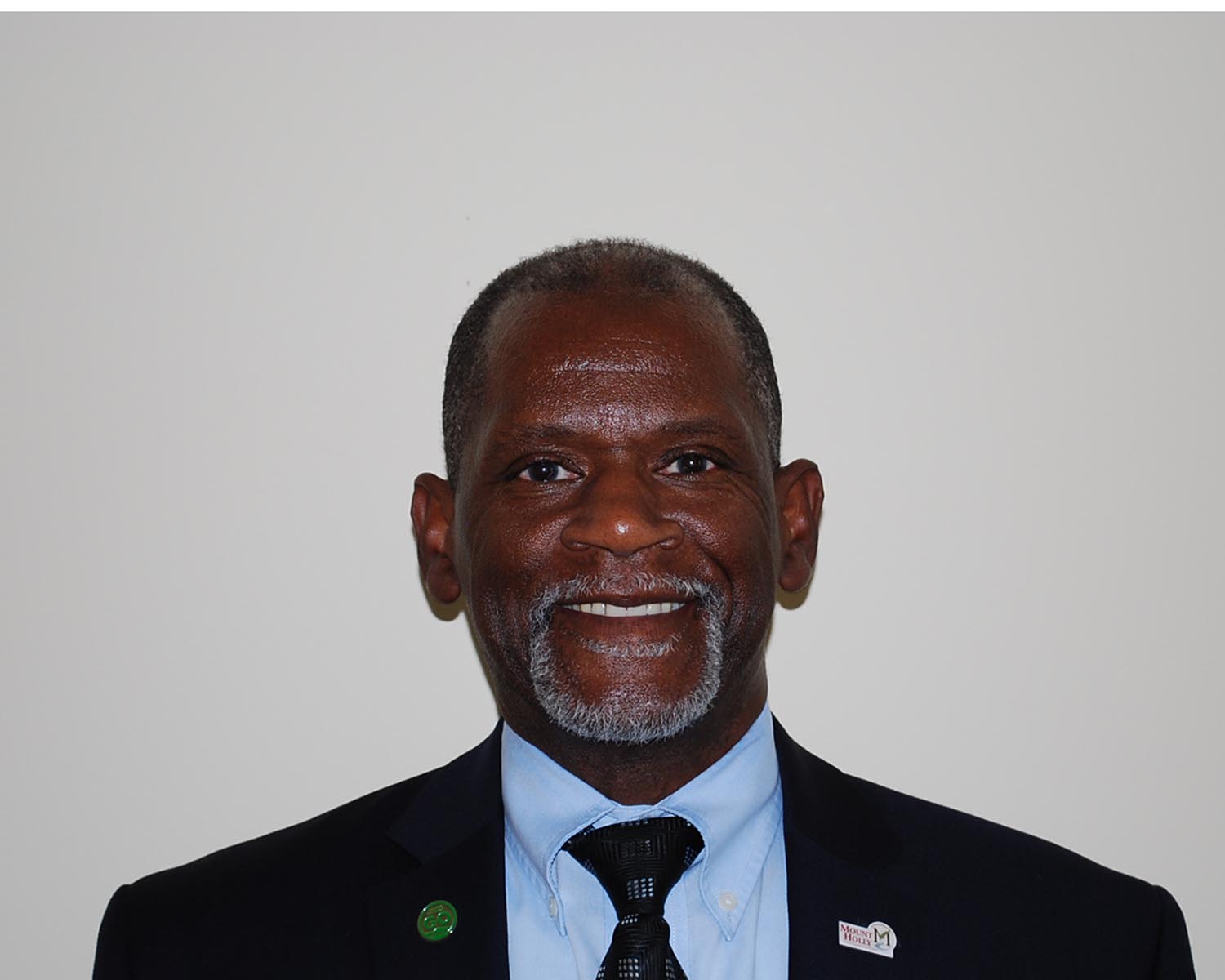
Spotlight On: Danny Jackson, City Manager, City of Mount Holly

Spotlight On: Danny Jackson, City Manager, City of Mount Holly

By: Felipe Rivas

2 min read February 2020 — Situated west of the Catawba River, the city of Mount Holly in Gaston County is known as one of the best bedroom communities in the Charlotte Metro Area. The city is experiencing residential growth as it aims to be a place where families can live, work and play. Its proximity to the Charlotte Douglas International Airport and to I-485 are great assets that will serve as a catalyst for the city’s growth, City Manager Danny Jackson told Invest: Charlotte. As part of its vision plan, the city is expanding its water and sewage systems and preparing its workforce for future tech-based jobs, Jackson said. 

How has Mount Holly grown in the last few years?

Mount Holly is in a great location. It is in proximity to Charlotte and the Charlotte Douglas International Airport. Interstate-485 has spurred development and as a result people have been discovering Mount Holly, as manifested by our population growth. These factors have been the genesis of our growth. We have been seen as a bedroom community for a number of years. Through our vision plan, we have launched efforts to make Mount Holly a place where residents can live, work and play. 


How is the city preparing for future growth?

Based on the growth that we are experiencing, people are approaching us for development opportunities, primarily residential and some commercial. Within that process, the infrastructure is constructed by the developers, then they turn it over to us for perpetual management. Sometimes, we add to existing projects to accommodate future growth. Also, we have connected our water and sewage plan to the city of Charlotte across the Catawba River to increase our capacity to accommodate future growth. Additionally, all of our local chambers of commerce have been working together to bring businesses to Mount Holly and boost the economy. It has been a good, collective effort. We believe we have the elements to support businesses. Not everyone wants to have the hustle-and-bustle of the large jurisdiction. We are not that, but yet we are close to one as well.  


What does the city’s updated vision plan entail?

In 2019, Mount Holly adopted its updated vision plan for the next 10 to 15 years. At the forefront of that plan is economic development, job growth and a diverse tax base. These are the nuts and bolts of it in terms of growth in the Gaston County region. I think the main sector growing in the region is technology. That is where the emphasis will be for this region, and with that comes the education component that is being addressed in Gaston County. Workforce development is a key component of this. We are making sure that our employee base is prepared for the next level of tech-based jobs that are coming to the area.


How is the city preparing itself in the event of a future economic downturn?

We have been working on worst-case scenarios. In 2008, the nation experienced an economic downturn, but Mount Holly continued to grow. Construction was still happening and people were moving to the city. I expect the same in case of another economic downturn. Our infrastructure is such that we are prepared for growth. We have done what we believe we need to do to stay economically sound, such as updating the vision plan and expanding our water and sewage systems. I think we have all of these mechanisms to continue to grow and grow positively.”  


To learn more about our interviewee, visit: https://www.mtholly.us/

Spotlight On: Dan Rajkowski, Chief Operating Officer, Charlotte Knights

Spotlight On: Dan Rajkowski, Chief Operating Officer, Charlotte Knights

By: Felipe Rivas

2 min read February 2020 — The Queen City is teeming with sports activity. It is host to NASCAR, the NBA and NFL, and closed the decade with a new MLS team. Not too far behind stand the Charlotte Knights, the region’s minor league baseball team. The Knights have led the country in fan attendance four out of the six years they have played in Charlotte. The loyal fan base and consistent attendance numbers can be attributed to affordable ticket prices, a family environment, and a centrally located ballpark, Chief Operating Officer Dan Rajkowski told Invest: Charlotte. For 2020, the Knights plan to host several Republican National Convention-related events and concerts to maximize the use of their ballpark.   

How has the local sports scene evolved in the last few years?

We have had tremendous success in Charlotte since we opened in 2014. We have led the country in minor league attendance four out of the six years we have been here. We are in a vibrant and growing market with a youthful demographic. Coming into the market from South Carolina, and bringing another 650,000 people into Center City, is creating tourism for different parts of the county. The Charlotte Knights produce an economic impact of close to $50 million a year. The region has NASCAR, NBA, NFL, major golf tournaments, other minor league teams, and now professional soccer. Charlotte has created a great hotbed for professional sports, while amateur sports are also enjoying growth. All this is largely thanks to the initiatives of city and hospitality leaders. They are very aggressive in trying to get sports teams to the region and making sure they stay


What are the benefits of being located in Center City?

Our ballpark is gorgeous. There are very few ballparks that have our skyline view, and fans can easily get to the park. Our affordability is important, especially in minor league baseball. While there are many options for fans, with different levels of ticketing, with us, they can get a ticket for $10 or $12 and enjoy the game. Some major league sports games are not as affordable as minor league baseball. We offer a great product that is not necessarily driven by wins or losses. We drive our fan base by promoting the experience, whether it be through a fireworks show, giveaways or on-field contests. We try to create an atmosphere of nine innings of fun. Being located in Center City, with its vibrancy, and the population base that is in this core, as long as you provide a good product people will continue to come. 


How are you collaborating with the local business community?

We are heavily involved with the business community as all sports teams in the city are. Charlotte has a tremendous business community. There are several organizations that work closely to improve the city and the business community gets that. We are fortunate to have wonderful corporate leaders across sectors that step forward when there are initiatives out there that relate to the community. We feel we need to be active in the community. That means donating time, money and resources. We have the ability to bring underprivileged kids to the ballpark and give them a great experience with professional athletes. As a sports organization, you have to position yourself to make an impact in the community that other people may not be able to make.


What can fans expect from the Charlotte Knights in 2020?

We have 70 games a year. We also host college baseball games. In 2020, we will host the ACC baseball tournament. This year, we will host a number of events related to the Republican National Convention. In the fall, we plan to host a few concerts as well. We will continue to improve our brand and keep prices affordable. We want to be creative, but always give people three hours of a fun experience.” 


To learn more about our interviewee, visit: https://www.milb.com/charlotte-knights

Rock Hill crystallizes its future with new development and capital projects

Rock Hill crystallizes its future with new development and capital projects

By: Felipe Rivas

2 min read February 2020 — About an hour south of Charlotte, in South Carolina, a city is experiencing an evolution much like its counterpart in North Carolina. Located in York County, the city of Rock Hill is crystallizing its future by moving past its textile history to make way for new development anchored by education and projects related to sports tourism. According to York County leaders, there are over half a billion dollars worth of projects under construction or in the pipeline, while completed projects have begun to change the landscape of Rock Hill and it’s Downtonw.

Much like Charlotte, the city of Rock Hill is focused on attracting and retaining talent as part of its economic development master plan, leveraging the growth of Winthrop University as the centerpiece of the capital projects happening in the area. The seminal project in the region, University Center, located in the Knowledge Park area, has already seen $100 million of total investment. “It’s a 23-acre former mill site that closed in the 1990s and employed around 5,000 people,” University Center developer Skip Tuttle told Invest: Charlotte. “It links Winthrop University to Downtown Rock Hill on the other side.” When complete, the project will account for about $250 million of development in Downtown Rock Hill. Tuttle, president of the Tuttle Company, is also making way for new office space in the nearby Lowenstein building featuring 225,000 feet of Class-A space, slated to attract new businesses to the region. “We have progressed rapidly on the redevelopment and have leased 70 percent of it. There are 350 people working there now in 10 firms,” he said. 

Another game changer for the region has been the Rock Hill Sports and Event Center. Opened

In January, the center welcomed 13,000 people during its first month in business, Tuttle said. “It has proven to be a phenomenal success, to the point that virtually every week this year it is booked,” he said. The center will serve as a mecca for indoor amateur sports ranging from gymnastics, volleyball, basketball, competitive cheerleading, and even cornhole. “It is going to be a catalyst for the rest of what we are doing in Rock Hill, which includes restaurants, breweries, outdoor entertainment venues, as well as office complexes. It is a true live, work, and play environment,” Tuttle said. 

Much of Rock Hill’s success can be attributed to the flurry of development and economic diversification happening in the Queen City. “There is no question that we are located in an area that is a desirable place to be because we are close to a major metropolitan area with an international airport less than 30 minutes away,” Tuttle said. “We have companies that are here because of the proximity to that airport and the other things that Charlotte has to offer.” Yet, Tuttle believes that Rock Hill has the workforce and infrastructure needed to create its own boom in economic growth and diversification. “About 56,000 people a day commute to Charlotte from York County. The local economic development folks are using that as a tool to recruit businesses by telling leaders that those highly trained, well-qualified individuals who leave York County to work in Charlotte could be working for them in Rock Hill,” he said, “And it is working.” 

To learn more about our interviewees, visit: https://tuttleco.com/

Spotlight On: Christopher Lam, Partner, Bradley Arant Boult Cummings LLP

Spotlight On: Christopher Lam, Partner, Bradley Arant Boult Cummings LLP

By: Felipe Rivas

2 min read February 2020 — Charlotte’s growth continues to attract a gamut of industries and talent into the region. As a result, the legal needs of businesses are evolving along with the diversification of the local economy, expanding the opportunities for legal professionals in the Queen City. Charlotte’s cost of living and sophisticated legal services rival the likes of New York, Chicago and Washington, D.C, Bradley Arant Boult Cummings Partner Christopher Lam told Invest: Charlotte. The business diversity is driving the need for expertise in compliance and data privacy. Additionally, there is a great emphasis to provide access to justice to all residents via pro bono legal services or by committing financial resources to community agencies in the region, Lam said. 

Q: How has the legal landscape changed with so much economic growth in the region?

A: From a legal perspective, a lot of firms from outside North Carolina decided to set up an office here, and not all of those have remained. According to American Lawyer, however, there are 59 law firms with a Charlotte office that are not headquartered here. This remains a very popular place to be for lawyers and that’s because of the way our business community has diversified.

We are known as a banking and financial services hub, and while this is still a key part of our economy, we are so much more than that, with energy, manufacturing, fintech and other sectors emerging. That diversification is good for us as lawyers too, as it better equips us to weather a potential downturn. For example, our firm has experts in multiple practice areas and industries, which allows us to serve clients with those needs and protects us against a downturn in one or two particular sectors.

Q: How have the legal needs of companies evolved as new technologies and developments emerge?

A: The core legal needs for businesses have largely remained the same – corporate, employment, litigation, real estate. But with new regulations, there is a greater need for expertise in compliance, specifically in data privacy, and particularly with new regulations such as GDPR and CCPA going into effect. That impacts almost every company. At Bradley, we have two of only a handful of lawyers in the country who are board-certified privacy lawyers, and we have an additional deep bench of lawyers who are CIPP-US certified. We have been well-positioned to help companies navigate these new regulations. 

Q: How do you think the private sector and public officials must work together to keep growth sustainable?

A: Charlotte has a proud legacy of business leadership in issues of community development and public policy. Our business leaders have long been champions of these initiatives and we certainly think we at Bradley are a part of that effort. It is important as corporate citizens that we recognize that the better we make our community as a whole, the better it is for everyone.

Q: How does the Charlotte legal market compare with other markets such as Chicago or New York?

A: Those cities are larger and more diverse and sometimes those legal markets can seem more attractive, whether it be a higher salary or more opportunities. In Charlotte, however, because of the diversity of the business community, we have sophisticated legal services here to rival the likes of New York, Chicago and Washington, D.C. We also have a cost of living that is more advantageous, meaning lawyers can have great opportunities with a lower cost of living. That’s the best of both worlds.

Q: What are the main challenges facing the Charlotte market today?

A: Most of the 5,500 lawyers in Mecklenburg County are not working in big firms or representing large companies. And there are thousands of residents in the broader Charlotte community who have legal needs but cannot afford legal services. As current president of the Mecklenburg County Bar, my time spent working with groups like the Charlotte Center for Legal Advocacy has emphasized that the greatest challenge for lawyers here is our responsibility to ensure there is access to justice for all. We have a professional obligation to do so. We can do this in a couple primary ways – providing pro bono legal services ourselves or committing our financial resources to the agencies doing the heavy lifting every day. That issue is not unique to Charlotte, but as lawyers we have a particular responsibility to help ensure there is access to justice. I am very proud to say our lawyers at Bradley live into that. As but one example, we have a partnership with the Bank of America legal department through which we work with Safe Alliance to represent clients who need domestic violence protective orders. 

To learn more about our interviewee, visit: https://www.bradley.com/

Spotlight On: Douglas Smith, Charlotte Market Executive, First Bank

Spotlight On: Douglas Smith, Charlotte Market Executive, First Bank

By: Felipe Rivas

2 min read January 2020  — After its recent acquisition of Carolina Bank, regional North Carolina financial player First Bank wants to keep its focus on the smaller side of business finance. The bank is relying on a combination of market expertise and speedy response to cater to companies with revenues up to $100 million that could fall through the cracks of larger, national institutions, First Bank Charlotte Market Executive Douglas Smith told Invest: Charlotte 


What have been the main impact from the 2017 acquisition of Carolina Bank?


Carolina Bank was a $700-million to $750-million bank at the time of acquisition, so it was not insignificant from a balance sheet perspective. That operation has had a high impact. We had an opportunity to relocate some of our operations people from Troy, North Carolina, to Greensboro, which has had a positive economic impact there. Carolina Bank was dominant in real estate and we have been able to capitalize on its market share in Greensboro. We were also able to keep some very good bankers from the Carolina Bank team, and hired really good team members with experience in the Commercial and Industrial (C&I) business since the acquisition.


Which niche is First Bank trying to fill within the Charlotte market?


In 2017, there were five banks headquartered out of Charlotte and now there is one, Bank of America. The landscape has changed a lot. Most regional and national banks are swimming upstream from a client perspective. They are looking more for midmarket clients with half a billion dollars in revenue or higher. Our opportunity is with operating companies that have $5 million to $100 million in revenue. I think there is a void there, not just in banks but also regarding the expertise of bankers in that market. Other regional banks offer business banking or a smaller commercial focus, but I don’t think they have our background or our emphasis on commercial banking. We also have a lot of knowledge in commercial real estate and look for project opportunities ranging in size from $2 million to $25 million. 


As a community bank, we have the opportunity to be nimble and quick in our decision-making. We make sure that we have a credit partner in every metropolitan market and we always have a treasury management product officer in every major market, providing all the commercially-relevant pieces that you need to offer quick answers, go to market together and have quick engagement. If we get a full financial package on a prospect, we can have a term sheet in our prospect’s hands within two or three business days. We have heard stories that in the regional bank space, some banks can take four to five weeks to put a term sheet in the hands of a prospect. That speaks to a client.


Which financial services are most in demand by your clients?


Aside from commercial, the mortgage space is hot right now, given where interest rates are. For a while, we were slowing down on refinances but I think that even those people who refinanced two years ago now see that rates could have dropped to 1% or 1.5%, and they are back at play in the market. Acquisition activity is still decent, but the rates environment is definitely driving a lot of activity to the mortgage side. We have a Small Business Administration (SBA) division, which does very well for us from a fee income perspective.


The retail group has also done a great job. We hired a team within the last 18 months that is focused on the oversight of the retail function. Our First at Work product provides the employees of new commercial clients with benefits like free checking, free closing on loans, discounted prices and general financial wellness seminars for their employees. That has been a very meaningful deposit-gathering tool for us. 


What programs are you supporting at the community level to educate the public?


We focus on supporting anything regarding youth education. We try to help with math education, for example, and we put a great emphasis on kids in less developed suburbs of Charlotte who need financial assistance with school supplies. As kids get older, we also look for opportunities to help with financial literacy, making sure that high-school kids understand what a credit card is, what a checkbook is, and making sure to foster the right kinds of behaviors.


What is the near-term business outlook for the city and the bank?


I would like to believe that the lion’s share of the M&A activity in the community banking space is slowing down, just because there are fewer of our types of banks out there. Because there has been so much consolidation in the community banking space, the North Carolina commissioner of banking has been a little bit more generous with the issuance of charters, which offers opportunities for new capital groups to buy charters. As a result, I think we are again building up that base of true, smaller community banks that would be $100 million to $500 million in size, and the community needs that. 


To learn more about our interviewee, visit: https://localfirstbank.com/


Spotlight On: Judy Wishnek, Commercial Market Executive, Truliant Federal Credit Union

Spotlight On: Judy Wishnek, Commercial Market Executive, Truliant Federal Credit Union

By: Felipe Rivas

2 min read January 2020Credit unions are growing at a fast pace across the country and in some cases rivaling banks, with their focus on long-term relationships with their members. North Carolina’s Truliant Federal Credit Union Commercial Market Executive Judy Wishnek says the credit union is well-capitalized and plans to continue to broaden its technology offerings to help it expand in the vibrant Charlotte commercial lending market. 

What is the state of business for banks and credit unions in the middle of the Charlotte boom?


Charlotte’s banking and credit unions have all had a great deal of growth, with a lot of people moving to the city. In the banking sector, many new names have entered the market, and credit unions specifically have had impressive growth. All credit unions combined now have about 115 million members nationwide. Truliant, specifically, has over 250,000 members. A recent article in the Wall Street Journal said that credit unions are now going toe to toe with other financial institutions, adding that credit unions’ asset growth is outpacing that of banks, and our industry is very well-capitalized. In Charlotte, Truliant has added nine locations in the last five years, to a total of 12 in the city. In the last year, we also added a commercial lending office.


What are the benefits of joining a credit union instead of putting yourself in the hands of a bank?


Credit unions are about deeper financial relationships. It is a very personalized type of service with high emphasis on guidance and helping members make the right decisions. We are not focused on the bottom line, because we are a not for profit. It is not a short-term strategy but a long-term strategy of working with our members to help improve their lives and their decision-making. In commercial lending, we have the opportunity to start telling our story and letting people know that we are a great source of financing for commercial real estate.


People are looking for lots of options and the ability to make decisions. It is nice that in Charlotte they can work with a credit union that is focused on really understanding their needs and helping them. We are investing in locations close to them, but we are also investing in technology so they have the option of having their financial needs met online or in person.


How is technology, such as the eClosings system for mortgages and credit, helping your clients and shaping your business?


Offering these efficient loan closings saves people time and money, and it can be done anywhere. There is less chance for error in their filings, and it is more secure, allowing the records to be recorded instantly. It also reduces paperwork, legal fees, mailing and courier costs. We are just excited to be a leader in that space. I think that this is going to be something that is going to spread throughout the country, and North Carolina and Truliant were innovators in getting this to work first.


Additionally, we have added a chief digital officer, a digital marketing director, a vice president of digital innovation and a vice president of IT infrastructure. Hiring these specialists has enhanced optimization and automation to ensure we stay on top.


What are Truliant’s expansion plans in the region? What is your relationship with the local business community?


We continue to look for additional locations, and I think we will continue to find areas to add brick and mortar offices in the Charlotte area. But I think we will continue to add people digitally, because it is very easy to grow our online services.


All the folks in the commercial lending office have been here for a very long time and are very involved with the business community. We sit on a number of boards, and we are involved with different organizations. It really is about relationships, and that helps Charlotte work.


To learn more about our interviewee, visit: https://www.truliantfcu.org/