Federal, state govts rally to help homeless during COVID-19 outbreak

Federal, state govts rally to help homeless during COVID-19 outbreak

By: Felipe Rivas

2 min read  — Since March, shelter-in-place measures have become the norm across the nation, shuttering nonessential businesses, schools and public gathering spaces. While the majority of people transitioned to a new way of life during the quarantine, including remote work and distance learning, the U.S homeless population risks COVID-19 infection as they lack access to testing and basic hygiene facilities, among other measures to combat infectious diseases. Additionally, for the homeless population, many are older adults or have underlying medical conditions, increasing the likelihood of contracting COVID-19. As such, states, municipalities, local health departments, housing authorities, among other institutions, have been working to meet the food, shelter, hygiene and testing needs of the homeless population.   


In South Florida, the Miami-Dade County Homeless Trust, in collaboration with various state and federal agencies, has been helping to protect sheltered and unsheltered homeless households and its staff in the face of the COVID-19 threat. “The Homeless Trust is proactive in engaging our housing and support service providers to offer guidance, assess needs and facilitate vital connections to local, state and federal resources,” said Trust Chairman Ronald L. Book in a press release. “Our preparations have to consider the fact that much of our population does not have a ‘home’ with which to self-quarantine; therefore, we have broader issues to consider. We will continue to work to ensure homeless households have access to shelter, care and food while doing all we can to mitigate the virus’ spread.”

As part of its outreach efforts, the Miami-Dade County Homeless Trust is distributing hygiene, safety and food kits to unsheltered homeless persons throughout the county along with educational information. Outreach teams are taking temperatures of unsheltered homeless persons to pre-identify those with symptoms, among other measures to help prevent the spread of COVID-19.

In Pinellas County, the city of Clearwater has taken similar steps to help the homeless population of the region. As part of its mission, the city’s economic development department is focused on economic growth and the vitality of the community, which includes the homeless population. As such, the department is encouraging restaurants that have had to close or limit their operations temporarily to donate food to food banks, which then distribute the food to the most vulnerable segments of the community, Economic Development and Housing Director Denise Sanderson told Invest: Insights in an interview. “We have not seen a big increase in street level homelessness,” she said. “We have seen an increase in the presence of our homeless community. Primarily because we have had to close down our recreation centers and libraries.” As those facilities closed, the department pivoted to placing porta-potties and mobile shower units throughout the city to help the homeless community stay clean during this time. “To date, we have not had any cases, at least known to us, where COVID-19 has affected the homeless population.” Sanderson said. 

In Orlando, the shelters are preparing for an influx of homeless people. Shelters are down beds because social distancing precautions require separation of beds, Spectrum News reported. Shelters are concerned with bringing in people who may have the virus. “Right now we have a campus that is fairly safe. How do we bring people on without introducing that,” John Hearn, president and CEO of the Coalition for the Homeless of Central Florida, told the news outlet. Hearn’s shelter has been screening everyone before they enter the campus. The shelter set up isolation areas for people showing symptoms. This move, along with social distancing measures, cost the shelter close to 50 beds, Spectrum News reported. His shelter has increased the distribution of meals to three times a day and still has open beds available, according to the news outlet. 

At the federal level, the Coronavirus Aid, Relief, and Economic Security (CARES) Act, a $2 trillion funding package aimed at protecting the population, industries and businesses from the impact of the coronavirus, set aside more than $12 billion to help the homeless population and those who serve them. Community Solutions, a nonprofit organization focused on ending homelessness, detailed the portion of the CARES act aimed at helping those experiencing homelessness. The Department of Housing and Urban Development would divvy up the funds for Emergency Solutions Grants to assist homeless shelters and outreach workers who keep people who are homeless safer from coronavirus, different rent assistance programs, and other assistance programs aimed at the elderly, Native Americans, and people with AIDS, among other initiatives, according to Community Solutions. Federal, state and local agencies must work together to optimize resources and help for the homeless population, the nonprofit wrote on its website. “While we are pleased that our federal lawmakers provided this needed fiscal relief, we need to ensure that people experiencing homelessness, and those who serve them, continue to be supported as state and local governments work to administer funds and in any forthcoming stimulus package, Community Solutions said. “Following the injection of this stimulus funding, state and local governments must focus on allocating this new funding to protect people experiencing homelessness and homeless response staff, and limit inflow into health care and hospital systems. This includes ensuring people experiencing homelessness — and the people helping them — have immediate access to housing, health and safety training, personal protective equipment, facilities for hand-washing, medical treatment, testing options and ultimately, safe places to quarantine.”


To learn more about our interviewees, visit:

https://www.centralfloridahomeless.org/

http://www.homelesstrust.org/

https://www.myclearwater.com/government/city-departments/economic-development-housing
https://community.solutions/covid-19-and-homelessness/

Spotlight On: Clay Worden, Office Managing Partner, RSM US LLP

Spotlight On: Clay Worden, Office Managing Partner, RSM US LLP

By: Max Crampton-Thomas

2 min read April 2020 — Accounting and consultancy firm RSM’s Orlando practice had little problem migrating its operation to remote after the COVID-19 pandemic hit the state. The company’s managing partner for the Central Florida city’s practice, Clay Worden, shares his views on how his company and small business will adapt and learn from the contingency.

What specific markets does your Orlando office focus on?

Hospitality and real estate are key components of the Central Florida economy, and we spend quite a bit of energy serving these sectors. Food and beverage is also an important sector for us. Agriculture is one of the key economic drivers in the state and we serve a lot of Ag-based organizations.


We also serve SEC clients, nonprofit organizations and manufacturing companies. Our tax practice is incredibly robust and growing. We seem to be firing on most cylinders.


Which area of your practice has seen the largest demand in recent years?

We are seeing a lot of demand related to digital transformation. Organizations, even before the COVID-19 situation, are looking at their systems, especially their legacy systems and saying, “Hey, is this the platform that is going to get us where we need to be?” From a technology consulting standpoint, I think that is one of the areas where we’ve had some exponential growth.


Another area where we continue to see organizations focusing on is the internal audit and risk advisory functions. When the economy is robust and companies are generally profitable, they want to make sure their systems, controls and policies are functioning as designed to safeguard their assets.


What challenges has the firm faced in dealing with the effects of the COVID-19 pandemic?

We recognize that our younger folks embrace technology and want to use technology. With that in mind, our audit practice and consulting practice has been primarily remote for the past several years. We visit clients and still have to access systems and software to be able to work, but we were pretty much prepared for the fact that we might not be at the office and prepared to work from home.


Our tax practice was traditionally people going to the office and to some client locations, so it was important to have the technology that provides them with access and to give them the tools they need, which included a little more bandwidth in the system to get to their tools. We started that process and were quickly able to get it to them. For us, it really hasn’t changed much. You still have access to all the data and everything we need to serve our clients.


One of the opportunities that we are seeing from this is that we are helping businesses access the stimulus that is being offered, making sure they qualify, follow the rules, and are taking advantage of the tax benefits that are available today. We’ve quickly mobilized people who are or are becoming experts in helping clients navigate these government programs.


Another area where we are seeing some changes is travel. We were to hold a firmwide leadership meeting with about 100 firm leaders going to Chicago in April. Instead, we held that meeting virtually. From my perspective it was very effective. We missed the reception and cocktail hour to talk face to face with some of our colleagues we have not connected with for a while, but in terms of disseminating information and communicating, it was very effective.


What is your outlook for the Orlando area in the near term?

My cup is always half full. I am confident that our firm and Orlando, Florida, and the country as a whole will come out of this stronger and more equipped than we were going in.


I think that certainly the pain is going to be probably worse, and longer, than most people would like. When you live in Central Florida, which is primarily built on hospitality and entertainment, I don’t know how quickly people are going to hop back on a plane and come right back.


I do have some serious concerns for the smaller businesses. I don’t know that the smaller businesses, like restaurants, have the capital to withstand being with limited customers for an extended period of time. Big and small,  companies are going to have to rethink how they do business in the future.


To learn more about our interviewee, visit: 

https://rsmus.com/

COVID-19 making innovation a must for educators

COVID-19 making innovation a must for educators

By: Felipe Rivas

2 min read April 2020As the coronavirus reduced daily activity to only essential services, educational institutions were forced to transition at a moment’s notice into a virtual setting as shelter-in-place measures and social distancing became commonplace. Entire curriculums, testing, labs, and even physical education in some cases, transitioned into an online classroom setting as teachers and students of all grade levels resumed their education under the COVID-19 pandemic. 

These risk-management decisions stressed and challenged the infrastructure of universities, colleges, and schools throughout the nation, while at the same time creating opportunities for innovation in the educational landscape. Although fully online classes are a temporary measure to slow the spread of COVID-19, and as local, state and national governments consider what a reopened economy may look like, educational systems alike are being forced to mitigate the challenges and innovate their educational practices and offerings via learning innovation and digitalization.

In Orlando, Seminole State College of Florida was able to make the transition into a fully online learning setting effectively because its student body and faculty were already familiar with online and remote learning. Prior to the COVID-19 outbreak and shelter in place measures, the college was well-positioned for the quick change of events, President Georgia Lorenz told Invest: Insights in a virtual interview. “About 53 percent of our students were already taking at least one online course as part of their schedule. The vast majority of our students at some point of their academic career have had familiarity with our online learning managing system,” she said. Many of the campus based classes use the same learning management system to enhance and support the learning process, making the transition easier to handle for faculty and students. Additionally, the college also quickly transitioned its library, student support systems, and other resources online to maximize the learning experience during a time of abrupt changes. “It’s been a lot of work and I give a lot of credit to our faculty, students and all of our staff for making this change very quickly.” 

In the COVID-19 landscape, tuition-dependent institutions are among the most vulnerable as students are liable to put their education plans on pause as they grapple with loss of employment and income. Colleges and universities with strong endowments and alumni contributions will likely survive the impact of COVID-19, but declines in revenue and increases in costs will likely loom for the coming academic years. Declining revenues could stifle innovation as institutions reprioritize budgets and offerings. 

However, a life post-COVID-19 may be ripe with opportunities for innovation and further streamlining of classes. COVID-19 helped destigmatize fully online learning. Moving forward, educational leaders will likely see online education as more than a source for extra revenues. Instead, online education will likely become an integral part of institutional resilience and academic continuity. Educational institutions will have to rethink how they plan for, fund, and market online learning. More unified institutions will emerge from the coronavirus pandemic, as online courses and student support functions become more centralized and integrated into existing academic structures and processes. 

At Seminole State College of Florida,  “students are appreciating the e-services and online learning capabilities,” Lorenz said. “We are continuing to innovate and fine-tune as we move forward, but it seems to be working really well for a good portion of our students and staff.”

In terms of lasting innovation, it is possible that online learning goes truly global as colleges and universities expand their student base to allow for more international students who may never see the inside of a physical campus. 

The lasting impact of COVID-19 to the educational sector remains to be seen. For the time being, it is likely that students will finish the spring semester and potentially the 2019-2020 school year from the comfort of their homes. As educators prepare for summer and fall semesters, they will have to contend with the challenges and opportunities of educating students in a post-COVID-19 world.       

To learn more about our interviewee, visit: https://www.seminolestate.edu

To view the interview with Seminole State College of Florida President Georgia Lorenz, visit: https://www.youtube.com/watch?time_continue=6&v=MhowKRH4dkY&feature=emb_title

https://live.capitalanalyticsassociates.com/invest-insights/

Spotlight On: Steven McCraney, President & CEO, McCraney Property Company

Spotlight On: Steven McCraney, President & CEO, McCraney Property Company

By: Yolanda Rivas

2 min read April 2020 —  The strength of the commercial real estate sector relies on the major roadways that run in and around Orlando, Steven McCraney told Invest:. He also notes that the location of Orlando is a great anchor to position his business as it provides ease of access to everywhere the company needs to be, as well as how the primary growth of his company has clearly been the warehouse and distribution space. 

How connected is the strength of the commercial real estate market to the major roadways in Orlando? 

The strength of the commercial real estate sector relies on the major roadways that run in and around Orlando. The last 50 years in Florida were all about the I-95 corridor, from Jupiter to Coral Gables. If you were to drive that route today there is not an available parcel of land on the roadway. We believe the next 50 years for Florida are going to be primarily focused on the I-4 corridor, from Tampa Bay to Lakeland to Orlando and onto Daytona Beach. While Daytona has not started to pop yet, the thing that we know is that there are two major roadways in Daytona, I-4 and I-95, which leads us to believe that it will be a good market at some point in the near future.


Why is Orlando the most ideal location for your operations? 

The Orlando economy continues to thrive. It’s attracting new residents, it’s generating new jobs and the increased interest is driving industrial users into the market because of the ability to distribute out of the state of Florida from the region on a one-day basis. We relocated to Orlando because the area places us right in the middle of the state. We operate throughout the Southeast and Orlando, which anchors us in the middle of everywhere that we need to be. It also provides the ability to move easily throughout the Southeast because of the region’s dynamic airport.


In regard to your business operations, where have you seen the most growth?

We are industrial developers. That is our mainstay and focus. This is complemented by third-party property management. As of late, the growth has clearly been the warehouse and distribution space. The total industrial space in Orlando is 123 million square feet, which breaks down into roughly 100 million square feet of warehouse distribution, 13 million square feet of manufacturing and the remainder is made up of office, flex space and distribution product. Here’s what we know: warehouse is the new retail. If a person is ordering online, whether it’s products,  clothing or food, the merchandise is likely not coming from a store, it is almost certainly coming from a warehouse. This is attributed to e-commerce growth and third-party logistics. Over the next few years, we are going to see the markets continuing to change and expand. From an industry perspective, I believe we have a trajectory that is at least 15 years long. While the product may continue to change, that product is coming from somewhere and that somewhere is a warehouse. As social distancing is ever more important and various markets are now under a “shelter in place” order, it is clear that suppliers, like Amazon, are still delivering essentials through package products to each and every home.


What market trends have had an effect on your business? 

We are always looking for ways to leverage technology in our business. Whether it’s roofing systems, lighting or super-flat floors, we want a logistics facility to be plug and play for a customer. The biggest challenge in recent years is rising costs. This can be broken down into the rising labor cost and the cost of materials. For example, the cost to build out a 1,500-2,000-square-foot office space within a warehouse space today can easily run around $250,000. That number exceeds $100 per square foot. At the same time, we have seen strong rent growth and because of that we have been able to keep pace. As we presently enter an economic downturn due to this pandemic, one would expect the cost of goods – both labor and material – will correct. Most of us in the industry went through the last recession and we know how debilitating it was. Moving forward, we have to be cautiously optimistic as we enter this challenging economic cycle and be mindful of our leverage, occupancy, quality of tenancy and our construction exposure.  


To learn more about our interviewee, visit: 

https://www.mccraneyproperty.com/

Spotlight On: Kate Saft, Partner, Greenspoon Marder

Spotlight On: Kate Saft, Partner, Greenspoon Marder

By: Max – Crampton Thomas

2 min read March 2020 — As the epicenter of the tourism and hospitality industries, Orlando affords many opportunities for businesses within those sectors and also to the service businesses outside those sectors. During her discussion with Invest:, Kate Saft, a partner with Greenspoon Marder, spoke on the opportunities the Orlando area affords her firm, the benefits of technology and how the COVID-19 crisis is affecting business as usual. 

How has the COVID-19 pandemic affected your firm? 

 We have seen consistent delays and pauses in our financing and real estate deals as a result of the COVID-19 pandemic. Some clients are anxious to complete as many pending transactions as possible given the uncertainty of what is ahead.  Others are seeing deals in which they can be competitive in light of the interest rate drop. We do anticipate some logistical issues, particularly in-person closings, which is why online notarizations are helpful.


How does the Orlando region provide opportunity for the firm? 

Orlando is the epicenter for the tourism and hospitality industries, including, specifically, the timeshare industry. Our Orlando office focuses heavily on representing timeshare clients, hotel operators and real estate developers, and that representation has led to many legal opportunities for Greenspoon Marder. 

Within the hospitality industry there are a plethora of legal issues that arise, including real estate transactional matters, marketing matters, lending and securitization transactions, consumer litigation, employment litigation, commercial litigation, and regulatory matters under various state and federal acts, including but not limited to the Fair Debt Collection Practices Act (FDCPA), the Telephone  Consumer Protection Act (TCPA), the Fair Credit Reporting Act (FCRA) and the Fair Labor Standards Act (FLSA). 

Our firm was founded with a focus on the core practice areas of real estate litigation. We have seen demand for those practices increase, not only throughout Central Florida but across the United States. We are pleased to be able to meet the needs and demands of our clients in these areas. We are consistently looking to expand our real estate, timeshare, corporate and litigation practice areas, not only in Orlando but on a national level, as well.


Is there any particular legislation that you are keeping a close eye on in 2020?

We are closely monitoring two Telephone Consumer Protection Act (TCPA) petitions pending in the Supreme Court that challenge the constitutionality of the TCPA. In particular, there is a petition pending that questions whether a single call necessarily results in injury that is concrete for the purposes of Article 3 standing and a petition that questions whether the restrictions on using an automated telephone dialing system or an artificial, pre-recorded voice violate the First Amendment. We are very interested in the results of these petitions and how they will affect our hospitality clients.


How does new technology benefit your practice and the legal sector overall? 

Technology makes it easier for us to connect with clients and reach potential new ones. All of our employees, from partners down to staff members, have access to virtual connections to safely access our clients’ information anytime and anywhere. We hold regular meetings through video conferences, sharing our expertise, so other attorneys are aware of the practice areas within our firm. In that way, we are able to utilize the specialties of all our attorneys to assist clients who present a diversified set of legal needs.

To learn more about our interviewee, visit: 

https://www.gmlaw.com/

Spotlight On: Daniel Zagata, Managing Partner, Evershore Financial Group

Spotlight On: Daniel Zagata, Managing Partner, Evershore Financial Group

By: Yolanda Rivas

2 min read March 2020 — Orlando’s diversifying economy has been attracting a high amount of investment to the region. The population of high-income earners and the number of high-income jobs continue to grow, according to Daniel Zagata, managing partner at Evershore Financial Group. Zagata shared the latest market trends and changes in an interview with the Invest: team. 

How did 2019 develop for Evershore Financial?

We have multiple locations in Florida: Orlando, Boca Raton, Palm Beach Gardens and The Villages. In Orlando, we purchased our first office building in 2019 and are looking at real estate acquisitions over the next couple of years as our firm expands. Overall, as a financial services company, we have been working to help people with their concerns over the market’s 12-year bull run, which has been the longest we have ever seen. Market volatility has pushed the consumer to engage us for financial advice and financial services due to the uncertainty that is emerging. Younger clients and people just getting started in the financial game are moving toward the automated system of robo-advisers, demonstrating a more of a do-it-yourself preference. The more affluent client has been engaging financial planners because they require more dynamic, complex, and customized solutions. On top of that, wealth management has changed drastically. It is not just about ROIs anymore. There are more family dynamics, multiple marriages, divorces, legacy issues and tax issues, just to name a few.


What shifts are taking place in the financial services sector?

There is an increasing demand for customized advisory services and guidance. We have been dealing with a greater number of business owners looking to not only sell their business but also looking for succession plans. The logistics behind planning have become extremely important. Most recently, the term “fiduciary,” and being able to engage a financial planner and adviser as a fiduciary, has become paramount and top of mind with most clients. That type of advice and engagement with clients is growing in demand while several financial advisers are either not properly licensed or do not have the capacity to work as a fiduciary. It has always been a priority for our firm to engage clients on their terms at the level they need. 


What trends are emerging in retirement and succession planning?

Many business owners do not have a written, executable succession plan, and have not identified the person who will take over. The problem becomes who to transfer the business to, how to bring that person in, whether or not they have a vested interest, if they have the required resources to purchase the business and if the resources are delivered as a lump sum or serial payment. It is often said that the top concern of a business owner relating to a succession plan is the impact on employees, along with preserving the business’ reputation. We have seen several business owners resort to repossessing their business when the transition was poorly executed or did not have the intended consequences.  


What is your outlook for 2020 and what are your areas of focus?

Election years tend not to be volatile because there is pressure to keep the economy stable. However, there are always events that are unpredictable, such as the Coronavirus, that can cause immediate volatility. From the firm’s standpoint, we continue to expand. We are looking to bring in highly qualified advisers to add value to what we do. As big proponents of education, clients today want to receive advice and information that are valuable to their investment strategies. I teach retirement classes at the Rollins College STARS program and Celebration Foundation for Lifelong Learning, to name a few. Our reputation, high-quality content and transparency has many schools and universities using Evershore Financial to deliver education. We understand people, and how behavior impacts investing and life. We will continue to grow and expand our firm as we help our clients navigate life’s transitions. 


To learn more about our interviewee, visit:

Evershore Financial Group: https://www.evershore.com/

Face Off: How local chambers of commerce are responding to the region’s population growth

Face Off: How local chambers of commerce are responding to the region’s population growth

By: Yolanda Rivas

2 min read February 2020 — Both the number of visitors to Orlando and its population are on the rise. The Invest: team spoke with Betsy Gardner Eckbert, president and CEO of the Winter Park Chamber of Commerce, and Andrew Cole, president and CEO of the East Orlando Chamber of Commerce, about their latest efforts to respond to the local growth and the challenges their chambers face.

Andrew Cole

How is the community responding to the region’s visitor growth?

Betsy Gardner Eckbert: The Winter Park Chamber of Commerce started several efforts to target and reach international guests. The second-biggest group of visitors that we receive in Winter Park is international. Half of the international visitors we received two years ago were coming from the United Kingdom. To respond to that demand we put together our Tourism Task Force, which created a business plan through destination marketing efforts, and as a result we had a 560 percent increase in traffic to our website from people from the U.K. We increased by 86 percent the traffic of people from the U.K. through the door of our Welcome Center. We will continue to expand our reach to international guests from different countries as well, including Canada and Brazil. 

Andrew Cole: We’re anticipating having almost 2 million people in Orange County by 2030. I think that speaks volumes, and we’re preparing for that population growth. Our transportation infrastructure is being enhanced, Virgin Trains is making its way into Orlando, the Orlando International Airport is building a new terminal, and our local governments are looking at additional transportation solutions and housing affordability issues. Businesses are expanding, creating new jobs, such as Universal Studio’s new Epic Universe theme park, Disney’s continued growth of their parks, and the Creative Village in Downtown Orlando is an innovation district for high-tech, digital media and creative companies providing new opportunities. Tourists and visitor numbers continue to increase providing plenty of opportunities for businesses to thrive. It’s exciting to know that businesses that are here and those relocating here have opportunities to grow and expand their footprint in Orlando.

Betsy Gardner Eckbert

What are some challenges for your chamber?

Eckbert: One of the challenges for our members is attracting and retaining the appropriate talent. To support them, we launched a pilot program to identify talented professionals — mostly women with impressive degrees who have stayed home to raise a family. Our program helps them get back into the workplace. Through this pilot return-to-work program we placed 83 percent of the participating women within six months in local and global companies. We are very excited to have the ability to furnish our members with a talent base of people who are reliable and have the skills and talents they are looking for. 

Cole: One of our biggest challenges is making sure that we have smart growth in that we’re looking at all aspects of the impact any new development will have on the area. We also have the battle between people who want to stay rural and those who want to see development. As long as we can plan smart growth, continue to address our challenges and remain forward thinking, I know Orlando will continue to be the place to be.

To learn more about our interviewees, visit:

Winter Park Chamber of Commerce: https://winterpark.org/ 

East Orlando Chamber of Commerce: https://www.eocc.org/

Spotlight On: Michael A. Okaty, Office Managing Partner, Foley & Lardner LLP

Spotlight On: Michael A. Okaty, Office Managing Partner, Foley & Lardner LLP

By: Yolanda Rivas

2 min read February 2020 — Orlando needs to promote itself as a hotbed for investors and companies as it enters more and more into the spotlight as a destination for private investors and venture capitalists. Historically, much of the local M&A activity has been on the sell side, said Michael A. Okaty, office managing partner at Foley & Lardner LLP, in an interview with Invest:.

Are you seeing a comeback of the corporate consolidation trend in the Orlando market?


Yes, I think that’s been happening for the last several years. We are seeing both consolidation of strategic owners who are trying to grow and consolidate, but also financial buyers, private equity and family offices that are trying to consolidate what would otherwise be fragmented industries into larger companies with more economies of scale.


We live in a middle-market city so more often than not we would tend to be on the sell side, representing a solid, family-owned, multidecade, multigeneration business that has gotten to the point where the founders are looking for liquidity and there are buyers, both strategic and financial, out there looking to roll up. Home-grown businesses based here over the last few years tend to be on the sell side. We don’t have a lot of large, publicly-traded companies based here, but we have a lot of defense and aerospace companies, like Siemens and Lockheed, but they are in a different league. Still, companies in Orlando, to the extent that they are engaging in M&A activity, are probably on the sell side.


What are the fastest areas of growth for the firm in the Orlando market?


Healthcare M&A, both in consolidation as well as provider practices and primary care groups. There’s also the area of medical office buildings, and we do a lot of work in the senior housing area. Healthcare and healthcare M&A is a really hot, growing area.


Private equity and venture capital, regardless of the industry, are also moving. They are looking at everything from diversified services like home plumbing and electrical to software technology, cybersecurity and health-related services. The interest of private equity and VCs in Florida, and Central Florida in particular, is increasing.


Another big area in Central Florida is simulation. Orlando is the capital of the simulation industry, both for medical and military simulation and engineering. The same kind of simulation that can be used in the military field can be used in healthcare. For example, surgeons are using simulation to practice surgery before actually doing the procedure.


Are there any particular areas where you are looking to expand your reach?


Real estate, the hospitality industry and healthcare. We have a major presence in real estate, and in particular in the hospitality industry, representing the vacation clubs that are based here in Orlando and the senior housing industry nationwide. We have a major presence in those areas.


To learn more about our interviewee, visit:

Foley & Lardner LLP: https://www.foley.com/en/offices/orlando 

Spotlight On: Beat Kahli, President and CEO, Avalon Park Group

Spotlight On: Beat Kahli, President and CEO, Avalon Park Group

By: Felipe Rivas

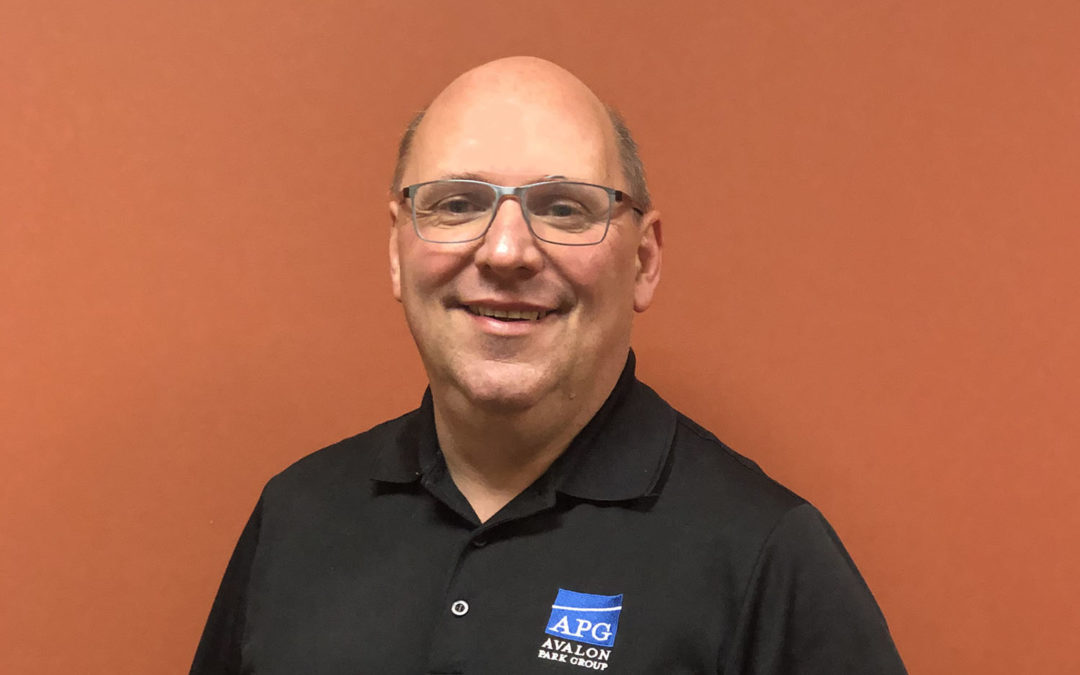
2 min read February 2020 — The Sunshine State has been a beacon of light for companies and families wishing to live, learn, work and play under the sun. Much of the population growth happening in Florida is concentrated in Central and South Florida. Compared to South Florida, the Orlando market still has land to develop and has done a great job in diversifying its economy, Avalon Park Group CEO Beat Kahli told Invest: Orlando. The group is developing four projects spanning from Tampa to Daytona Beach and focusing on mixed-use communities where residents can live, learn, work and play.  

How would you describe the strength of the real estate market in Orlando today?

Orlando has a high level of infrastructure, with the Orlando International Airport, the Orange County Convention Center, University of Central Florida and a broad job base. The level of infrastructure compared to the pricing on real estate is one of the biggest advantages in the area. If you compare Orlando to other markets like South Florida and New York, Orlando still has land. While we still have a lot of land available, Orlando has done a great job in diversifying its economy. The I-4 corridor is key to the region’s growth and I see Orlando and Tampa growing together. 


What are your most significant projects in Central Florida?

We have four large projects in the I-4 corridor between North Tampa, Orlando, Daytona Beach and Tavares. We have over 20,000 residential units and those projects are all at different stages. Our Avalon Park Orlando project is 99% completed. For this project, we focused first on young families. We have 10,000 students stationed in our school district and thousands of homes already built. The community is a great place to live, learn, work and play with a variety of apartments, single homes, town houses, schools and about 150 businesses.  


What are some trends in Orlando’s real estate market?

People are interested in mixed-use development communities where you can live, learn, work and play. Building smaller homes is another trend, especially due to their affordability. People are getting smaller homes with higher upgrades in design and finishes. The most important change is toward live, learn, work, play communities and the quality of life these present. Co-working spaces are also a trend and we have already started to include these types of spaces in our communities. 


What is your outlook for Orlando’s real estate sector in the next year?

We have done a much better job after the Great Recession. When I look back on the last decade of recovery, I’m very positive about Central Florida for the next 20 years. However, we expect the real estate sector to stabilize within the next two years. Central Florida has attractive prices, and its diversified economy provides great opportunities for real estate investments.  


To learn more about our interviewee, visit: 

https://www.avalonparkgroup.com/team/