Miami’s Industrial Real Estate Has Buyers Lining Up

Miami’s Industrial Real Estate Has Buyers Lining Up

Writer: Sara Warden

2 min read SEPTEMBER 2019 — Miami is an attractive place to live and a business hub, but that also means its real estate doesn’t come cheap. In the huge land expanses involved in industrial real estate, assets cost a pretty penny. But the dynamics of the Miami market mean developers are not shying away from putting their hand in their pocket.

A key example of this is the recent sale of the three-building, 74-acre Centergate development at Gratigny in Hialeah for $178 million, Florida’s biggest sale of the year. Real estate giants CBRE closed the sale on behalf of the buyer.

“Centergate is one of the largest industrial offerings to come for sale in South Florida in recent years,” said CBRE Executive Vice President Jose Lobon in a news release. “Given the challenges to aggregate square footage in our market, Centergate presented a unique opportunity to acquire critical mass in one of the most desirable logistics markets in the nation.”

The sale can be broken down to a price of $111.25/ft2, a steal compared to recent deals in the greater Miami area. At the end of last month, institutional investor The Blackstone Group bought the 14-acre Airport Trade Center property west of Miami International Airport for $56 million, or $152/ft2.

Also this month, CBRE closed another multimillion-dollar industrial real estate deal, selling the five-building Miramar industrial portfolio to Stockbridge Capital. This deal equates to an eye-watering $192/ft2.

“It’s hard to buy industrial real estate in South Florida. It’s very competitive. Particularly when you see something of this size, multiple buildings,” Lobon added. “The opportunity to be able to buy in one stroke over 600,000 square feet of Class A, high-quality institutional industrial real estate in South Florida, those opportunities don’t come around that frequently.”

With these values, it’s not hard to see why other industrial real estate investors have made Miami a prime focus in their business plans. NYSE-listed real estate corporation Terreno has made Miami a cornerstone in its six-market strategy. 

“Terreno acquires, owns and operates industrial real estate in six major coastal US markets. Exclusively. Functional, flexible, infill real estate located at the intersection of growing demand and limited, or even shrinking, supply,” the company says on its website.

E-commerce is one of the reasons why industrial real estate close to the city limits is in such high demand in recent years. Miami is the sixth-most densely-populated city in the United States and the metropolitan area is home to over 6 million people. 

A 2017 study by San Francisco technology company Trove Technologies found that Florida is No. 1 for discretionary income in the South Atlantic region. Discretionary income is the amount left over after paying for the essentials such as rent and bills.

A huge captive population combined with sizeable disposable income is not only good news for e-commerce, but also for the US industrial real estate giants that are betting on the greater Miami area.


To learn more about our interviewees, visit:

https://www.cbre.com/about

https://www.blackstone.com/

https://stockbridge.com/

https://terreno.com/

Charlotte Demographics Catalyze Office-Space Boom

Writer: Sara Warden

2 min read AUGUST 2019 – Charlotte is gaining more than 1,000 new residents a week, according to the 2017 Census. In the second quarter of 2019, Charlotte added 26,700 new jobs and kept unemployment down, at around 3.7% on the year. By 2050, another 1.8 million people and nearly 1 million more jobs will be added.

Research has shown that Charlotte is able to attract younger generations due to its affordability and quality of life. Cincinnati-based Growella conducted research on the friendliest cities for under-35s, measuring indicators such as entry-level job availability, time spent commuting and strength of paycheck, and Charlotte came out No. 5, with an A grade.

“With a growing tech workforce, a booming financial industry and a strong millennial growth rate, Charlotte is poised to be a forerunner of economic expansion not only in the Southeast but in the United States,” said real estate firm Cushman & Wakefield in a report on the city.

Charlotte ranked seventh in Growella’s research for strength of paycheck, which indicates how high salaries are compared with the cost of living. The city also boasts solid infrastructure, transport links and a dynamic nightlife. With characteristics that allow it to entice more of the young workforce, Charlotte is becoming a titan in attracting disruptive industries, such as tech and innovative financial services.

The predominant US tech hub is undoubtedly Silicon Valley in San Francisco. But it seems more and more startups are looking to more affordable cities that have favourable demographics. The frontrunner is Charlotte.

One company that decided to headquarter itself in Charlotte is SmartSky Networks, which aims to transform aviation using disruptive technologies. Another is Passport, a provider of digital parking software. MapAnything, Sitehands, PeraHealth and many others have also chosen Charlotte to lay down roots. This is all serving as a boon for the city’s real estate industry, and office space in particular.

At the end of the second quarter, Charlotte’s average rental rates increased 13% on the year, above markets such as San Jose, California, which saw an 11.8% rise and even the home of Silicon Valley, San Francisco, which saw a 9.4% increase.

But even though property is rapidly increasing in value, it is still far more affordable than many business hubs, making it a no-brainer investment opportunity for many forward-thinkers. “Rent as a percentage of household income is still substantially below the likes of much larger cities like Boston, Chicago, Seattle and Miami,” said Dave Welk, Director of Acquisitions of private equity real estate firm Origin Investments in an article written for the company.

Nearly 5.1 million square feet of office space is under construction in Charlotte, the majority in the Central Business District (CBD). Most recently, real estate investors The Spectrum Companies and Invesco teamed up to break ground on a 577,000-square-foot mixed-used development in Charlotte’s CBD that will eventually house two 11-story office buildings.

As demand drives up prices, existing assets are also selling for eye-watering amounts, with the top five transactions so far this year totaling $855 million.

“As space is leased and rental rates continue to rise, owners are expected to sell properties for record-high amounts as Charlotte demonstrates it is a viable and highly sought-after investment market,” said Cushman & Wakefield.

Our Picks: Top 5 Miami Neighborhoods to Live, Work and Play

By Yolanda Rivas

2 min read AUGUST 2019 — With warm weather, a diverse population and a strategic location, Miami is a magnet for new residents. From luxury condos to mixed-use developments and single-family homes, the city’s residential sector remains strong. These are five thriving neighborhoods to live, work and play.

Wynnwood

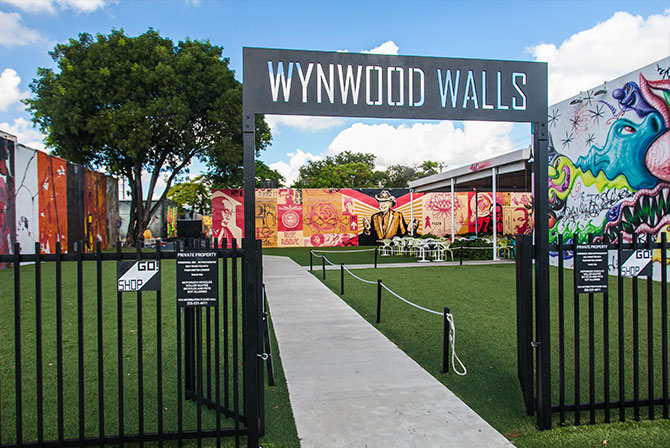
The popular art district is a must for many visitors. What once was an area with shuttered factories and warehouses is now recognized as a premier destination for arts, culture and innovation. Wynwood is home to over 400 businesses, including art galleries, antique shops, artisanal food and beverage restaurants and innovative companies. The neighborhood’s street art and hundreds of murals and graffiti are a main driver to the area. The 2018-19 Wynwood Market Report states both multifamily and office inventory in the Wynwood Business Improvement District market are poised to double over the next three years, as projects that are under construction are delivered.

Brickell

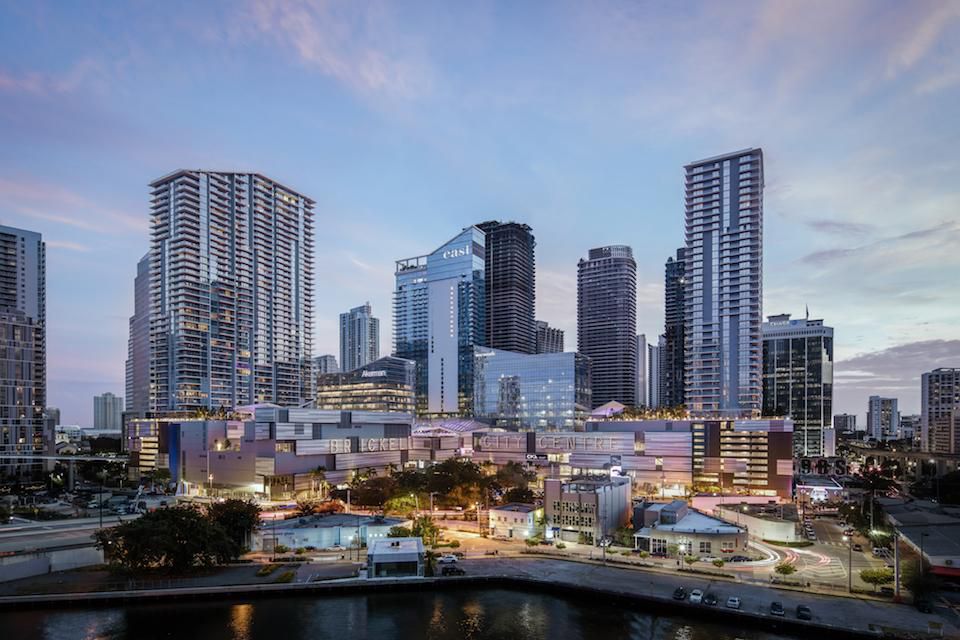
Known as the financial district of Miami, Brickell has much more to offer than just business and office space. With many trendy bars and restaurants, hotels, condominiums and business opportunities, Brickell is among the fastest-developing areas in Miami. The opening of the $1.05-billion shopping and mixed-use Brickell City Centre in 2016 has been a catalyst for growth. The walkability in Brickell and access to the metromover are also some of the benefits for families and businesses in the area. 

“Brickell offers the ultimate live, work and play lifestyle. Apart from its walkability and nightlife, it also serves as a central point between the best Miami has to offer. It’s minutes from Coconut Grove, Key Biscayne, Wynwood and Miami Beach,” Diego Valencia, founder of WeRentBrickell.com, told Invest:.


Coconut Grove

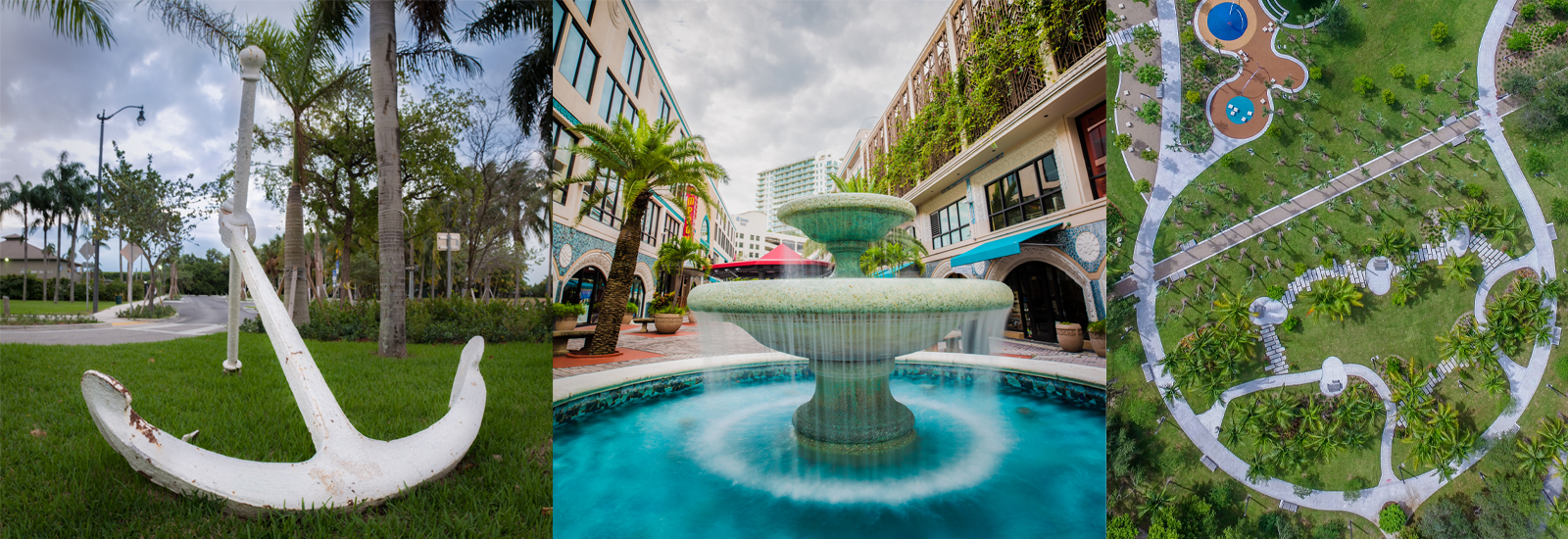
Located south of Downtown Miami, Coconut Grove is a pedestrian- and bike-friendly neighborhood that is perfect for an escape from the city’s noise. It has been the sailing capital of Miami and it is known for its lush green landscape, bohemian setting and the beautiful Biscayne Bay waters. The renovation of the iconic, open-air mall CocoWalk is expected to attract national and international brands to the area. “The entire retail and office landscape of Coconut Grove is being redeveloped, and there are a significant number of baby boomers who are living in large homes and are reaching a stage in life where relocation makes sense. This creates opportunities for new buyers and developers,” Jay Phillip Parker, CEO of Douglas Elliman Real Estate, said in an interview with Invest:.


Edgewater

Located north of Downtown, next to Wynwood Arts District and south of the Design District, this neighborhood has great potential as a live, work, play community. Residential and office towers in the area have great views to Biscayne Bay and a strategic location near some main highways, major neighborhoods and arts and culture offerings. Property prices are usually lower than those in Miami Beach or Downtown and construction activity is on the rise.


Doral

Doral is one of the fastest-growing cities in Miami-Dade. The city’s population has grown 77% in the last eight years and is ranked No. 2 in Forbes Magazine’s America’s Top 25 Towns To Live Well, which cites the city’s cultural amenities, pro-business environment, and highly educated workforce. 

“Doral is one of the best locations to live, work and play. It has the parks, restaurants and amenities, and it’s located between the major highways and near the airport. A lot of major companies are headquartered in Doral, and many of the industrial players are located in the city as well. The government is very approachable and they understand business needs,” Rich Guertin, regional vice president of PS Business Parks, told Invest:.


To learn more about our interviewees, visit:

WeRentBrickell.com: http://www.werentbrickell.com/ 

Douglas Elliman Real Estate: https://www.elliman.com/florida 

PS Business Parks: https://www.psbusinessparks.com/ 

Spotlight on: Gary Jonas, President & Principal, The HOW Group

Writer: Yolanda Rivas

2 min read AUGUST 2019 — Philadelphia’s real estate market has been growing steadily over the last few years. Many international and national investors are targeting the sector, where rents are affordable, when compared to surrounding markets, and there are numerous low-risk investment opportunities. This week’s “Spotlight On,” with Gary Jonas, president and principal of the The HOW Group, illustrates the landscape for the city’s real estate industry, including the most in-demand services, top neighborhoods and the trends in the sector.

What HOW Group business lines are seeing the most growth in Philadelphia today? 

The two divisions that are seeing the most growth are construction and real estate. We attribute that to the hole in the market between companies working for themselves and building a small number of units and companies building hundreds of units. There is a spot in the middle where people need contractors to build 50 to 100 units. It is hard to find companies to fill that space because of the labor shortage. It is also hard to find companies that are capitalized enough to work in that space. Because we are able to fill that gap, we have seen significant growth in our construction division over the last year. There is a huge need for that type of work.

Our real estate company does a lot of new construction sales, which speaks to the Philadelphia market. We expect this division to double its business this year. We made a big investment three to five years ago to launch this division, and now we are seeing significant growth. Between those two companies, we are going to do north of $100 million this year.   


What areas of Philadelphia are most in demand in residential real estate?

There is a huge growth opportunity in neighborhoods where you can provide housing that is in the $300,000 to $400,000 range. That is an underserved market and there is a lot of development starting to happen in that price range. For example, Mantua is a neighborhood right on the edge of Schuylkill Yards, education centers and the development going on in the area, and it is a great place for these types of projects. University City has a 17% to 20% homeownership rate, but it’s the second-biggest job hub and there is a need for affordable housing in the area. The edges of University City are primed for significant growth. There is a neighborhood next to Grays Ferry, known as the forgotten bottom, which is another great area for development because of its location and access to major highways. We also expect to see growth in south Philly. 


What are some trends in Philly’s real estate sector?

We are seeing people who want to do co-living spaces. We are seeing a lot more buildings that provide a product similar to Airbnb. We are also starting to see more micro units because affordability is starting to become an issue. As construction and land costs continue to rise, we are seeing unit size starting to decrease and become a popular option. Because of the inadequate labor pool, we are also starting to see more manufacturing stock like modular and prefab units being placed.

We are always looking to create advancements within the construction division. We are working with manufactured housing developers to figure out ways to use technology to build in a more efficient and cost-effective way. We are working with foundation companies that use proprietary systems and build foundation walls that are more energy efficient and cost-effective than concrete. We are doing these things to differentiate our products.


How does The How Group impact the community?

Our charity division, HOW Charities, supports underserved families with homeownership and financial literacy. We want to get people to financial freedom and this year, we are donating two houses. We are working with the Building Industry Association of Philadelphia (BIA) to figure out ways to duplicate this effort on a broader scale. Along with the BIA, we are looking at solutions with the private sector toward affordable housing and job placement within the industry. There is a lot of momentum because of how great the sector and the city are performing.


To learn more about our interviewee, visit:

The HOW Group: https://howgroup.com/ 

A changing investment landscape

Invest: Miami speaks with Jose Parrilla, CEO & president of InvestQuest Partners

What were InvestQuest Partner’s most important successes and milestones for 2016?

We achieved many important milestones in 2016. From the business standpoint, we were able to open an important number of developments. Our primary business is buying, renovating and flipping assets. We wiped out over $10 million in liens held by the local municipalities and completed over 200 flips. Our success this year has allowed us to grow the company to 300 employees.

With the deceleration of real estate growth, what is the expected impact on real estate investment in 2017?

The current slowdown in the market is a temporary one. We strongly believe that Miami will continue on a path of long-term growth because of its history of continually attracting affluent investors. We are confident that in a two-year period we will be able to sell our new projects at similar or higher prices to the ones today. Even when you take into account that, for Latin American investors, it has become more expensive to invest in the U.S. due to the strengthening USD and that the proportion of foreign money in the market has decreased in the last few years, there have still been an increase in foreign investors with significant presence, such as those coming from Spain and Canada.

What has been the performance of the REO vs the short sale market?

The Real Estate Owned (REO) market has completely dried up. According to our data, which is very conservative, there are people in that market segment who are overpaying for properties. This might be related to some speculation in the market, with many players assuming that the market is slowly going to increase. However, our data suggests that we should be preparing for a slight downturn.

The opposite situation is happening in the short sale market. It is an important opportunity in Miami because it not only gives players a chance to help people by taking them out of a difficult situation offering “cash for keys,” but it also is the most lucrative investment in real estate because of its many revenue sources: commissions from the banks, commissions from the mortgage holder, and the property at a huge discount.

How can investors take advantage of the zoning in Miami?

The optimum zoning we are currently focused on is  T6-80, which allows the developer to build up to 12 stories with a density of 150 units per acre.  One of the main challenges for developers that are trying to build under Miami21 is compliance with the parking spaces that are required in order to be allowed to build the units. However, since one of our projects is near the border between Downtown and Brickell, we received the first permission to build our units without the required parking spaces. This shows that the city is evolving and adapting to a structure better suited for high population density.

To learn more about Invest Quest partners, visit their website at: http://investquestpartners.com/

New Frontiers

New Frontiers

Fortune International Group President and CEO Edgardo Defortuna discusses Miami-Dade’s complex zoning landscape and the impact on luxury real estate development


One of your major projects at the moment is JADE Signature, located in Sunny Isles. What advantages does Sunny Isles offer to developers?

Oceanfront property has become increasingly scarce in South Florida. Sunny Isles is one of the few remaining areas where a developer can secure large parcels of land with a water view. Our Jade Signature project – designed by Herzog & de Meuron – the architects that created the Perez Art Museum Miami (PAMM) – sits on 2.5 acres of land right on the beach.

Sunny Isles is attractive to developers because it allows the space for creativity – literally. There are no other locations on the beach that permit you to build structures up to 650 feet tall. That sparks innovative thinking in design and presents an exciting opportunity for developers like Fortune International Group to have a significant impact on the skyline.


How would you describe the landscape for zoning and other regulations affecting real estate development?

The regulatory landscape in the region is complex, and in Miami, it is as diverse as the city itself. Twenty years ago when Fortune began developing here, there were zoning and land use guidelines in Miami and in Dade County. Over time, many smaller towns and municipalities started to form independent governments, each with its own set of zoning regulations.

For example, today the zoning rules in North Miami and Key Biscayne are different, just as they are in the Broward County cities of Hollywood and Hallandale. From a developer’s point of view – that kind of change significantly impacts your business strategy. You must be extremely knowledgeable of the area and the regulatory nuances from project to project.

In the City of Miami, where development now is fairly limited, you have one set of zoning guidelines, Miami 21, which is quite favorable to commercial developers because it is primarily a business district. However, it is challenging to find waterfront sites within the city. While in Miami Beach, the challenges arise due to the various historic designations and related restrictions. In many areas, existing structures cannot be demolished to make room for new development. You can refurbish a historic building, but you must maintain the existing structure.


How does this fragmentation impact development? Do you see the situation changing in the near future?

It’s important to understand that the main revenue stream for all of the cities and counties in South Florida today is real estate tax. The municipalities thought that taxes were unfairly distributed when they were concentrated into one place, so I don’t see the situation changing. There might be some agreements made between one area and another, but it would be difficult to create a unified government; if anything, more areas are going to break apart and try to generate their own pockets of zoning.

Not having a strong unified effort for infrastructure, transportation and other services needed for a major city like Miami to function presents a challenge. Hopefully the public sector can integrate a little bit more, and really create comprehensive plans for the major needs of the city as a whole so as to support the growth we are experiencing.


What are some of the comparative advantages Miami offers when it comes to real estate?

Prices here are competitive when compared to other major cities in the U.S. and the world. Prices in New York are three or four times what it is here, and the same goes for San Francisco and Los Angeles. From a U.S. investment proposition, Miami is still very attractive to outside investors, which is why we are seeing the high volume of individual buyers, as well as funds and groups, willing to invest equity in the different projects being developed here.

Miami has much to offer culturally as well. The museums have done marvels to the city. Art Basel has significantly changed the cultural aspect of Miami, as have the Adrienne Arsht Performing Arts Center and the New World Symphony. If you like sporting events, you have The HEAT and the Dolphins, and hopefully David Beckham can bring soccer here.

All of these things impact the overall perception of the city. Previously, higher-end Latin Americans would say, “Yes, I love Miami. I spend a few days there, but my apartment is in New York.” Now, they might still have their apartment in New York, but they are spending a significant amount of time in Miami, and they all want an apartment here.


What risks are present within the real estate market?

People talk about bubbles all the time, but it’s really a question of managing supply and demand, and the timing of when you launch the supply. As a developer, it’s important to be disciplined and mindful of what the market is like before moving forward.

Today, most prudent developments are supported by 50 percent deposits from the buyer; you don’t start construction until you have a significant number of presales. With all the money the buyers have put into the construction, it’s very difficult for them not to close at the end, which is what happened in the past when they were speculating with 10 percent or 20 percent.

As long as we keep this structure in place, we should avoid some major risks. But now that financing is becoming more available, this could create a temptation for developers to require reduced deposits of, say, 30 percent and get the remaining 70 percent from the bank. That’s when problems could potentially start.


How has the consumer profile for luxury properties changed in the current building cycle? 

In the past, the market was dominated by Latin Americans responding to the political and economic situations in their home countries. Today Europe is becoming a very strong player – England especially – because the exchange rate makes Miami prices attractive. Investment from the Asian market, which was previously almost nonexistent, is starting to pick up as well.

Brazil and Argentina continue to be key markets for us – as they have been for a long period of time – for different reasons. Brazil has been doing well for the past five years, while Argentina’s economy has been going the other way. People are attracted to Miami when their countries are either doing very well or very poorly. If they’re doing very well, then they’re diversifying and buying in Miami and if they’re doing poorly, then they’re taking the money out of their countries and buying in Miami. We’re also looking at Mexico because of the growth and wealth creation happening there.

I’m particularly excited about our new relationships in London because the market is so vibrant there. People are making significant amounts of money there and they all love the natural conditions of Miami. They just need to get more exposure to this type of product because they’re used to buying in Orlando or in the islands and they are just now really discovering Miami.

 

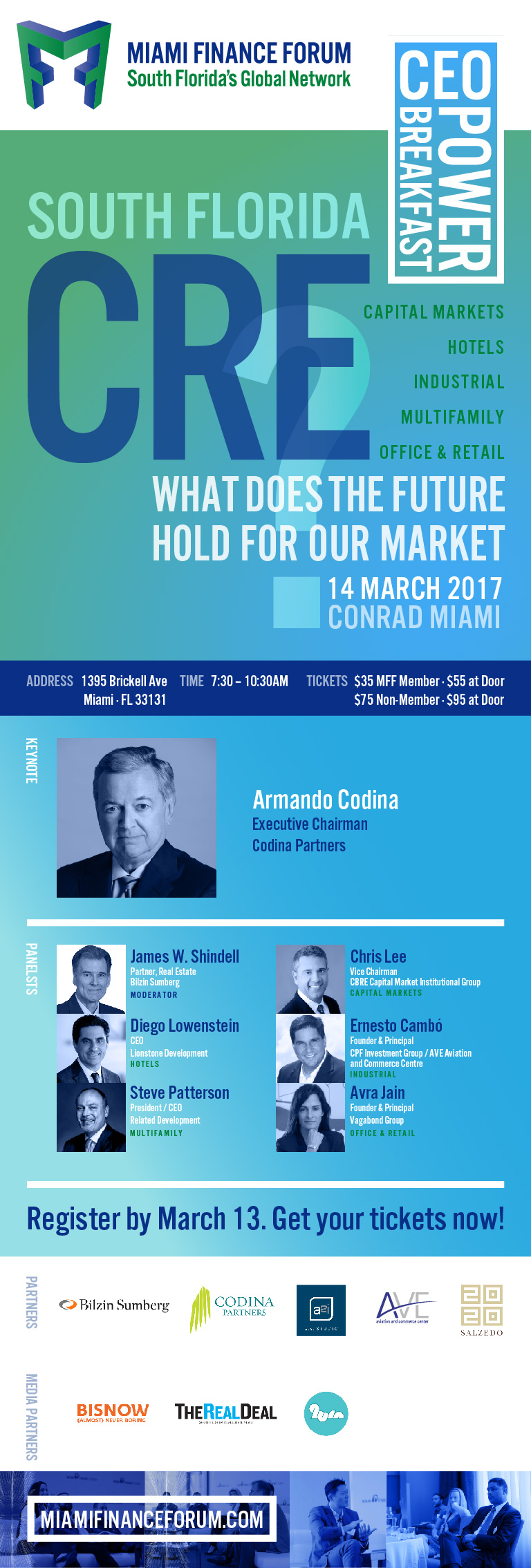
Invest: Miami speaks with Armando Codina, Chairman, Codina Partners

Invest: Miami speaks with Armando Codina, Chairman, Codina Partners

Alex Wertheim
Doral’s growth story is linked to the growth story of Miami-Dade. The highest employment concentration in Miami-Dade County is Airport West, the area where Doral lies. Carnival Corporation is headquartered in Doral, along with major media companies like Miami Herald and Univision, as well as the Federal Reserve, U.S. Southern Command, and a thriving logistics sector. Employment opportunities have brought an influx of residents into the city – as have greater affordability and a strategic location – both foreign and domestic. In recent years, Venezuelans, fleeing political and economic crises in their country, have come to Miami-Dade and settled in Doral. For them, and for many Latin Americans, the proximity to the airport is a great attraction and a reason to buy homes and start businesses here.
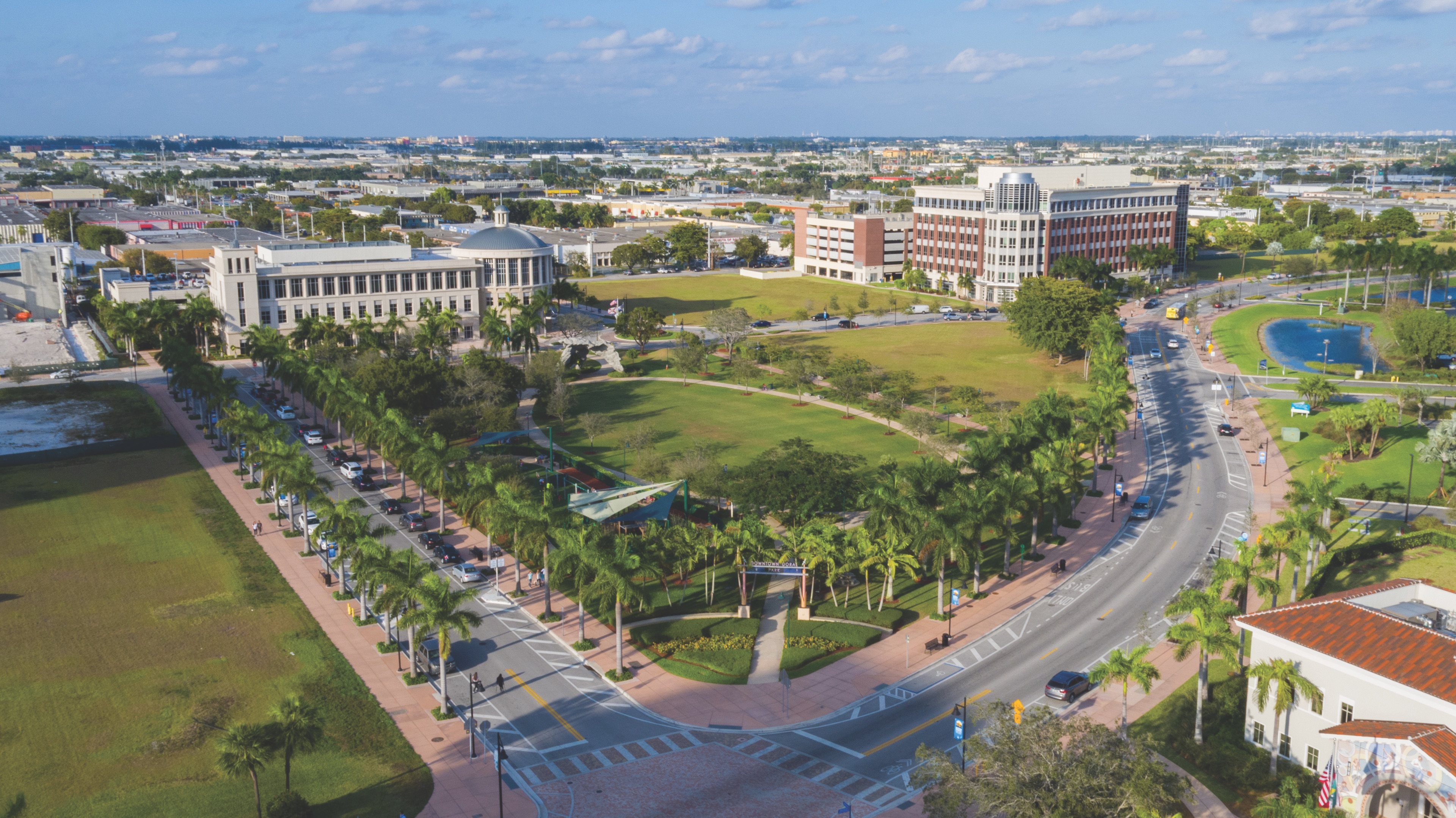
If Doral was to become a great city, it needed a heart, and a downtown is the heart of any city. This is why we’re building Downtown Doral. Doral is the first city in Dade County that offered the opportunity to build a core – a downtown – from the ground up, and for a developer, this is truly special. We are creating a master-planned community that includes high-end shopping, dining and living options, as well as the supporting infrastructure – bike paths, sidewalks, public green spaces etc. With so many businesses that also call Doral home, we have taken special care in developing the new office space that will be included in the project, creating a modern campus feel.
This project also features a great example of a public-private partnership (PPP) – Downtown Doral’s collaboration with Miami-Dade County Public Schools to build a charter school. In this arrangement, developers provide the land and finance the construction, while the school board administers the school. Private sector execution allows for greater efficiency, while public sector management allows all parties to benefit from the expertise and accomplishments of the county’s award-winning school board. The new school will be an added draw for prospective residents seeking an affordable community with strong infrastructure, while it allows the county to earn additional revenue from operating the school.