What Phase 3 of reopening means for Broward County

What Phase 3 of reopening means for Broward County

By: Beatrice Silva

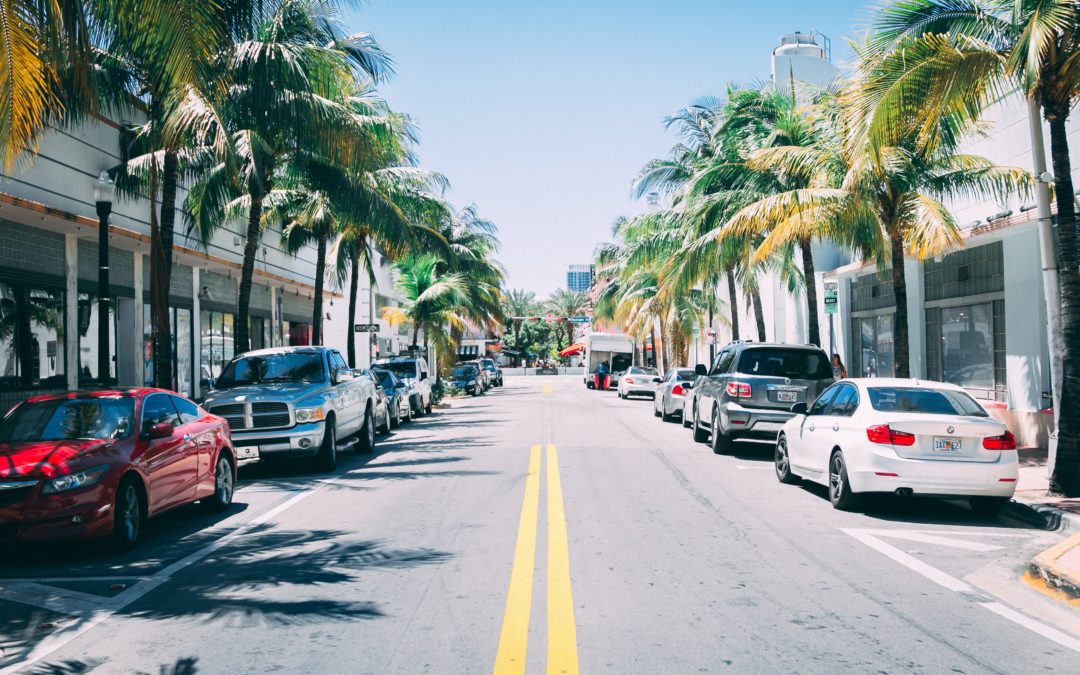
2 min read October 2020 — Gov. Ron DeSantis’ decision to move Florida into Phase 3 has led to a scramble among local government officials to make sense of which public health regulations remained in place. In the aftermath of the announcement, confusion has quickly swept across Broward County to the point where Fort Lauderdale Mayor Dean Trantalis issued a New Declaration of Emergency Regulations that clarifies the rules and regulations for businesses and individuals during this phase of economic reopening. 

 DeSantis announced his plans on Sept. 25, just three weeks after Broward and Miami-Dade County entered Phase 2 of reopening. Phase 3 is outlined within the Safe. Smart. Step-by-Step plan. It has minimum recommended health protocols and lifts the majority of restrictions on restaurants, bars and other businesses. Moving forward, such establishments will be allowed to operate at full capacity with limited social distancing protocols. Local governments were given the permission to limit some bars to 50% of capacity. However, the new bill prevents cities and counties from ordering them to close or penalizing them for not following the rules. “I think we need to get away from trying to penalize people for not social distancing and work with people constructively,” DeSantis said in a statement. 

Fort Lauderdale’s Trantailis responded to the Phase 3 reopening plan in a letter to the public. His message highlighted the importance of opening business but under regulated guidelines. “As I have long said, we have needed to begin reopening our businesses and amenities but that we also must do so in a way that continues to protect public health. Given the broad nature of the governor’s order, I am attempting to maintain a measure of protection that an urban area like ours needs since the virus can easily spread. For the month of September, the daily infection rate in our area has remained consistently under 5 percent. We want to continue to keep it there and avoid another spike in COVID-19 infections…My new order conforms with the governor’s expansion, but still maintains our old local rules of six feet of separation between tables and between people who are standing or waiting in line. Employees must wear masks as must customers except when they are eating,” said Tranalis. 

Gyms, fitness centers, state parks, public beaches and other large venues were also permitted to open at full capacity with limited social disconnecting protocols. The Safe. Smart. Step-by-Step plan is promoted to help get small businesses up and working again. During the height of the pandemic, Broward County’s unemployment rate leaped to 14.5% in March. 

“The re-opening of our economy has not been easy, but it is being done right in most states. Of course, things change, but as we gather more knowledge on this virus, I believe we can combat it and not have to close our economy. Florida Gov. Ron DeSantis’ approach of Safe. Smart. Step by Step is proving to be the right way to re-open the economy,” Alex Sanchez, president and CEO of Florida Bankers Association wrote in an opinion piece

Just two days after Florida entered Phase 3 of reopening, Florida’s COVID-19 Data and Surveillance Dashboard reported 1,868 new cases. Some public officials are questioning if Gov. DeSantis overstepped his power while others are adamant about reopening to full capacity.


 

The Post-Pandemic City

The Post-Pandemic City

By: Abby Melone, President & CEO, Capital Analytics

It’s a truism in today’s hyper-connected world that people go where the jobs are, more so now than ever before. But what happens when your job suddenly can be done from anywhere?


The 19th century ushered in the first and second Industrial Revolutions that saw more and more people move to urban environments, precisely because that’s where the jobs were. In the United States, the rise of manufacturing opened a new world of employment possibilities, pushing people from the farm to the factory. It’s a push that in one way or another continued into the 20th and 21st centuries. The result is seen today in the population densities that cram big cities from coast to coast, border to border.

According to the United Nations’ World Urbanization Prospects report and the website Our World in Data, the world crossed over in 2007. That’s the fist year the number of people living in urban areas rose above the number living in rural areas (3.35 billion versus 3.33 billion). In the United States, around 82.3% of the population lives in urban areas, according to the World Bank. Growth trajectories project a steady increase in urbanization as far out as 2050. 

Today, the millennial generation is changing the character of urbanization by spearheading the live-work-play ethos. This generation prefers to skirt the traffic jams and live and play near where they work. The goal to have it all close by has given rise to the mixed-use building concept that puts everything – your living options, your entertainment choices and your shopping – all in one convenient location, which preferably, is near your workplace. 

It also means we are all living closer to each other in smaller and smaller spaces. That seemed to suit a lot of people just fine. Then the COVID-19 pandemic happened, and all of sudden, none of that seemed fine at all.

The pandemic resulted in shelter-in-place orders that forced people to live 24 hours a day in their homes while also working from their home offices, if they had one, or their kitchen tables if they didn’t. The very idea of needing to go somewhere else to do your job turned out to be not so much of a necessity after all. In just a few months, priorities appear to have shifted. Now, many of us seem to crave space, the great outdoors, and we seem to be split 50-50 on whether we want to continue working from home, wherever we choose that to be, or prefer an official office setting, mostly for the socializing.

There is little doubt that the world has changed as a result of the pandemic. Most experts are puzzling on whether that change will last and just what our cities will look like as a result. The fact is, though, that change was already in play before COVID-19 hit.

My company focuses on nine major U.S. markets like Orlando, Miami, Atlanta and Philadelphia. We talk to industry and political leaders to understand the issues their communities face to gauge the direction in which they are moving. Today, everyone is talking about the pandemic’s impact on the retail sector, for example. Yet, e-commerce was already a thing before COVID-19. In 2019, a record 9,800 stores were shuttered, according to a Bloomberg report, with 25,000 closures expected in 2020 due to the coronavirus impact, the report said, citing Coresight Research. Yes, that’s a devastating impact, but the pandemic really has only accelerated the pace of implementation. It pushed more people online immediately, but those people were likely headed there anyway.

Many of the leaders we have spoken with during the pandemic agree that retail and commercial real estate was already undergoing a slowdown as industrial space to accommodate last-mile delivery for the Amazons of the world was booming. Many expect this trend will continue.

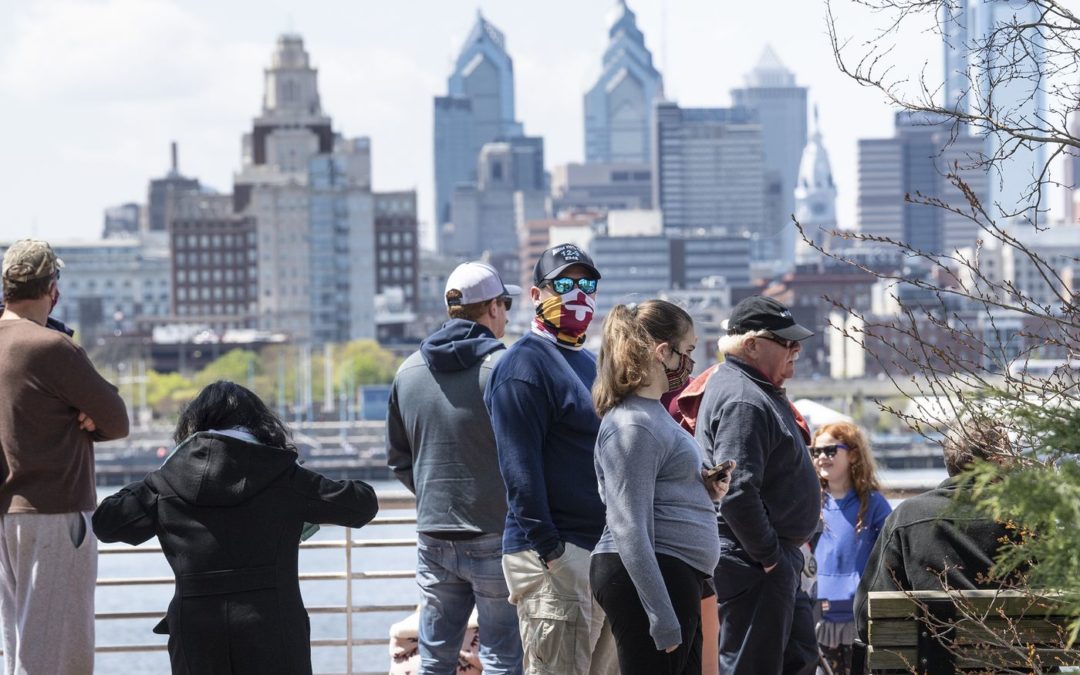
More importantly, what the pandemic has done has caused a rethink of priorities among individuals and it is this impact that will likely shape the post-pandemic city. Living in lockdown awakened people to the “smallness” of their space, forced on them by a combination of convenience and higher and higher housing prices in big cities. The median listing price for a home in Miami-Dade, for example, was $465,050 in May compared to the average U.S. listing price of $329,950, according to the Federal Reserve Bank of St. Louis. Interestingly, population growth in Miami-Dade was already slowing as more people moved out, with escalating living costs among the factors. With the pandemic highlighting the risks of living so close together, will more people decide that farther away is not only cheaper, but safer?

Big city living will change in the post-pandemic world as social distancing forces “people places” like gyms and restaurants to accommodate lingering fears from the virus. Tens of thousands of small businesses have already closed down for good, clearly altering the very unique characteristics of cities that attracted people in the first place.

The biggest impact, however, will be on how – and where – jobs are done. Remote working is hear to stay in some form or another. Like the industrial revolutions of the 18th and 19th centuries, people will always go where the jobs are. For many, those jobs will now be done from home, which means that home can be virtually anywhere. It creates choice like never before, and this will dramatically alter the character, although not likely the course, of urbanization. That’s an important difference. 

Big cities have seen the ebbs and flows of population growth before and will likely see them again. Through it all, they have more often thrived than not. The post-pandemic city may look and feel a bit different – the way condo units are built, for example, may change to accommodate working from home, while adding elements like air filters to battle any future virus outbreak – and there may even be a greater push to the suburbs in the short term. Overall, however, continued urbanization likely will remain on the cards. If we’re lucky, there may just be a little more distance between all of us.


Decatur Driving Global COVID-19 Response

Decatur Driving Global COVID-19 Response

Written by: City of Decatur 

2 min read June 2020 As the world seeks answers to the devastating impact of COVID-19, many of the most critical questions about the virus and how to eradicate it are being routed through Decatur. And while the CDC certainly plays an outsized role in this equation and generates most of the attention, The Task Force for Global Health in Downtown Decatur is quietly using its infrastructure to drive solutions.


“When it comes to our work, we take pride in operating mostly behind-the-scenes and shining the light on our partners rather than ourselves,” said Bill Nichols, executive vice president and COO for The Task Force for Global Health.


Behind the scenes or not, The Task Force has been a crucial force in the worldwide response to the coronavirus pandemic, including coordinating the distribution of 1.4 million pieces of personal protection equipment to hundreds of hospitals and healthcare facilities around the country, strengthening epidemiological and lab skills through training 14,000 individuals around the world, and hosting monthly teleconferences for health officials worldwide to connect and share best practices and treatments. 


Additionally, The Task Force is coordinating critical collaborations between the public and private sectors, aligning the contact tracing efforts of tech giants like Apple and Google with health officials around the world.


“This pandemic has clearly changed the way our country thinks about global health, and it’s up to all of us to ensure we don’t lose focus on this critical issue in the future,” said Nichols. “Being properly prepared for a pandemic requires billions of dollars, but it’s an investment worth making as an ‘insurance policy’ to protect against the type of economic fallout we are experiencing.”


While the coronavirus pandemic has thrust discussions about vaccines into the mainstream, The Task Force regularly works on coordinating the vaccine safety efforts related to epidemics affecting areas and regions that are often overlooked. Having this infrastructure in place has allowed the organization to continue its lifesaving work in underserved regions around the globe while also addressing COVID-19, including through its Brighton Collaboration, a worldwide network of over 5,000 vaccine researchers that ensures vaccine safety, and the Partnership for Influenza Vaccine Introduction (PIVI), a program that works with low and middle-income countries around the world to develop their influenza vaccine delivery infrastructure, which will better prepare them for when a COVID-19 vaccine becomes available.


“Now more than ever, our location in Decatur serves as a major asset when you consider how closely we are working with the CDC, Emory and other Atlanta-based institutions to address the pandemic,” added Nichols. “It also allows us to give back, as we are sharing our global expertise with the Dekalb County Coronavirus Task Force to guide our own community through a safe reopening in the days, weeks and months ahead.”


To learn more about this, visit: https://www.decaturga.com/


Florida and Pennsylvania unemployment claims level off as economies slowly reopen

Florida and Pennsylvania unemployment claims level off as economies slowly reopen

By: Beatrice Silva 

3 min read June 2020 — As of June 5, most of Florida has taken the next step of reopening the economy that was devastated by COVID-19. Unemployment figures are starting to level off as businesses slowly start to open up again. On June 6, the U.S. Department of Labor saw its lowest figure for new unemployment claims since March 26. However, the sunshine state’s economy isn’t in the clear just yet. Florida has the fourth highest unemployment claims in the U.S. To make matters worse, some Floridans are still struggling to collect their unemployment benefits. 


 Since March 15, the Florida Department of Economic Opportunity (DEO) has paid out $1.5 billion in state claims and another $4.6 billion in federal unemployment benefits. Approved applicants should be getting $600 per week from federal benefits plus the state’s additional $275 weekly benefits. Unfortunately, issues resulting from an influx of people filing for benefits has caused the Florida DEO’s website to crash on multiple occasions. On April 15, Gov. Ron DeSantis placed Jonathan Satter, Florida Department of Management Services secretary, in charge of fixing the state’s unemployment benefits system. As a result, a new mobile-friendly website was born. People can now submit an application on the new website if they don’t currently have an open unemployment benefits claim on file. 


Different markets were hit particularly hard by the COVID related economic slowdown. The transportation and hospitality sectors are expected to take the longest to get back on their feet.

“There are a couple of key industries that will be greatly impacted the longer this goes, especially tourism and real estate. On the positive side, there is a significant number of secondary markets in Florida. Traveling overseas will likely not be as popular in the next couple of years, speaking well for these secondary markets. Challenges do drive opportunities and developers might take cues from the latter. Hospitality and tourism will continue to suffer and will likely require continuous stimuli the longer this continues,” said Blain Heckaman, CEO for Kaufman Rossin in an interview with Invest: Miami. 


Florida isn’t the only state feeling economic pressure as a result of COVID-19. Northeastern regions of the United States that were hit particularly hard by the virus, like Pennsylvania and New York, have also started reopening nonessential businesses in an effort to jumpstart the economy. Since March 15, the Unemployment Compensation department has paid over $16.4 billion in state and federal unemployment compensation benefits, according to Pennsylvania’s government website. The state is also preparing to activate an unemployment program that would extend benefits for up to 13 more weeks for eligible individuals. The last time Pennsylvania initiated the extended benefits program was during the fallout from the Great Recession in 2009.


Pennsylvania Gov. Tom Wolf is taking a three-phase, regional approach to reopening the state. The system consists of red, yellow and green phases that are then applied to individual counties. Red is the most restrictive and green is the least. On June 5, Wolf allowed 34 counties to transition into the green phase. Although most restrictions are lifted during this final phase, people are encouraged to follow CDC guidelines. Businesses like gyms, hair salons and indoor recreation centers that remained closed in the yellow phase can start to reopen at 75 percent occupancy. There are still 33 Pennsylvania counties in the yellow phase, which serves the purpose of slowly powering up the economy while still trying to contain the spread of COVID-19. 


Gov. Wolf has publicly voiced his desire for Pennsylvania to reopen. However, he warns business owners not to open up too early. “By opening before the CDC evidence suggests you’re taking undue risks with the safety of your customers. That’s not only morally wrong, it’s also really bad business. Businesses that do follow the whims of local politicians and ignore the law and the welfare of their customers will probably find themselves uninsured because insurance does not cover things that happen to businesses breaking the law,” Wolf said during a press conference. 


To learn more visit…


https://kaufmanrossin.com/


https://www.baynews9.com/fl/tampa/news/2020/06/15/florida-unemployment-benefits-update


https://www.miamiherald.com/news/business/article243450076.html?


https://www.pa.gov/guides/unemployment-benefits/


Florida’s phase 2 reopening and what it means for South Florida

Florida’s phase 2 reopening and what it means for South Florida

By: Beatrice Silva 

2 min read June 2020 On June 3, Gov. Ron DeSantis announced his plans to transition the majority of the state into the second phase of its recovery plan. However, the three southeast counties hit hardest by COVID-19 — Miami-Dade, Broward, and Palm Beach — will not be included in the reopening. 


 “We’ll work with the three southeast Florida counties to see how they’re developing and whether they want to move into phase 2,” DeSantis said during a news conference in Orlando on June 3. “They’re on a little bit of a different schedule.”


Gov. DeSantis will allow the three southeast counties to enter phase 2 under certain circumstances. The county mayors or county administrators will have to seek approval to enter phase 2 with a written request. Palm Beach County Mayor Dave Kerner and County Administrator Verdenia Baker wasted no time sending their request letter to DeSantis. 


“Palm Beach County is ready to go into ‘phase 2,” said Kerner at a news conference on Friday afternoon. “But we want to do it with some particular carve-outs that are necessary for the unique nature of Palm Beach County.” The county’s public officials are waiting for approval from Gov. DeSantis. 


As for Miami-Dade, their previous reopening date was pushed back by protests against police brutality. Miami-Dade Mayor Carlos Gimenez lifted the countywide curfew on June 8, and approved the reopening of gyms and fitness centers under Amendment 2 to Miami-Dade County Emergency Order 23-20. Although the city isn’t officially included in the initial phase 2 reopening date, Gimenez says he is working with the state on reopening locations very soon. 


Upon approval, restaurants may allow bar-top seating with appropriate social distancing. Bars will be able to operate at a 50 percent capacity inside and full capacity outside. Retail stores are going to be allowed to operate at full capacity and entertainment venues like movie theaters and bowling alleys will be able to welcome back guests at a 50 percent capacity. Residents who do decide to venture out will still have to follow CDC guidelines like wearing a mask, social distancing, and frequently washing their hands.


Although the north and south regions of Florida are on different opening schedules. State universities will have to submit their blueprints by Friday. The State University System of  Board of Governors recommends things like social distancing, disinfecting, face masks and student’s desks being as far away from one another as possible. School districts on the other hand, will be given the final say on their own social distancing protocols. It is expected that students will have a much different learning experience upon returning to the classroom. 


“We have a great opportunity to get back on good footing,” DeSantis said. “I know our kids have been in difficult circumstances. … Getting back to the school year is going to be really, really important to the well-being of our kids.”


Broward County school districts are in the process of surveying parents to gauge what they would like their child’s school to look like this coming fall. “We will have schools open. We will have teachers in schools. We will have students in schools … including hybrid models that some parents are rightfully demanding,” said Alberto Carvalho, superintendent of Miami-Dade County Public School, at Wednesday’s school board committee meeting. 


Within the past four months, there have been 70,971 confirmed COVID-19 cases and 2,877 related deaths in Florida, according to the Florida Health. 


For more information visit: 


https://floridahealthcovid19.gov/#latest-stats/


https://www.miamiherald.com/news/local/education/article243464791.html


https://miami.cbslocal.com/2020/06/11/governor-ron-desantis-plans-reopening-schools-fall/


https://www.abcactionnews.com/news/state/florida-state-universities-must-submit-fall-reopening-plans-by-friday


Spotlight On: Jenna Kelly, Northern Georgia Region President, Truist

Spotlight On: Jenna Kelly, Northern Georgia Region President, Truist

By: Felipe Rivas

2 min read May 2020SunTrust and BB&T have combined in a historic merger of equals to create Truist, the sixth-largest U.S. bank holding company. With 275 years of combined history serving clients and communities in high-growth markets, the new company will deliver the best of both companies’ talent, technology and processes, Northern Georgia Region President Jenna Kelly told Focus: Atlanta.


Q: What has stood out for Truist in Atlanta in the last year?

A: We announced our merger in February last year and closed it in December. We spent the bulk of the year operating independently as SunTrust and BB&T. This meant we really only had three months as a joint entity before the COVID-19 pandemic struck. All along, we have been talking about how this merger was an opportunity to build a better bank and we looked at how we were better together, including our complementary business lines and strategies. One of the exciting developments this year was our announcement of the new branding and our purpose. The Truist purpose is to Inspire and Build Better Lives and Communities. That purpose is at the center of everything we do, and something that differentiates us, especially given the current circumstances, to our clients.

Q: What has been the real impact of the COVID-19 outbreak on the operations of Truist?

A: We said from the outset of the merger that all our client-facing teammates would retain roles. Within the Northern Georgia region, our team remains in place and our efforts have really been more about how we integrate culture. With the pandemic, most of our team is working remotely. We paid a $1,200 special bonus to all our teammates who make less than $100,000, we have implemented additional time off and we have introduced more flexibility given family dynamics can be difficult to juggle when childcare or education are not available. 

We also turned our attention to how we can provide our clients with relief. We are participating in the Paycheck Protection Program (PPP) and we are working on how we can get our clients the funding they need. Through the first round of funding, we have helped around 32,000 clients with $10 billion in PPP loans. In Atlanta, we made around $4 million in grants to the agencies that are on the frontlines of the crisis response. 

Q: As you have seen the landscape change, how have you seen the banking industry set up for the future?

A: The message is that there is a place for everyone, whether it be a small bank, a large regional or a multinational. The impetus behind our merger was the growth of technology in banking. We looked at the demands our clients have in the way they want to be serviced, and it is not necessarily walking into a branch anymore. We needed some additional scale, and we came together so we could be more innovative and make new investments. This does not mean there is no longer a role for community banks. We believe we have a unique opportunity however to leverage our high touch community bank model with investments in technology to create better client experiences and build more trust – something we call T3.

Q: What role does Atlanta continue to play for Truist in its portfolio?

A: Atlanta is our largest market, given it was the headquarters of SunTrust. When we merged, we enhanced our market position. Atlanta is a diversified economy both in industries and population and from a banking perspective, we like where we are in the market. We continue to invest to strengthen our position.  

We have a very long history of supporting Atlanta as well as communities across the state. We announced last year that we would double our commitment to the Atlanta community to $300 million in investments over a three-year period. The investments include a combination of community development investments from the bank and philanthropic grants from our foundation. 

More broadly, the Southeast has been one of the most attractive areas of the country. Those growth dynamics play well for Atlanta, which will continue to attract jobs, companies and population. As we come out of the COVID-19 pandemic, we hope to recover faster than other parts of the country, given our position going into the crisis. 

Q: How are banks going to be able to help small businesses through this crisis?

A: Unfortunately, small businesses will be the hardest hit through this pandemic. The government stimulus is certainly a starting point and that will give them some temporary relief. We want to be able to leverage the tools and capabilities we have as a larger bank and deliver them on a local, personalized level. We, as a bank, can perhaps help fund CDFIs that can in turn fund small businesses. There is no one solution, but that is an area we were considering well before the pandemic.

I think it will be interesting to see how this pandemic changes the world for all of us. We have all adapted in ways we probably thought we never would or could. There is a lot of digital activity going on now that makes our merger make even more sense. We set up a portal for the PPP program within 36 hours so our small-business clients could apply for this funding quickly. Now we have this online business portal we can use when it is over to help small businesses apply for loans in ways that were not possible before. It remains to be seen what the scale of the impact will be. For our teammates, the priority will continue to be about their safety and when we will go back to working in a more traditional environment. But we have all proven that we can be productive in a nontraditional environment.

Q: What is the outlook for Truist Atlanta in the next 12-18 months?

A: We will continue our integration of the two banks because we are still operating fairly independently in terms of systems and brands in the market. The full rebranding will not happen until the third quarter of next year, so we have a lot of integration work to do in the next 18 months. We will focus on doing this in the least disruptive way for our clients. One significant and positive development is that we will not need to change our clients’ existing account and routing numbers so they will not have to order new checks. Creating a seamless transition to Truist will help solidify and grow our brand awareness in Atlanta, especially given the loyalty our previous brands generated. 

To learn more about our interviewees, visit: https://www.truist.com/


Pennsylvania ready for a partial reopening; Philly, New Jersey not there yet

Pennsylvania ready for a partial reopening; Philly, New Jersey not there yet

By: Felipe Rivas

2 min read May 2020 — Along the East Coast, states are phasing in the reopening of their respective economies after weeks of economic inactivity as a result of the coronavirus. In the Northeast, Pennsylvania is the latest state to begin the battle of balancing public health and economic recovery by partially opening 24 counties along the northwest and north-central regions of the state beginning Friday. Most notable during this process, Philadelphia County, a major economic driver for the state and its most populous county, will remain shut down. Across the Delaware Valley, New Jersey remains in a health battle as Gov. Phil Murphy extended his shelter in place order for another 30 days.

“Over the past two months, Pennsylvanians in every corner of our commonwealth have acted collectively to stop the spread of COVID-19,” Gov. Tom Wolf said in a press release. “We have seen our new case numbers stabilize statewide and while we still have areas where outbreaks are occurring, we also have many areas that have few or no new cases.” The 24 counties reopening on Friday are Bradford, Cameron, Centre, Clarion, Clearfield, Clinton, Crawford, Elk, Erie, Forest, Jefferson, Lawrence, Lycoming, McKean, Mercer, Montour, Northumberland, Potter, Snyder, Sullivan, Tioga, Union, Venango and Warren. These counties were deemed ready to move to a reopening because of low per-capita case counts, the ability to conduct contact tracing and testing, and appropriate population density to contain community spread, according to the governor’s office.

Philadelphia Mayor Jim Kenney says he’s “not going to sacrifice people’s lives” in reopening the city too soon during the COVID-19 pandemic, according to local news sources. Kenney said there is no timetable as to when the city will open. “You can’t set a timeline. The timeline is what the virus dictates. We certainly have targeted things we’d like to see happen, but unless the data indicates that it’s safe, then it’s not safe,” Kenney said, according to CBS 3 Philly. 

Gov. Wolf urged citizens to adhere to all social distancing and health guidelines. “Every human-to-human contact is a chance for the virus to spread, so more contacts mean a higher likelihood of an outbreak,” Wolf said. “If we see an outbreak occur in one of the communities that has been moved to yellow, we will need to take swift action, and revert to the red category until the new case count falls again. So, Pennsylvanians living in a county that has been moved to the yellow category should continue to strongly consider the impact of their actions.”

In New Jersey, Gov. Murphy erred on the side of caution, as the state continues to deal with the COVID-19 pandemic. “I want to make it absolutely clear that this action does not mean that we are seeing anything in the data which would pause our path forward, and it should not be interpreted by anyone to mean we are going to be tightening any of the restrictions currently in place. These declarations, unless extended, expire after 30 days,” Murphy said. 

No formal timeline was given as to when the economy will reopen. In the meantime, Murphy urged residents to continue to observe all social distancing and health guidelines. “If this extension of the public health emergency signals one thing, it is this: we can’t give up one bit on the one thing that we know that is working in this fight, social distancing,” Murphy said. “Remember, in the absence of either a vaccine, or proven therapeutics for COVID-19 specifically, our only cure is social distancing, covering our faces, washing our hands with soap etc. And we know, by the way, that the effort of millions in this state is working. We have made enormous strides, folks, unlike any American state. Let’s keep it that way.”


To learn more, visit: https://www.governor.pa.gov/newsroom/gov-wolf-announces-reopening-of-24-counties-beginning-may-8/

https://www.nj.gov/governor/news/news/562020/approved/20200506c.shtml

Charlotte begins reopening process, Altanta ramps up COVID-19 testing

Charlotte begins reopening process, Altanta ramps up COVID-19 testing

By: Felipe Rivas

2 min read May 2020—Southeast metro areas like Charlotte and Atlanta have been a popular destination for families, businesses and large corporations looking for affordability, dynamic business fundamentals and a high quality of life. In the landscape of the coronavirus, much of the national attention was placed on the Southeast in late April as Georgia Gov. Brian Kemp led the nation in the reopening timeline, terms and guidelines. Following Georgia’s example, North Carolina Gov. Roy Cooper announced Tuesday the loosening of his stay-at-home and transition into phase one of his economic recovery plans effective Friday, May 8. 


“COVID-19 is still a serious threat to our state, and Phase 1 is designed to be a limited easing of restrictions that can boost parts of our economy while keeping important safety rules in place,” Gov. Cooper said in a press release. As of May 5, Mecklenburg County, where Charlotte is located, reported more than 1,700 residents have tested positive for the novel coronavirus and 52 deaths due to COVID-19, according to Mecklenburg County Public Health. “This is a careful and deliberate first step, guided by the data, and North Carolinians still must use caution while this virus is circulating,” Cooper said

Gov. Cooper’s orders remove the distinction between essential and non-essential businesses. Retail businesses are allowed to open at 50% capacity and must follow strict health guidelines and best practices, such as social distancing, perform frequent cleanings, provide hand sanitizer when available, and screen workers for symptoms. The order also allows people to leave their homes for commercial activity at any business that is open, bringing potential economic activity to small businesses that were shuttered during March and April. “We must continue to protect our families and neighbors as we take this cautious step forward,” Secretary of the NC Department of Health and Human Services Dr. Mandy Cohen said. “When you leave your home, follow the three W’s: Wear a face covering, wash your hands, and wait six feet apart.”  

Days into phasing the reopening of the Georgia economy, health, university, local and state officials are ramping up COVID-19 testing in the Peach State. On April 30, the state reported conducting over 20,000 tests, a single-day record for COVID-19 testing, according to the governor’s office. “Thanks to Georgia’s partnership with our university system, the private sector, and local public health officials, we ended April by setting a single-day testing record, reporting over 20,000 tests on April 30 alone,” Gov. Kemp said. “This is great progress for our state, but we refuse to rest on our laurels. In the days ahead, we will continue to increase access to coronavirus testing across Georgia.”

In March, the state of Georgia announced partnerships with the University System of Georgia, Georgia Public Health Laboratory and Emory University to process over 3,000 samples a day.  Since that time, Georgia, a state with large rural areas, has partnered with companies like CVS, Walgreens, Walmart and eTrueNorth to launch drive-thru testing sites throughout metro Atlanta and deploy mobile testing units to areas with limited access, according to the governor’s office. “We have the capacity, we have the bandwidth, and now we need the patients,” Kemp said. He encourages residents who are experiencing symptoms as well as asymptomatic medical and frontline workers to schedule a COVID-19 screening and visit one of the state’s more than 50 active testing sites if necessary. “We will continue to work diligently to innovate and increase testing in Georgia, and together, we will win this fight,” Kemp said.


To learn more, visit:

https://governor.nc.gov/news/governor-cooper-announces-modified-stay-home-order-and-transition-phase-1-easing-restrictions

https://www.mecknc.gov/news/Pages/Mecklenburg-County-COVID-19-Data-for-May-3.aspx

https://gov.georgia.gov/press-releases/2020-05-01/georgia-sees-banner-week-covid-19-testing