Industrial investors eager to pounce on faltering retail properties

Industrial investors eager to pounce on faltering retail properties

By: Beatrice Silva 

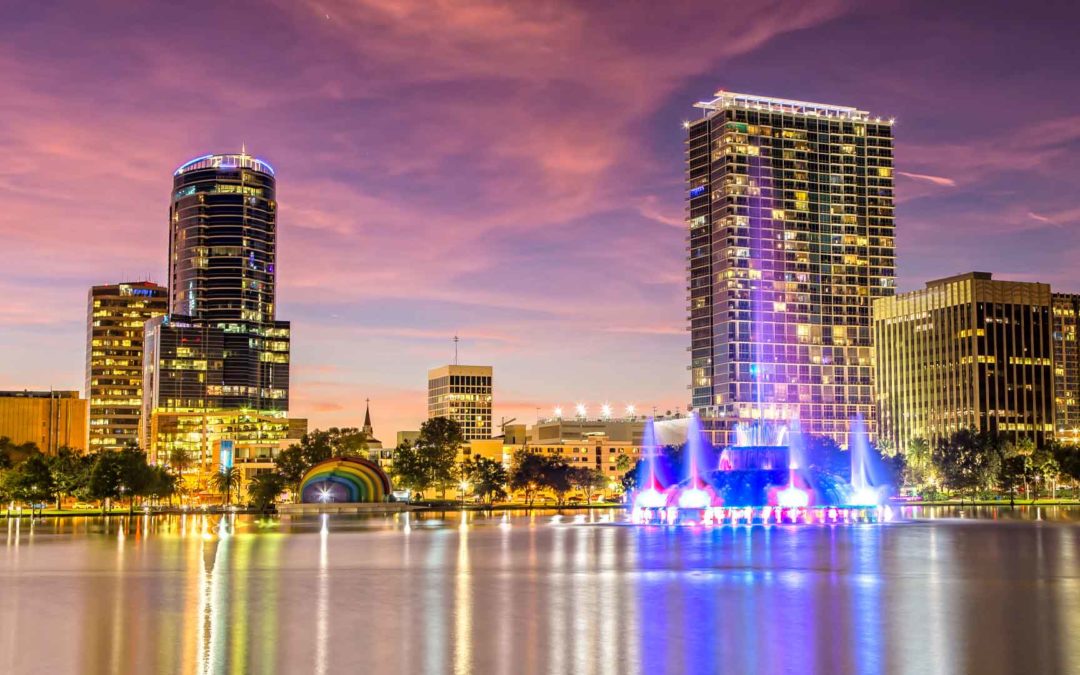
2 min read August 2020 — Before April, e-commerce was already a booming business but COVID-19 has skyrocketed digital commercial transactions to a whole new level. Despite the current flash recession, the demand for industrial real estate has grown in almost every market. As a result, industrial real estate investors are eager to pounce on faltering hospitality and retail properties. Vacant or unprofitable large-acre facilities are being eyed up as potential warehouses and distribution centers. 

Businesses like hotels, theme parks, restaurants and others in the hospitality industry have taken the greatest hit financially among all major sectors. In Orlando, tourism disparities are now trickling down to those industrial companies that succor these industries. “Orlando’s weakness is that we’re a community built on tourism and convention services. When those industries suffer, typically our market suffers too,” Bo Bradford, industrial expert and co-president of Lee & Associates Central Florida, told Orlando Business Journal

However, with every crisis comes opportunity. If building vacancies do start to emerge as a result of the current economic slowdown it will give new operations a chance to plant roots in Orlando’s limited industrial market. One example is the area around the Orlando airport. In July, two flex industrial warehouses were proposed on 61.8 vacant acres at 6249 S. Goldenrod Road, according to the Orlando Business Journal. Orlando Office Center LLC are the property owners and Kelly Collins & Gentry Inc. are reported to be the project engineers. 

The increase in demand for industrial properties is making real estate investment companies get creative. Simon Property Group Inc. is considering converting vacant Sears and JCPenney stores into distribution centers, according to the Orlando Business Journal. However, in early June, the group decided not to proceed with an agreement with Taubman Centers that could have added various retail properties to its portfolio. “The COVID-19 pandemic has had a uniquely material and disproportionate effect on Taubman compared with other participants in the retail real estate industry,” Simon Property Group said in a press release. The real estate investment company has four properties in Orlando and if it does decide to transform even one of its properties into an industrial building, it could be a win-win for both parties involved in the transaction. 

Since the pandemic began, retail stores have suffered as more and more people shift to online shopping. Within a few years, traditional malls and outlet stores could become a thing of the past. For companies like Amazon, large vacant retail properties provide vital space in a limited market. 

Charlotte: Toe to Toe with Coronavirus

Charlotte: Toe to Toe with Coronavirus

By: Felipe Rivas

4 min read June 2020—The tenacity of the coronavirus has challenged, and at times highlighted, the economic strength of cities across the nation. While the pandemic has severely bruised the Queen City’s economy, the city’s dexterity and sound fundamentals are helping to soften the blow as Charlotte recoups and prepares for an uncertain future. 


Marked by serious losses and promising victories, June has been a roller coaster of economic activity for the Charlotte Metro Region. Unexpectedly, the city’s hospitality sector, an already embattled segment of the economy, suffered a further blow when President Donald Trump and Republican leaders swiftly yanked the Republican National Convention (RNC) out of Charlotte after coronavirus-related concerns prevented North Carolina leaders from guaranteeing a fully operational Spectrum Center, hotels and other amenities. But as Charlotte reeled from this sudden blow, the region jabbed back at the coronavirus-related adversity with positive job expansion and promising rezoning announcements slated to be catalysts for growth in the near future. 

Two years of RNC preparations vanished as RNC leaders decided to move more than half of the August festivities to Jacksonville, Florida. Since winning the bid to host the 2020 RNC in 2018, the host committee and Charlotte’s hospitality and business leaders have toiled to ensure a smooth and enjoyable experience for the thousands of delegates, journalists, and visitors expected for the event. However, as government and business leaders entered 2020 confident about the state of the economy, the contingency plans unsurprisingly failed to factor in a global pandemic and the subsequent reduction in major events and large gatherings of people. 

In late May, in a letter to Gov. Roy Cooper, RNC leaders demanded that Charlotte, which remains in a state of emergency, guarantee a “full convention,” and “full hotels and restaurants, and bars at full capacity,” according to a response letter published by the governor’s office. Citing uncertainty and the state of the coronavirus come August, Gov. Cooper said planning for a scaled-down convention with fewer people, social distancing and face coverings is a necessity. “As much as we want the conditions surrounding COVID-19 to be favorable enough for you to hold the Convention you describe in late August, it is very unlikely,” Gov. Cooper wrote to the RNC leaders. “Neither public health officials nor I will risk the health and safety of North Carolinians by providing the guarantee you seek.” 

This lack of guarantee prompted RNC leaders and President Trump to move three of the four convention days to Jacksonville, according to different news sources. Charlotte will host the first day of the convention, with the traditional speeches and fanfare occurring in Jacksonville. The convention is scheduled to run Aug. 24-27.  

“We wanted to host the RNC because we hosted the Democratic National Convention in 2012 and so we want to prove to the world that we are capable of delivering high-quality events,” Charlotte Mayor Vi Lyles told Invest: Charlotte in the spring, before the RNC decision. She further explained the advantages for Charlotte: “It is a great branding opportunity for the city, as we expect up to 50,000 people, including many international journalists, to visit during the event. It will also provide a huge boost to our hospitality industry.” she said. The convention was expected to generate more than $150 million in revenue for the area’s restaurants, bars and hotels, the Charlotte Observer reported.  

As the hospitality and tourism sector begins to gather its composure after such a punch, Charlotte heavyweights aim to continue to strengthen the region’s foundation. Two significant redevelopments projects moved forward on Monday after receiving unanimous approval from city leaders. Rezonings were approved for the redevelopment of Atrium Health’s Midtown flagship campus and the former Eastland Mall property in east Charlotte, according to the Charlotte Business Journal. 

Atrium Health, the region’s largest employer, seeks to rezone close to 70 acres at the Carolina Medical Center to accommodate a live, work, and play environment, complete with a new bed tower, rehabilitation hospital, office space, affordable housing and more. In 2019, Atrium Health announced more than $1.5 billion investment in the Charlotte metropolitan area to help build new infrastructure, including new hospitals and medical facilities, President and CEO Gene Woods Told Invest:Charlotte in the spring. “This is about more than just adding brick and mortar. It’s about investing in this community because this is the place our friends, our neighbors and our loved ones call home, and we want to see it continue to thrive,” Woods said. “As the major healthcare system in the state of North Carolina, we know we can play a key role in helping our economy flourish as well.”

The Eastland rezoning includes close to 78 acres of mostly city-owned property, according to the Charlotte Business Journal. The site will be the future headquarters of the yet-to-be-named Charlotte Major League Soccer team, owned by business leader David Tepper. Similar to the Atrium Health project, Eastland will be the site of mixed-use development featuring residential units, office and retail space, and athletic fields. 

And while these projects are expected to pay dividends to the community in the future, the region scored significant economic development victories on Tuesday when Chime Solution and Ross Stores announced the addition of 250 and 700 jobs respectively to the region’s economy. 

Georgia-based Chime Solutions, a provider of customer contact services for several industries, will add jobs for licensed life and health insurance agents and will pay $16 an hour and include training and licensing,  WFAE reported Chime Solutions  opened an office in the University City area last fall. Leading off-price apparel and home fashion retail chain Ross Stores Inc. announced it will expand its distribution and warehousing operations in York County, according to the Charlotte Regional Business Alliance. The company’s $68 million investment is projected to create 700 new jobs over five years. 

To learn more, visit:

https://files.nc.gov/governor/documents/files/2020_06_02_RNC-Response-Letter.pdf

https://www.bizjournals.com/charlotte/news/2020/06/16/eastland-mall-atrium-health-rezoning.html

https://www.charlotteobserver.com/news/politics-government/rnc-2020/article243540772.html

https://charlotteregion.com/index.php?src=news&submenu=Relocation_Expansions&srctype=detail&category=Investor%20News&refno=8639&hurl=n

https://www.wfae.org/post/charlotte-says-chime-solutions-250-job-expansion-offers-economic-mobility#stream/0


 

Spotlight On: Patrick Mahoney, Principal, President & CEO, NAI Realvest

Spotlight On: Patrick Mahoney, Principal, President & CEO, NAI Realvest

By: Yolanda Rivas

2 min read February 2020 — Orlando’s real-estate scene has witnessed major changes as people look more for destination experiences and after Amazon changed the rules of retail. While some regions within Orlando are running out of development land, Patrick Mahoney, principal, president and CEO of NAI Realvest, is convinced there is still room for growth.

How has real estate demand evolved in Orlando?

The changes in retail are the talk of the town. We work with Planet Fitness among several other retailers that are marketed as destinations. You still see the national value tendency with examples like HomeGoods and T.J.Maxx. Similar businesses are still coming in and leasing space. Forever 21’s bankruptcy filing had more to do with overleverage. It was more about debt rather than retail. There are certain malls, such as Fashion Square Mall, where a complete redo is scheduled. In these cases, the anchor tenants are likely not going to stay, to the benefit of a more multifamily, mixed-used project. The other extreme is the strip malls: small clothiers that focus primarily on making sure they are in the right location. Park Avenue and Winter Garden are good examples of that. An increasing number of these small boutique clothiers are going to have a small store presence but will start selling online.


What advice would you give small retailers to thrive in this market?

It boils down to a two-pronged approach. First, demographics. Remain aware of changes within the demographics around their location and adapt to those changes. Second, plan the required resources ahead of time to weather such changes and make the best use of the available land and redevelop the property. 


What primary challenges is your business facing?

The first thing that comes to mind is competition. There is virtually no barrier to entry when it comes to obtaining a real estate license. The spectrum goes from a residential broker dipping its pen in commercial while working from home with no overhead, to groups like us with lots of overhead and a fully-staffed office, and finally the multibillion-dollar competitors that we compete with, such as CBRE. To maintain a sharp edge, we engage in a continuous improvement process, embracing new technology. We invest in the latest software and research tools. As members of NAI Global, we can compete with multibillion-dollar real estate companies on either a national or global stage. Because we are locally owned, we have greater local knowledge and flexibility in the marketplace than our large competitors do. We have the best of both worlds: being able to compete with either the big and small real estate firms. 


Financing also remains an issue. Coming out of the last recession we learned who to approach, depending on the property type and what we are trying to accomplish. Increasingly, we are turning to private rather than bank debt. Banks usually are on the fence over lending on land. 


Manpower is another challenge. I would consider Orlando a zero percent unemployment market. Whether it is salespeople, administrative help or maintenance engineers and property management, finding talent is difficult. 


What is your outlook on commercial real estate in Orlando?

We remain quite bullish about the market, particularly Florida and Central Florida. We are positive that 2020 will be another solid year as there are no variables telling us otherwise. Recruiting is at the top of our list. Our operational focus will remain centered on delivering excellence for our clients, our brokers and property owners through continual improvements. We do not skimp on our resources and invest in the best software available to manage our properties, such as Yardi. We are implementing the tip of the iceberg. We will also continue to guarantee we are as financially secure as possible through solvent debt levels. 


To learn more about our interviewee, visit:

NAI Realvest: http://www.naiglobal.com/members/nai-realvest-maitland-orlando-area

Face Off: Osceola County Cities Sharpening Economic Growth Plans

Face Off: Osceola County Cities Sharpening Economic Growth Plans

By: Yolanda Rivas

2 min read January 2020 — Amid the growth in Orlando’s economy and population, local cities are emphasizing the unique characteristics of their respective business communities. The city of Kissimmee is taking advantage of its aviation industry, while the city of St. Cloud is looking to expand its experiential and entertainment retail offer. The Invest: team spoke with Belinda Ortiz Kirkegard, economic development director at the city of Kissimmee, and Antranette Forbes, St. Cloud’s economic development manager, about their efforts to grow their economies while taking care of their existing businesses. 

What are the key industries for the city’s economy?

Belinda Ortiz Kirkegard: Aviation is a growing industry in Kissimmee, as the city owns a general aviation airport, Kissimmee Gateway Airport. This airport is predominately the airport of choice for corporate jets or private plane owners arriving to go to the Orange County Convention Center or a Central Florida theme park. Kissimmee Gateway Airport is also a relief airport for Orlando International (OIA), providing services for noncompatible OIA uses.  Additionally, understanding the value of high-wage aviation jobs, the city launched its Aerospace Advancement Initiative to attract companies to our airport. A recent Florida Department of Transportation study showed our airport yields a direct annual economic impact of $190 million. In the last seven years, the airport has grown by over 300 jobs.

Another growing field in Kissimmee is the medical sector. The city of Kissimmee is home to two strong, growing hospitals, AdventHeath-Kissimmee and Osceola Regional Medical Center. Combined, these hospitals have invested over $300 million in campus expansions or are growing their service lines. To capitalize on that growth, the city launched its Kissimmee Medical Arts District, providing economic development incentives specifically to attract more physicians and medical companies to the area. When new medical companies enter the market, they provide new job opportunities, but it also results in more medical services available to residents. It’s a win-win.   

Antranette Forbes: Retail and professional services are our key industries. In fact, 35% of our business is service-oriented. In the medical industry, St. Cloud Regional Medical Center is our largest nongovernmental employer. They have over 500 employees and the majority are in medical or medical-related professions. We also have a large population of dentists. From a business recruitment standpoint, that is a great opportunity for medical device providers, assisted living facilities and other related companies.

We are focusing on diversifying our retail footprint. We are looking to attract experiential and entertainment retail. We have places to shop and eat, and now we are focusing on providing options to play. We also need more diversity in our industrial sector. While we may not have a high amount of space to do industrial, we do have talent who can perform in the sector.

How do you support the interests of residents, while focusing on expanding the city’s business community?

Ortiz Kirkegard: Meeting the needs of our residents is always at the forefront of economic development. Programs are designed to attract companies that provide high-value, high-wage jobs to the community. As our economic development program has evolved, so have the job opportunities, and that helps advance our household income levels. Additionally, the evolution of the program has worked toward diversifying our economy by no longer being solely tourism centric with jobs circling retail and hospitality. Although tourism will always be at the heart of Central Florida, diversifying industries increases our economic resilience.  

Forbes: We are implementing numerous strategies to diversify our economy. We have over 1,300 registered businesses in St. Cloud. Over 35 percent of those are home-based businesses. These types of businesses are an important contributor to our economy. These “mom and pop” types of companies are a major focus for us. We are looking to move them out of their homes and into office or storefront space. By helping them to reach that next level, these are the businesses that will be hiring more employees and supporting our growth.

To learn more about our interviewees, visit:

City of Kissimmee: https://www.kissimmee.org/government/economic-development/economic-development-office 

City of St. Cloud: http://stcloud.org/926/Economic-Development 

Miami Beach Welcomes Two New Hotel Developments to Usher in 2020

Miami Beach Welcomes Two New Hotel Developments to Usher in 2020

By: Sara Warden

2 min read January 2020 — Miami Beach’s hospitality industry entered 2020 with a bang, with two high-profile hotel openings. Both the Greystone development and the Hampton Inn at The Continental are refurbished versions of the Art Deco and Miami Modernist styles of the 1930s and 1940s, combined with a cool beachy chic that is synonymous with Miami Beach.


The Hampton Inn at the Continental was acquired by the Hampton by Hilton brand, which subsequently invested $25 million to give the hotel an overhaul to make it not only align with the brand but also to maintain the historic relevance of the building. 

“As renovation experts, we’re proud to present this completed project alongside Pebb Capital,” said Alan Waserstein, principal with LeaseFlorida, in a press release. “The historic component of this hotel, coupled with the Hampton by Hilton brand will make it a mainstay in Miami Beach’s hospitality scene.”

As well as the 100-room hotel, the development has embraced the multiuse concept that makes or breaks hotel chains. The ground floor will become the Piola restaurant, and future updates will incorporate a parking garage and retail space, according to the developers. 

This strategy has also been adopted by the Greystone Hotel in Miami Beach, which was opened for reservations this month. Conscious of the need to offer a more unique experience, the hotel is adult-only and eco-friendly, and offers a rooftop pool, mixology lounge and courtyard café. And although human babies may not be allowed, patrons should feel free to bring their furry four-legged babies (up to a maximum weight of 25lbs). 

There are 91 renovated guest rooms for most tastes and budgets with private decks and hot tubs (the Hot Tub Terrace Suites come in at over $600 per night). You can also interact with hotel facilities through your smartphone, including locking and unlocking the door, ordering room service and contacting the concierge through the hotel’s bespoke app. The Golden Gator basement speakeasy completes the lineup in a nod to the hotel’s 1930s roots. 

Vos Hospitality is the developer behind the $70 million renovation, which partnered with private investment group the B Group in 2018 to purchase the adjacent building on 20th Street, giving the development an impressive total 54,000-square-footprint.

“We will bring in an alternative to the area’s club scene,” said Vos hospitality owner James Vosotas to the Miami New Times. “We are catering to young-minded professionals with a nontraditional luxury of high-quality without the white glove. Everything has been upgraded cohesively so that locals and guests will have plenty to explore within the property.”


To learn more, visit:

https://www.greystonemiamibeach.com/

https://www.hilton.com/en/hotels/miacahx-hampton-miami-beach-mid-beach/

http://www.voshospitality.com/

https://leaseflorida.com/


Spotlight On: Sean Beuche, Regional Manager, Marcus & Millichap

Spotlight On: Sean Beuche, Regional Manager, Marcus & Millichap

By: Yolanda Rivas

2 min read December 2019 — 2019 was a steady year for Philadelphia’s commercial real estate. The market’s affordability, the city’s position as a logistics hub and its attractive environment for startups has driven strong demand. One of the areas seeing a high amount of activity is King of Prussia. Commercial real estate firm Marcus & Millichap recently relocated to the area, attracted by the growth in the region. Regional Manager Sean Beuche discussed with the Invest: team the neighborhoods seeing the most growth in commercial real estate and his outlook for the sector as we enter 2020. 

Marcus & Millichap relocated its Wynnewood location to King of Prussia. What makes that community attractive?

This relocation highlights our commitment to the area and our optimism about the local economy. The construction and new development activity going on in the King of Prussia market is very attractive. Numerous businesses and baby boomers are moving to the area, where there is more land available, beautiful housing stock, good school districts and less traffic congestion.  King of Prussia is a nexus of a variety of different interstates and that strategic location amid emerging growth and development is much more desirable for us. In addition, we are expanding in a nicer Class A office space that provides our clients and agents with a much brighter and enjoyable place to do business.


Which areas are the fastest-growing for commercial real estate in Philadelphia?

We’re seeing fast appreciation in the Point Breeze market, while Fishtown and Kensington have been hot for some time. We are also seeing numerous investments in areas further along the Main Line region. The Lehigh Valley and Central PA markets are both driving a lot of new investors into Pennsylvania. As the yields continue to deliver in some of these secondary and tertiary markets, investors want to move outside of areas where they’re getting squeezed by some popularity. There is a bit of a ripple effect being created by the economy being strong for a long time, and many of the investments that have been made or taken in these core markets are pushing investors further out. 


What is your outlook for Philadelphia’s real estate sector over the next 12-18 months?


The outlook is positive. There is uncertainty from a political standpoint, we are dealing with some of the trade wars and we are very interested in seeing where that shakes out. We focus on private and middle market clients and, in times of uncertainty, we provide them with market research about existing opportunities. From an income standpoint, rents in the Center City market and many of our urban infill markets are pushed up, and we would need to see some relevant margin changes in household income to afford a greater rent increase. Our clients are seeing strong fundamentals in the main groups that we focus on, which are multifamily, industrial, office and retail. As that financing loosens up and remains affordable, deals are very quickly moving off our shelves and into the hands of investors.


To learn more about our interviewee, visit:

Marcus & Millichap: https://www.marcusmillichap.com/ 


Spotlight on: Adam Mullen, Market Leader, Greater Philadelphia Region, CBRE

Spotlight on: Adam Mullen, Market Leader, Greater Philadelphia Region, CBRE

By: Yolanda Rivas

One of the main drivers of Philadelphia’s economy is the real estate industry, attractive for its affordable prices, advantageous location and the Pennsylvania I-78/I-81 Corridor. A recent report from commercial real estate firm CBRE showed the corridor saw a total of $132 million in capital investment during Q3 2019. In an interview with Invest:, Adam Mullen, CBRE’s market leader for the Greater Philadelphia region, discussed the areas seeing the most growth in Philly’s commercial real estate and what is spurring growth in the market.


What are the lines of business seeing the most growth or demand in Philadelphia today?

It is hard to understate the momentum we are witnessing in the industrial and logistics space. The shift to e-commerce and modernized supply chains have not only created one of the largest warehouse distribution markets in the world in our backyard, the Pennsylvania I-78/I-81 Corridor, but demand continues to be robust for Philadelphia’s industrial properties. A variety of users, including retailers and third-party logistics companies, are driving demand so they deliver goods to consumers more efficiently than ever before. 

At the same time, the local retail market is as vibrant as it has been in years. Philadelphia is at the top of everyone’s list as a major gateway market in the retail space. We have the largest mall on the East Coast, the King of Prussia Mall, which is a prime example of the consumption activity in our region. Also, the food and beverage sector is one of our leading sources of demand, not only in the suburbs and shopping centers, but also in Downtown Philadelphia. Due to the opportunity we see in the retail market, we have had an extreme focus on our retail business in Philadelphia, doubling down on our investments over the last few months. 

We can’t overlook the dynamism in Philadelphia’s office market. Our Downtown office market is larger, in terms of square footage, than Downtown Los Angeles or Downtown Houston, and we are seeing considerable demand from not only tenants but also investors, particularly from Asia and the Middle East. 

Finally, we continue to watch the rise of the multifamily market in the region. Due to low interest rates and a plentitude of available debt capital, the demand for multifamily assets in greater Philadelphia has exploded over the past few years. 

What are the major drivers of growth for Philadelphia’s real estate sector?

The local economy is very strong and is being driven notably by the “eds and meds” segment, which has a unique presence in the Philadelphia region. Not only do the local educational and health services institutions have a huge effect on the economy and are growing rapidly, but they also represent the largest share of our employment base. Consequently, this concentration of talent has created a boom in the local life sciences industry, which is experiencing rapid growth, notably in central Philadelphia where most of the region’s major academic and healthcare institutions are clustered and spurring innovation and new companies. Not incidentally, we are seeing the highest office rents we have ever seen in Center City, and also experiencing a significant uptick in office tenants relocating to Downtown Philadelphia.

To learn more about our interviewee, visit:

CBRE: http://www.cbre.us/people-and-offices/corporate-offices/philadelphia 

Spotlight On: Keith Koenig, CEO & Chairman, City Furniture/Broward Workshop

Spotlight On: Keith Koenig, CEO & Chairman, City Furniture/Broward Workshop

By: Max Crampton-Thomas

4 min read November 2019 — Acting as both the CEO of his company City Furniture and the Chairman of the Broward Workshop, Keith Koenig provides a unique perspective and insight on various facets of business and progress being made in Broward County. He not only discusses how the Workshop is working to address the  effects of climate change on the county, but also the progress it has made on the goals set forth last year. In regards to his business, Koenig reveals his key to longevity in the marketplace as well as what today’s consumers are looking for when choosing where to shop. 


How is the Broward Workshop addressing the issues related to climate change in Broward County?

Wherever anyone stands on the science of climate change, one issue is undeniable, and that’s the economics of resiliency. Smart people in the insurance world believe that our risks and insurance costs will go up in the years to come if we do not get ahead of resiliency. Broward Workshop members understand that issue and want to lead a public, private effort to improve the resiliency not only of South Florida, but to create opportunities for coastal communities around the world to partner and learn. We are still in the process of setting our priorities for our annual goals, but in all likelihood they will include supporting the Army Corps of Engineers’ $20-million research project. In addition, our members are supporting Broward County’s efforts to jump-start our resiliency efforts. We will also be supporting South Florida water management efforts to finish phase two of the C-59 reservoir, which is an important step forward in our resiliency efforts. 

What progress has been made on the goals set by the Broward Workshop last year?

When we look back over the last year, we have really moved all our goals forward. At the top of the list was addressing homelessness. A little over a year ago, we had a major encampment of close to 100 homeless in Downtown Fort Lauderdale and they were in an area right next to the library. Earlier this year, we worked to help place these homeless people into more permanent housing. The best way to end homelessness is to provide people with housing that is respectful and valuable. Our second goal revolved around education, particularly K-12 education in Broward County. When Superintendent Bob Runcie arrived in 2011, the Broward County school system was in disarray. Members of the school board had been accused of improprieties, morale was low and we were facing over $20 million in fines for not meeting state-mandated class size. Runcie has worked diligently to address those issues and to move our Broward County school system forward. The good news is that our school system has improved greatly with higher graduation rates and higher rated schools. Broward County Public School System nearly achieved an overall A rating in 2018 and they are working to continue to improve. We set a goal to support the Broward County public schools and our measure of success was to make sure Bob Runcie stayed as superintendent. I’m proud to say Bob Runcie is still our superintendent today.

The third big goal was the transportation sales tax initiative. Last year, county leaders put this sales tax increase on the ballot to fund transportation initiatives. It was a major initiative and members of Broward Workshop fell on both sides, but like any good organization we listened to the majority. We put our support behind it and the sales tax initiative passed. The last goal we set was around tourism. Tourism is Broward County’s biggest industry, and the biggest need we have is an expansion of our convention center and to build a convention center hotel. We were active both on the forefront and behind the scenes, and the expansion and the convention center hotel are going forward. 

How has City Furniture maintained its longevity in the market? 

The key to City Furniture’s longevity in the Broward County marketplace has been reinvesting back into our business. We operate financially conservative, meaning that we are careful and never try to bite off more than we can chew. That being said, growth has been a cornerstone of our business. If you do not have growth as a cornerstone strategy for your business, you can’t attract the talent you need or want. For instance, millennials all want to see opportunity to advance, grow and succeed, so they are attracted to companies that embody that vision. In our case, we just opened up big stores in Orlando, and we are planning to open in Tampa over the next few years. The other key to this business has been private ownership. We are able to invest for the long-term benefit of our associates, our customers and our community. 

How have you seen priorities shift in regards to consumers making a decision on where to shop?  

Retail needs to be more of an experience. What will drive you to a store as opposed to buying online is the experience. When the consumer is given a choice, they prefer to do business with local companies that genuinely support the local communities that they are in and companies that move in a direction of sustainability toward a carbon neutral footprint. Mostly, our shoppers and customers learn that City Furniture does these things after they come to our stores. It becomes a better value proposition for them to do business with us. All of these elements are aimed at tilting the customer experience factor a little more in our favor. 


To learn more about our interviewee, visit:


https://www.cityfurniture.com/


https://www.browardworkshop.com/

Spotlight On: Gary Gagnon, President & CEO, Gagnon Development

Spotlight On: Gary Gagnon, President & CEO, Gagnon Development

Writer: Yolanda Rivas

2 min read October 2019 — Gary Gagnon’s family has been involved in the real estate industry since the 1930s. Gagnon decided to follow in his family’s footsteps by creating Gagnon Development, LLC and  Gagnon Real Estate Investments, LLC. He also specializes in commercial income producing property in Central Florida. In an interview with Invest:, Gagnon described the benefits and strength of Orlando’s real estate sector. 


How would you describe the strength of Orlando’s real estate sector today?

Orlando’s real estate sector is stronger than most, since it is somewhat in a protective bubble because of being mostly tourism-driven, though we are actively trying to attract more tech-related businesses. Our unique location and economy protects us whenever there is a slowdown or recession. With low interest rates and prices increasing for commercial and residential real estate, fear is beginning to spread and people are starting to question if it is time to sell. Luckily, if the whole country takes a hit, I think Orlando is somewhat protected and should not be as harmed as much as the rest of the country would be.


Lenders are starting to get over their fears and they are starting to have a hunger to loan but are still being cautious and require larger down-payments or cross collateralization. Development is booming and we are seeing a high amount of capital in A-class products. However, the growth of new office space in Orlando has been historically stagnant and there is not enough large office space available. Orlando has several new office projects in the works, which should help satisfy the demand for new office space. Many of our international clients are choosing to build new office space instead of renting since it is less expensive than leasing at current rates. Orlando also provides an opportunity for investors to generate high cash flow with less investment dollars when compared to other cities such as Miami and New York. 

Which markets are seeing the most demand in Orlando?

Apartments continue to see great demand. E-commerce and big chain retailers transitioning to or expanding their online sales footprint have created an increased demand for large industrial space. We usually do build-to-suit projects specifically for a client’s needs, but we recently worked on a speculative flex space project with a client. That project consisted of smaller spaces with an office and showroom in the front and warehouse in the back. Along with the client, we were able to sell five of eight units before completing construction. A trend we are seeing in industrial is the smaller the square footage you build, the faster you lease or sell it. There is a demand for flex space and we are looking to expand in that area. Warehouses are in high demand, too. Many larger investors are looking for warehouses that have rail access. Office building is just now hitting its stride. Public storage is keeping up with supply and demand but we don’t see above average growth in that sector. Overall commercial real estate in Orlando is in very high demand and there is more demand than there is supply.


To learn more about our interviewee, visit:

Gagnon Development LLC: http://www.gagnondevelopment.com/