Spotlight On: Sal Saldana, General Manager, Town Center at Boca Raton

Spotlight On: Sal Saldana, General Manager, Town Center at Boca Raton

By Max Crampton-Thomas
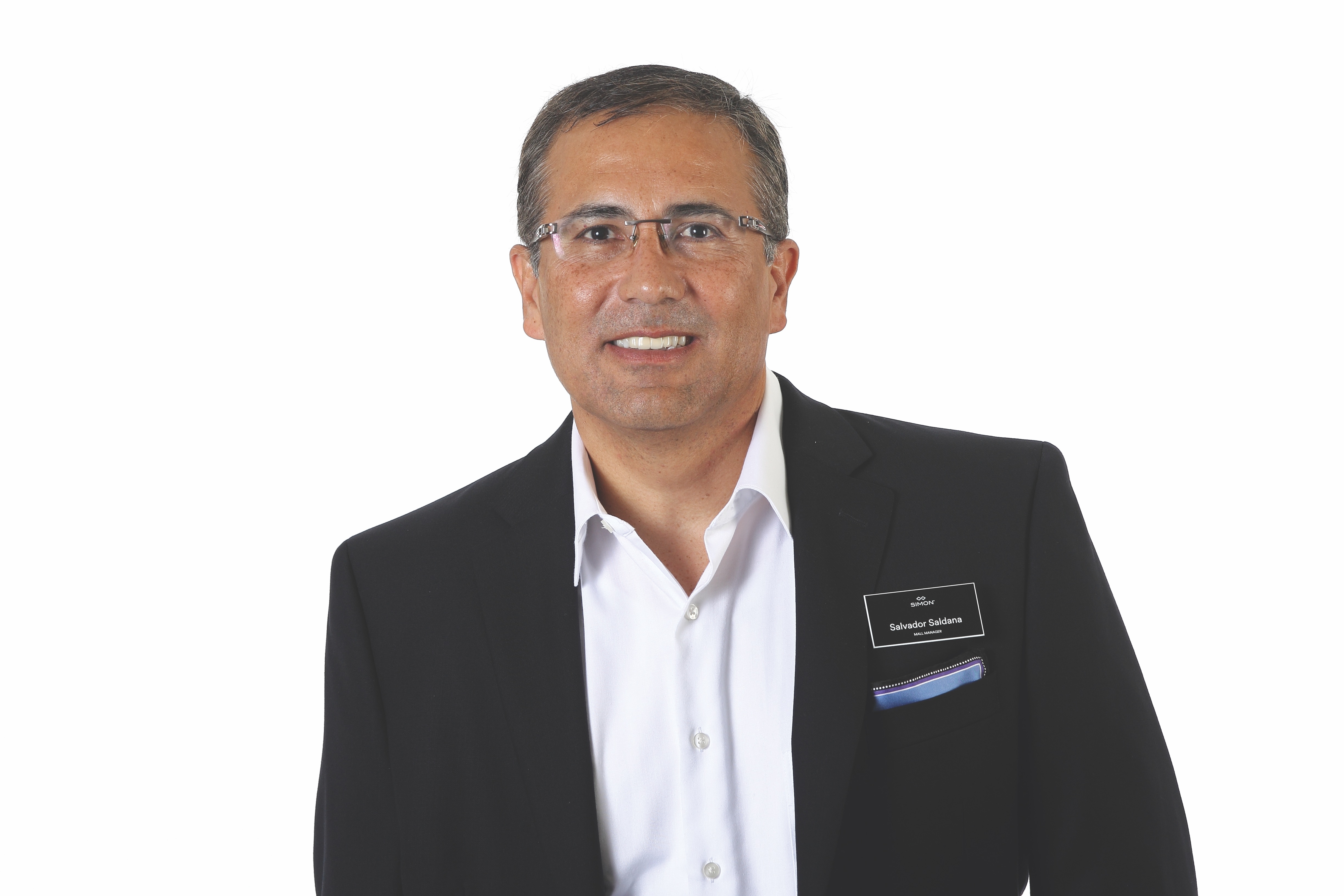
 

2 min read October 2019The world is changing rapidly thanks to technology. For certain segments of business this means changing with the times or risk falling into obscurity. The traditional mall has become one of these segments, and with the rising popularity of e-commerce, the need for innovation is at an all-time high. One of the malls that recognized this early on was Town Center at Boca Raton, whose General Manager Sal Saldana spoke to Invest: about the mall’s successful longevity in the market, how it is handling the challenge of evolving customer demands and how it is innovating its business model to become much more than just a shopping center. 

How is Town Center at Boca Raton a staple for Palm Beach County? 

This mall is a regional shopping center that is owned by Simon Property Group. It has been in the Palm Beach County area for a number of decades, and over that period of time there has always been an emphasis on making sure it always meets the quality and brand recognition of Boca Raton and Palm Beach County. The mall is an extension of Boca Raton, which is known for its beauty, quality of life and wealth. It also has an international flavor because it houses some of the most widely recognized and regarded retail shops. Overall, the mall is an important asset to the community, and will continue to be for the foreseeable future. 

What has been the key to Town Center’s longevity and success in the wake of an e-commerce-centric world? 

Simon Property Group is an amazing company and has a phenomenal group of shopping centers nationwide. We have been able to really cater to the community and meet its needs and demands from a domestic and international standpoint. We also have the resources to continue improving our operations and attractions. What we do is make sure that we are meeting and surpassing the expectations of a traditional mall. We maintain a very high standard of what we are because we are not only a shopping center, we are also an entertainment destination. 

What challenges is Town Center facing, and how are you mitigating those challenges? 

We are always looking to see how we can improve customer experience, and in this business there is the challenge of keeping up with the times while making sure that we meet customers’ demands. Our competition now comes in many forms, whether that is the internet or a direct competitor in the region. We always want to be projecting new and improved, and this isn’t always necessarily a challenge, but more of an opportunity. To be successful, we have to have a team that is always thinking of what we can do next to make sure that we are staying ahead of the curve. For instance, we are adding a 1,600-square-foot recreational space called PLAY that will feature a combination of seating and interactive play elements inspired by local waterways and waterfronts. Everybody that we work with has to be on the same team and have a philosophy of approaching this shopping center as a five-star resort.


To learn more about our interviewee, visit:

https://www.simon.com/mall/town-center-at-boca-raton

Spotlight On: John Crossman, CEO, Crossman & Company

Spotlight On: John Crossman, CEO, Crossman & Company

Writer: Yolanda Rivas

2 min read October 2019 — The retail sector has remained steady in Orlando over the last few years. Far from affecting physical stores, e-commerce has contributed to the growth of many businesses and the retail market. Crossman & Company is a commercial real estate firm focused on serving retail landlords exclusively throughout the Southeast. CEO John Crossman spoke recently with the Invest: team about the performance of the Orlando and Central Florida retail sector and its latest trends. 


What are some trends and advantages of Orlando’s retail sector?


Retail is interesting in that it follows growth from other market sectors. When you look at the real estate industry, typically jobs lead, then housing and then retail. When you look at a market, there are two specific factors to consider in terms of retail performance: the number of people moving and vacationing in the area. If those two numbers are up, then there will probably be an up retail market. In Orlando, those numbers keep going up and the retail market is doing very well. In central Florida, we have healthy demographic growth and a big tourism industry that is making the retail sector substantially bigger. Orlando has one of the highest timeshare markets in the world and the exponential factor of tourist retail is amazing. 


There is also what we call “the halo effect,” which happens when an online retailer opens physical stores and, most times, their online sales go up. Similarly, when an online retailer closes physical stores, their online sales go down. When customers buy something online and return it to a physical store, they typically end up spending more money in the store. In the Orlando area, we’re not seeing people radically closing stores. We are seeing a combination between their physical and online presence. 


What areas of Orlando are seeing the most demand in retail real estate?


The areas that are closest to the I-4 corridor have typically done well. As more beltways have been added over the years, that has spurred additional growth. Submarkets like Oviedo, Lake Mary, Clermont and Kissimmee have done well, too, due to their proximity to the corridor’s beltways. I don’t think you can talk about Orlando’s retail without talking about Lake Nona. There’s no doubt that that area has a major significance. Retail activity starts with jobs, then residential and retail, and there are numerous jobs and growth in Lake Nona. In the tourism area, some significant deals were closed recently, specifically on International Drive and Disney. Disney Springs and Park Avenue Winter Park are some of the best retail experiences in Orlando. 


What are some challenges facing the retail real estate industry in Orlando?


The retail industry overall is doing well. Yet, it’s very dynamic and it can become overwhelming. The industry has significantly changed so much and now is more similar to that old school, post-1950s retail, where retail surrounded a property that was growing up in a certain area. We used to talk about mixed-use developments, but now we have the mixing of uses in developments. Now, you can have a retailer, medical providers, educational institutions, religious organizations and a different mix of tenants in the same place. That makes for healthier retail, but it also can be complicated due to the many dynamics in the same place. Another challenge is technology, augmented reality, and the rapid pace of innovation. We need to get together as an industry to explore the future impact of new technologies in the retail sector.   


To learn more about our interviewees, visit:

Crossman & Company: https://www.crossmanco.com/

How e-commerce is feeding Orlando’s booming retail market

How e-commerce is feeding Orlando’s booming retail market

Writer: Yolanda Rivas

2 min read SEPTEMBER 2019 — At times when big retailers such as Sears, Charming Charlie’s and some malls are struggling to survive, Orlando’s retail sector continues to thrive. The city’s rapid population growth and robust economy present an ideal environment for retailers. Rather than having a negative effect on brick and mortar stores, e-commerce has had a positive impact in Orlando’s retail market, according to industry leaders who recently met with the Invest: team.

“We are seeing a blend of both online retail presence and brick and mortar, and that is a trend that we will continue to see for the next two to four years. Retail is going through an evolution, and that is not necessarily a negative thing. We will see significant changes over the next few years,” SRS Real Estate Partners Managing Partner and Market Leader for Orlando & Tampa Cindy Schooler, told Invest:.

Colliers International’s 2019 Q2 Central Florida Retail Market Report showed the area has a 5.3% vacancy rate. The report points out that Orlando’s regional growth has fueled investor demand for retail product to an all-time high. Rental rates have increased to $50 per square foot in Central Florida’s top retail corridors, while Orlando’s tertiary markets have increased in tenant demand. 

“There are two specific factors to consider in terms of retail performance: the number of people moving and vacationing in the area. If those two numbers are up, then there will probably be an up retail market. In Orlando, those numbers keep going up and the retail market is doing very well. In Central Florida, we have healthy demographic growth and a big tourism industry that is making the retail sector substantially bigger,” John Crossman, CEO of Crossman & Company, told Invest: in a one-on-one interview. 

Crossman explained the impact of “the halo effect,” which happens when an online retailer opens physical stores and, most times, their online sales go up. Similarly, when an online retailer closes physical stores, their online sales go down. 

“When customers buy something online and return it to a physical store, they typically end up spending more money in the store. In the Orlando area, we’re not seeing people radically closing stores. We are seeing a combination between their physical and online presence,” he said. 

An example of the e-commerce growth in Orlando is Kroger and Ocado’s second customer fulfillment center. Earlier this year, Kroger Co. and UK-based online grocery partner Ocado Solutions confirmed the location for a 375,000-square-foot fulfillment center in Lake County. The center will supply online customers only and its expected to create 506 jobs and add $63 million in annual economic impact. 

Orlando’s tourism sector also provides a particular advantage for businesses to test new products, according to Schooler. “We are a test field in the area because of the tourist market. A lot of entrepreneurs bring concepts here and test their brands because of the diversity in the area. That allows clients to test lines that they would never be able to test in traditional retail markets,” Schooler said. 

According to Colliers 2019 Q2 retail report, approximately 980,571 square feet of construction was underway by the end of the second quarter. This is the highest amount since before the Great Recession. 

To learn more about our interviewees, visit:

SRS Real Estate Partners: https://srsre.com/ 

Crossman & Company: https://www.crossmanco.com/ 

Colliers International: https://www2.colliers.com/en 

Top Philly Neighborhoods for Commercial Real Estate

by Yolanda Rivas


2 min read AUGUST 2019 — Philadelphia’s real estate sector has been in growth mode for a long time. Affordability, a strong economy and the city’s strategic location are some of the drivers behind investment. According to local market leaders, King of Prussia, Fishtown and Kensington are among the neighborhoods experiencing a high volume of commercial real estate activity.

“The construction and new development activity going on in the King of Prussia market is very attractive. Numerous businesses and baby boomers are moving to the area. There is more land available, beautiful housing stock, good school districts and less traffic congestion,” Sean Beuche, regional manager of Marcus & Millichap, said in an interview with Invest:.

King of Prussia’s proximity to a variety of interstates, strategic location and the emerging growth and development going on in the area, makes it an attractive destination for real estate investors. In addition, King of Prussia is home to the largest mall in America by leasable space, which is another major driver for retail activity. 

Another area of high activity is the I-78/I-81 Corridor, especially in the industrial and logistics space. 

“The shift to e-commerce and modernized supply chains have not only created one of the largest warehouse distribution markets in the world in our backyard, the Pennsylvania I-78/I-81 Corridor, but demand continues to be robust for Philadelphia industrial properties. A variety of users, including retailers and third-party logistics companies, are driving demand so they deliver goods to consumers more efficiently than ever before,” Adam Mullen, market leader for the Greater Philadelphia Region at CBRE, told Invest:.

CBRE’s Pennsylvania I-78/I-81 Corridor Industrial MarketView Q2 2019 report showed that the corridor saw occupancy gains of 1.9 million square feet and observed a total of $135 million in capital investment. 

Other areas attracting interest are Point Breeze, which is gaining value, while Fishtown and Kensington have been hot for some time. According to Beuche, areas further along the Main Line region are also seeing numerous investments. Lehigh Valley and Central PA markets, for example, are driving many new investors into Pennsylvania

“As the yields continue to deliver in some of these secondary and tertiary markets, investors want to move outside of areas where they’re getting squeezed by some popularity. There is a bit of a ripple effect being created by the economy being strong for a long time, and many of the investments that have been made or taken in these core markets are pushing investors further out,” Beuche said. 

Opportunity Zones are also an attractive area to build market rate, workforce housing and to expand commercial development. 

“In Philadelphia, land is still relatively cheap compared to other getaway northeastern markets. Some of the most attractive undeveloped parts of the city are in Opportunity Zones. For example, in Center City East, on the west side of University City, on North Broad Street and in South Philadelphia,” Managing Partner at Alterra Property Group Leo Addimando told Invest:.  


To learn more about our interviewees, visit:

Alterra Property Group: https://alterraproperty.com/ 

CBRE: http://www.cbre.us/people-and-offices/corporate-offices/philadelphia 

Marcus & Millichap: https://www.marcusmillichap.com/about-us/offices/philadelphia-pennsylvania 


 A new urban retail

 A new urban retail

Swire Properties President Stephen Owens discusses the evolution of the urban retail experience in Miami-Dade

How will Brickell City Centre contribute to Miami-Dade’s retail landscape?
Brickell City Centre will transform the retail industry in Miami by offering something that does not yet exist. Currently, there is no place downtown where young people can come together and get a full retail experience that includes shopping, dining and nightlife. Brickell City Centre will introduce an urban mall to the area.
Another innovation we are bringing is integrating our building with public transportation. With Brickell City Centre, we are developing three blocks of retail and connecting all of it using bridges above and below the street that allow people to move more easily within the area, without taking any land away from the public or blocking any streets. At the same time, we keep consumers immersed in the retail experience as we will be placing different vendor experiences those walkways. We have also utilized underground parking, which will be well-lit so shoppers feel safe, and situated the project next to the Metromover to facilitate easy access. Our goal is to make the retail experience a positive one that seamlessly integrates with the urban lifestyle.
 
Swire Properties is based in Hong Kong. What features of the Asian retail experience is Swire bringing to Miami? 
Hong Kong is similar to Miami in that both cities are high-density and nearly all development happens near the water. We have applied a number of features prominent in our Hong Kong and mainland China developments, particularly when it comes to our focus on vertical transportation (elevators) and integrating retail and commerce with public transit. We have one of the highest ratios of vertical transportation of any project ever built in the U.S. – and that is about getting people up and down quickly, safely and comfortably.
How will mixed-use developments contribute to the evolution of Miami-Dade’s retail landscape?
In the U.S. mixed-use developments have been around for 30 to 40 years, but are taking off in Miami recently, as witnessed by the emergence of Brickell City Centre. One factor is simply the population growth of downtown – more and more young professionals have moved in and they tend not to use cars. The current retail centers in the county are in suburban malls; there is nothing to speak of within the urban centers. In part, this gap existed because of the relatively low number of residents in the urban core. Eventually, we had Bayside Marketplace – though that catered primarily to tourists – and then Aventura Mall, Lincoln Road and Bal Harbour Shops started to take off, as well, bringing luxury brands into this market. Yet we were still lacking a strong retail offering in the center of the urban core and because of the density, a mixed-use development made the most sense.