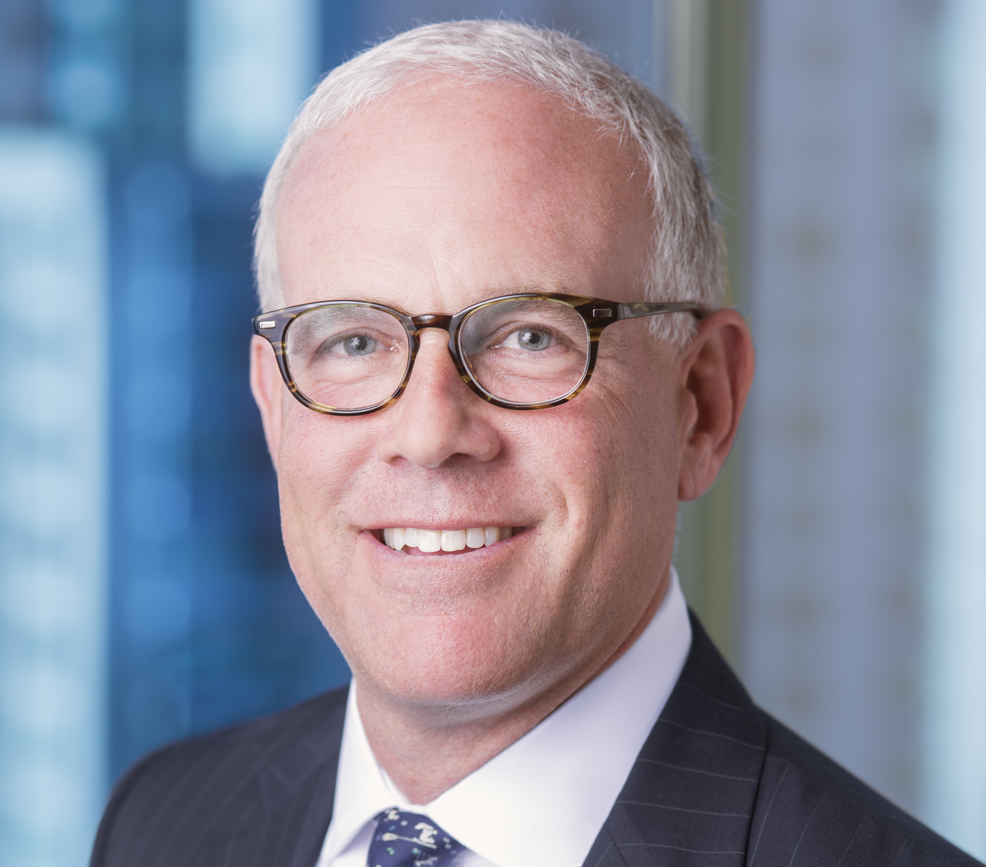
Spotlight On: Gregory Stuart, Executive Director, Broward Metropolitan Planning Organization

By Max Crampton-Thomas
 

2 min read August 2019 — Almost a billion dollars a year are spent on transportation in Broward, and as the region continues to grow so will this number. With so much money being funneled into transportation, there must be an overseer to decide how to disperse these federal funds. This overseer is the federally-mandated agency The Broward Metropolitan Planning Organization. Invest: Greater Fort Lauderdale recently spoke to Executive Director of the MPO Gregory Stuart, who discussed how the passage of the penny sales tax will help fund new transportation initiatives, the more immediate changes Broward will see thanks to the sales tax and the challenges facing transportation in the county. 

What have been Broward MPO’s most significant highlights over the last year? 

There have been three. The first is possibly the most significant, which was the passage of the penny sales tax that added $350 million a year to our annual budget. We spend about a billion dollars a year on transportation in Broward, so adding this $350 million is a substantial increase in transportation spending for our region. Second, was the municipal portion of that sales tax, which was one of the most significant items to be included in the penny sales tax. While we can talk about the large-scale projects that the sales tax will generate for the region, the impact of 23% of that money being dedicated to our municipal partners to build quality of life improvements when it comes to the transportation system is going to be key. It will provide those dedicated funding sources for our community shuttles, which folks use to go to the grocery store, appointments and other short distances. Third, was the implementation of the quiet zones for the FEC and CSX tracks here in Broward. While this didn’t necessarily improve the overall condition of transportation, it improved the quality of life for the residents along both of those corridors. 

What will be some of the more immediate changes due to the passage of the penny sales tax for transportation? 

Realistically, the immediate changes aren’t going to result in construction. We are focusing on enhancing the traffic signalization program. This includes coordination between traffic lights and people’s vehicles through the installation of smart communication equipment. Another immediate change that has happened already but which we’re not going to notice for about another year, is the county transit agency’s purchase of another 130 buses. Considering they are operating a fleet of about 300 buses right now, this is a one-third expansion and a significant increase in the bus system. 

What are some of the biggest challenges facing transportation and transit in Broward County?

The biggest challenge that we face is just trying to get everybody on the same page, whether it is a local government, the county government, the state government, the federal government or homeowners and business associations. It can be a very difficult task, but it can be done. We are working to strengthen the relationship between the three counties: Miami Dade, Broward, and Palm Beach. They all need to be talking to one another if we are going to make real positive change when it comes to transportation needs across South Florida. 

To learn more about our interviewee, visit:

http://www.browardmpo.org/

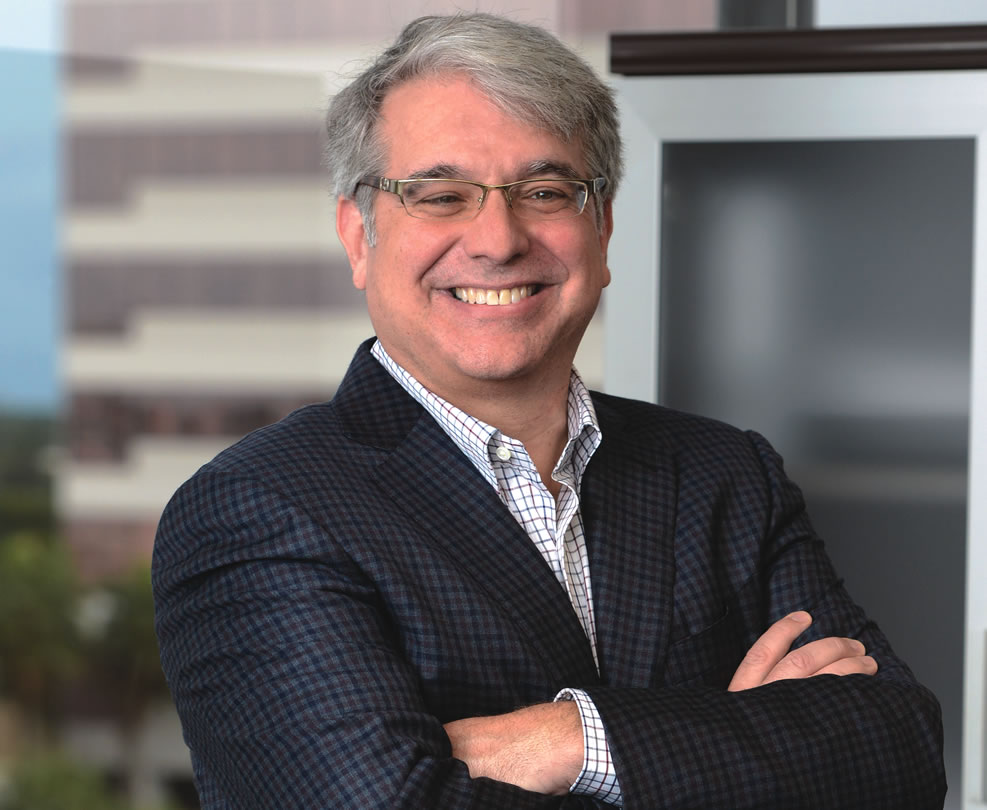
Spotlight On: David Gwynn, District Seven Secretary, Florida Department of Transportation

Writer: Max Crampton-Thomas

2 min read July 2019 — Challenges with transportation, traffic and transit options are not new issues for the Tampa Bay region. As the area continues to make strides in its economic and population growth, there is a heightened emphasis on finding solutions. Invest: Tampa Bay recently sat down and discussed these issues with David Gwynn, District Seven Secretary for the Florida Department of Transportation. Gwynn spoke about how FDOT is working to mitigate these challenges, enact forward-thinking initiatives and his outlook for transportation in Tampa Bay for the next year.

What is the biggest initiative for Florida Department of Transportation in District 7? 

We have been working on a program called Tampa Bay Next. Over the last two and a half years, we have had hundreds of public meetings with big and small interest groups, elected officials and general members of the public, which we used to gather some great input. A key issue that we identified was transportation. Although we recognize that our interstate needs some work, there are other areas, like the downtown interchange, where infrastructural improvement would have a pretty massive impact on the surrounding neighborhoods. As a result, we are focusing on ways we can improve transit and intersections in those areas to help make them safer, while also not requiring a significant expansion of the highway footprint.

How are you working to mitigate the traffic issues in the region? 

We have come to the conclusion that simply widening and continuing to build more roads is not going to completely mitigate this issue. We have shifted our efforts to also look at multimodal solutions, like the streetcar system in downtown Tampa. Until last year, it was underutilized, but we recognized that this could be a good part of a transit system. The question was how to make it more attractive for people to start riding it. What we found was because there was not a lot of local money to fund it, it was only running from 11 in the morning until 8 at night. We were able to get a grant to allow the streetcar to run from 7 in the morning until 11 at night and on a more frequent basis. The ridership has since tripled, and that is important because we now have a strong case for the federal government to invest in expanding that streetcar system further out into Tampa Heights. If we can get federal funding, they will put 50% of the cost in, the locals put in 25%, and then our department covers the last 25%. 

What is the outlook for the transportation sector in Tampa Bay for the next year?

The passage of the sales tax in Hillsborough County was a big step forward because the local money allows us to do things with state and federal matching money. We will start to see an increased frequency of buses, better stations and more opportunities to expand the systems. On the highway side, we continue to build road and safety improvements. Four hundred of our signalized intersections that had the highest number of crashes are in the process of receiving new LED lighting that will illuminate these intersections at night much better than they have been. We are going to start the Howard Frankland Bridge project, and the Gateway Expressway will probably be completed in another two years. 

To learn more about our interviewee, visit:
https://www.fdot.gov/home

Spotlight On: Brett Forman, President & CEO, Trez Forman Capital

By Max Crampton-Thomas


2 min read July 2019 — The demand for residential and commercial real estate development in Palm Beach County is at a high, and developers are jumping at the opportunity to capitalize. This spike in demand has not only been beneficial to developers but also to those who are helping fund this development. Invest: Palm Beach recently sat down with Brett Forman, President and CEO of Florida-based, commercial bridge lender Trez Forman Capital. He discussed how Palm Beach County is uniquely positioned for real estate development, and how his company is benefiting from the boom in the market.

Where are you seeing the highest demand for your services? 

We experience the highest demand from developers of condominiums or multifamily rental apartments. There are a variety of financial firms pursuing these type of deals, but we offer something slightly different. We’re competing with banks every day, and we’re competing with more traditional mezzanine players and preferred equity investors. As a result, we have to be creative and offer a unique one-stop shop, including higher proceeds than the banks and non-recourse options. 

How is Palm Beach County a unique market for real estate development? 

Palm Beach County is home to some of the most expensive residential real estate in the world. On the opposite end of the spectrum, it’s also home to some of the poorest areas. So when you talk about Palm Beach real estate, you’re talking about a very diverse asset mix.

Trez Forman is more or less asset-agnostic; we lend against residential real estate, whether it’s apartment communities for rent, single-family houses for rent or condominiums for sale. We don’t necessarily construct homes, but we finance the lot on which developers do the horizontal development. 

What differentiates Trez Forman Capital from a traditional bank? 

It’s very easy to understand what differentiates us from the banks, since the banks are highly regulated. They have to do things according to what the regulatory agencies prescribe, and their leverage is usually much lower and typically requires recourse. What we’re offering is a much higher loan-to-cost solution. Trez Forman basically can take what the bank and the preferred equity investor offers and combine it to provide our clients with a one-stop solution that has surety of execution. We like to under-promise and over-deliver. We can fund a deal in 30 to 45 days, unlike a bank that may not be able to lend in that timeframe.


To learn more about our interviewee, visit its website:

https://www.trezforman.com/