Spotlight On: Gregory Stuart, Executive Director, Broward Metropolitan Planning Organization

By Max Crampton-Thomas
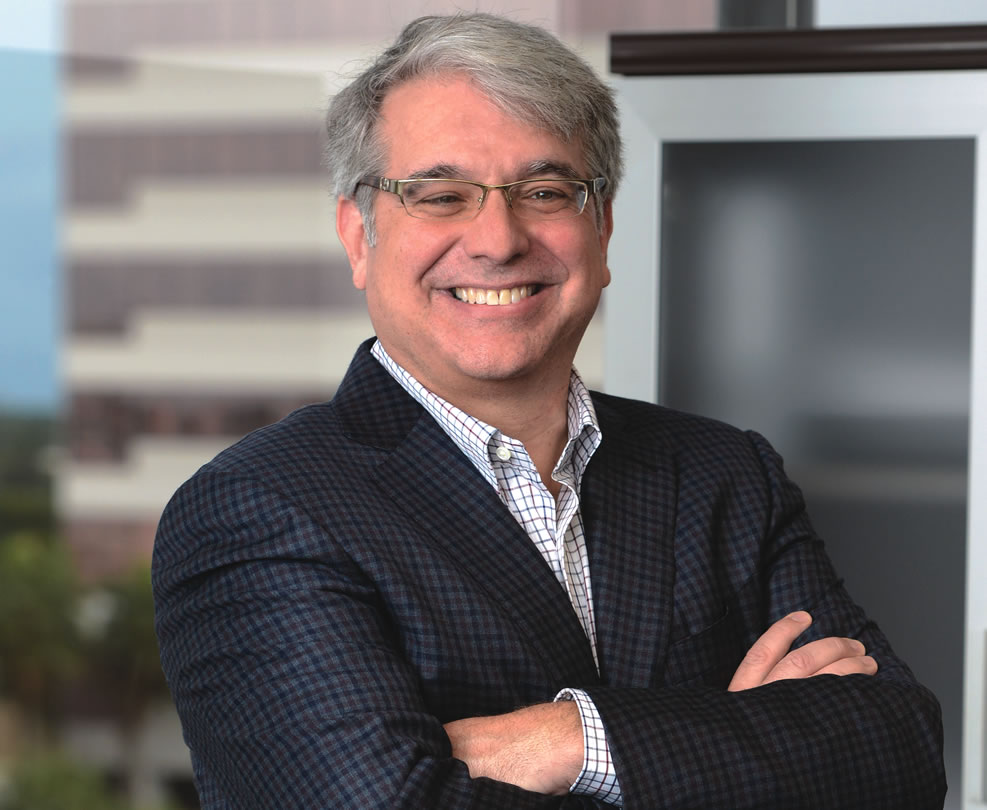
 

2 min read August 2019 — Almost a billion dollars a year are spent on transportation in Broward, and as the region continues to grow so will this number. With so much money being funneled into transportation, there must be an overseer to decide how to disperse these federal funds. This overseer is the federally-mandated agency The Broward Metropolitan Planning Organization. Invest: Greater Fort Lauderdale recently spoke to Executive Director of the MPO Gregory Stuart, who discussed how the passage of the penny sales tax will help fund new transportation initiatives, the more immediate changes Broward will see thanks to the sales tax and the challenges facing transportation in the county. 

What have been Broward MPO’s most significant highlights over the last year? 

There have been three. The first is possibly the most significant, which was the passage of the penny sales tax that added $350 million a year to our annual budget. We spend about a billion dollars a year on transportation in Broward, so adding this $350 million is a substantial increase in transportation spending for our region. Second, was the municipal portion of that sales tax, which was one of the most significant items to be included in the penny sales tax. While we can talk about the large-scale projects that the sales tax will generate for the region, the impact of 23% of that money being dedicated to our municipal partners to build quality of life improvements when it comes to the transportation system is going to be key. It will provide those dedicated funding sources for our community shuttles, which folks use to go to the grocery store, appointments and other short distances. Third, was the implementation of the quiet zones for the FEC and CSX tracks here in Broward. While this didn’t necessarily improve the overall condition of transportation, it improved the quality of life for the residents along both of those corridors. 

What will be some of the more immediate changes due to the passage of the penny sales tax for transportation? 

Realistically, the immediate changes aren’t going to result in construction. We are focusing on enhancing the traffic signalization program. This includes coordination between traffic lights and people’s vehicles through the installation of smart communication equipment. Another immediate change that has happened already but which we’re not going to notice for about another year, is the county transit agency’s purchase of another 130 buses. Considering they are operating a fleet of about 300 buses right now, this is a one-third expansion and a significant increase in the bus system. 

What are some of the biggest challenges facing transportation and transit in Broward County?

The biggest challenge that we face is just trying to get everybody on the same page, whether it is a local government, the county government, the state government, the federal government or homeowners and business associations. It can be a very difficult task, but it can be done. We are working to strengthen the relationship between the three counties: Miami Dade, Broward, and Palm Beach. They all need to be talking to one another if we are going to make real positive change when it comes to transportation needs across South Florida. 

To learn more about our interviewee, visit:

http://www.browardmpo.org/

Spotlight On: David Gwynn, District Seven Secretary, Florida Department of Transportation

Writer: Max Crampton-Thomas

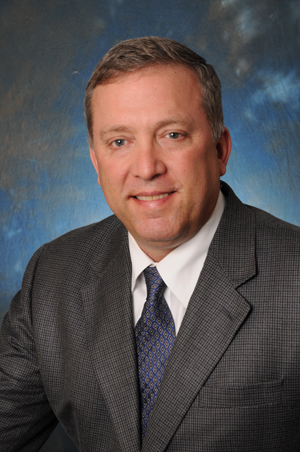
2 min read July 2019 — Challenges with transportation, traffic and transit options are not new issues for the Tampa Bay region. As the area continues to make strides in its economic and population growth, there is a heightened emphasis on finding solutions. Invest: Tampa Bay recently sat down and discussed these issues with David Gwynn, District Seven Secretary for the Florida Department of Transportation. Gwynn spoke about how FDOT is working to mitigate these challenges, enact forward-thinking initiatives and his outlook for transportation in Tampa Bay for the next year.

What is the biggest initiative for Florida Department of Transportation in District 7? 

We have been working on a program called Tampa Bay Next. Over the last two and a half years, we have had hundreds of public meetings with big and small interest groups, elected officials and general members of the public, which we used to gather some great input. A key issue that we identified was transportation. Although we recognize that our interstate needs some work, there are other areas, like the downtown interchange, where infrastructural improvement would have a pretty massive impact on the surrounding neighborhoods. As a result, we are focusing on ways we can improve transit and intersections in those areas to help make them safer, while also not requiring a significant expansion of the highway footprint.

How are you working to mitigate the traffic issues in the region? 

We have come to the conclusion that simply widening and continuing to build more roads is not going to completely mitigate this issue. We have shifted our efforts to also look at multimodal solutions, like the streetcar system in downtown Tampa. Until last year, it was underutilized, but we recognized that this could be a good part of a transit system. The question was how to make it more attractive for people to start riding it. What we found was because there was not a lot of local money to fund it, it was only running from 11 in the morning until 8 at night. We were able to get a grant to allow the streetcar to run from 7 in the morning until 11 at night and on a more frequent basis. The ridership has since tripled, and that is important because we now have a strong case for the federal government to invest in expanding that streetcar system further out into Tampa Heights. If we can get federal funding, they will put 50% of the cost in, the locals put in 25%, and then our department covers the last 25%. 

What is the outlook for the transportation sector in Tampa Bay for the next year?

The passage of the sales tax in Hillsborough County was a big step forward because the local money allows us to do things with state and federal matching money. We will start to see an increased frequency of buses, better stations and more opportunities to expand the systems. On the highway side, we continue to build road and safety improvements. Four hundred of our signalized intersections that had the highest number of crashes are in the process of receiving new LED lighting that will illuminate these intersections at night much better than they have been. We are going to start the Howard Frankland Bridge project, and the Gateway Expressway will probably be completed in another two years. 

To learn more about our interviewee, visit:
https://www.fdot.gov/home

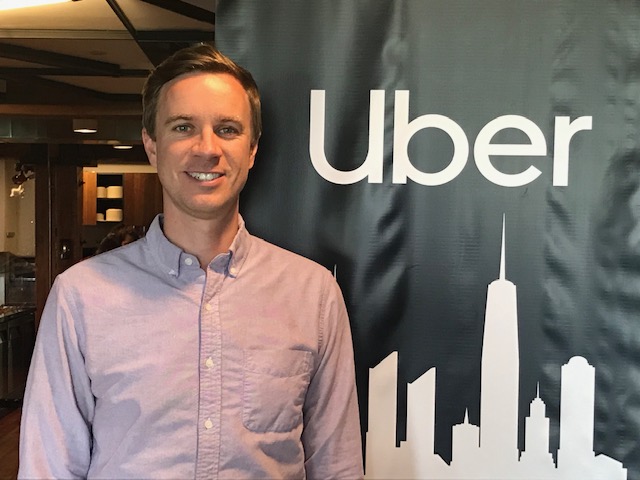
Spotlight on: Chad Dobbs, General Manager for Pennsylvania, Uber

Writer: Yolanda Rivas

2 min read JULY 2019 — Ride sharing is here to stay. Although the concept is not new, it has gained significant popularity over the last few years. According to Statista, a survey indicated that 36% of 11,000 participants in the U.S. used ride sharing services in 2018, an increase from 15% in 2015. Our ‘Spotlight on’ for this week, Uber’s general manager for Pennsylvania Chad Dobbs, shared with Invest: Philadelphia the latest highlights and growth areas for the company in the region. 

What were some highlights that Uber saw in the region during the past 12-18 months?

We rolled out Express POOL, which is a new version of Uber POOL. This new shared ride option allows passengers to get more affordable rides by taking a short walk to a spot along the route to meet their Uber, and joining other users with similar routes — which makes ridesharing more efficient. We also made significant progress on our wheelchair accessibility, through a partnership with MV Transportation, to get more wheelchair accessible vehicles on the road and massively improve the reliability of that service. Finally, we launched Uber Rewards in late 2018, which is a loyalty program for riders. Whether you’re using Uber as a rider or to get food you can accumulate points and unlock special features on the Uber app.

What are the main growth drivers for Uber in Philadelphia?

In Philadelphia and other similar-size cities, our fastest growth areas are typically outside of the core. We’re excited to bring portable options to places that are not traditionally served by public transportation, and need a quick, reliable and cheap alternative. Outside of our ride program, we’re expanding the Uber concept as a platform and joining other transportation modes. For example, we recently launched a transit planning pilot program in Denver with the local transit system. The biggest opportunity for growth is around this concept that Uber is a platform and a way to get from point A to point B, but not necessarily in the back of a car. That part of the business has grown substantially over 2018 and is continuing to grow.

What are you doing to grow and improve the driver side and experience in the city?

We’re sitting in our Greenlight Hub facility, which is a physical location where drivers can come to receive in-person support with the on-boarding process. It’s very important for us to make sure the drivers have the support they need. We have also launched a number of different tools over the last 18 months to improve the drivers’ experience. For example, we had our 180 Days of Change campaign to make substantial improvements to our product based on the feedback of our local and national drivers. 

To learn more about our interviewee, visit:

Uber: https://www.uber.com/

Spotlight on: George Cretekos, Mayor, City of Clearwater

Writer: Max Crampton-Thomas

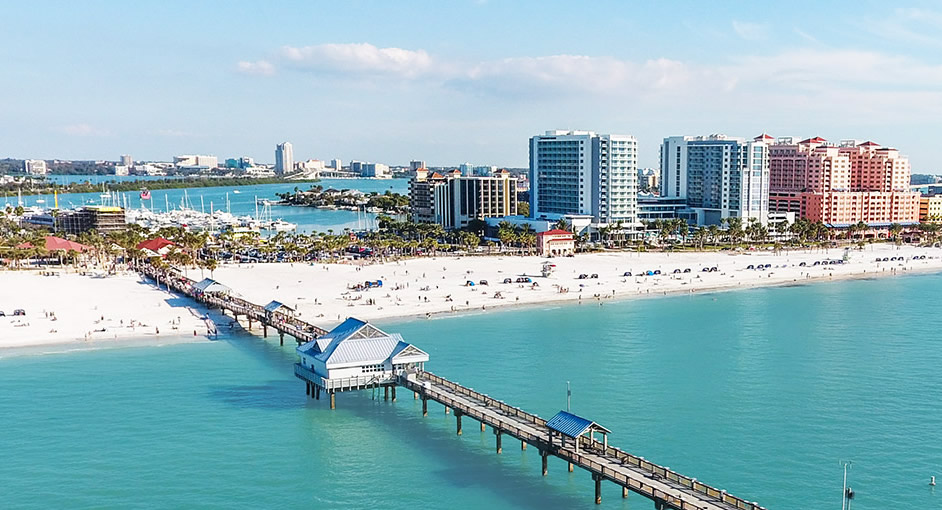
2 min read JULY 2019 — For the second year in a row, Tripadvisor awarded Clearwater  the distinction of having the best beach in the country. This comes as no surprise to the city’s 115,000 residents, who have long been stewards of their environment. With the population in the Tampa Bay region growing, that stewardship becomes even more important. 

Invest: Tampa Bay recently sat down with Mayor George Cretekos, who is on the verge of completing his second term. He discussed how the city is handling population growth, the challenges associated with it and how residents are at the forefront of environmental sustainability in Clearwater. 

How are Clearwater residents supporting environmentally sustainable practices? 

As I complete my second term, I appreciate how our residents and businesses have, on their own initiative, promoted sustainability and environmental stewardship.  Before there had been any talk about governments banning single-use plastics in the region, Clearwater’s businesses had started their own programs to stop using plastic straws. It is now common to find many restaurants in Clearwater that do not offer plastic straws or styrofoam to-go containers. This is a testament to how our residents are promoting sustainability and being good stewards of the environment.

How is the region handling the recent increase in population growth?

The region must have smart growth to make sure we are not only taking care of the environment, but also guaranteeing accessibility for our residents and visitors. We continually hear that we have traffic problems and at certain times of the year those problems can be exasperating. The population in this region needs to adapt to using alternatives like public transportation, which can be a better option than building more roads. We should model our transportation efforts to be like that of other major cities where reliable public transportation is an alternative.

What are the biggest challenges facing the city of Clearwater? 

Transportation and affordable housing are the two biggest concerns for the Tampa Bay area. A large percentage of the employees in Clearwater does not live in the city; if we can help provide affordable housing for these employees then the transportation problems could be eased. These individuals would not have to commute long distances into Clearwater, which in turn would help clear a significant amount of congestion on the roadways and emissions. My fellow mayors in the Tampa Bay region have realized that we may be separated by a body of water, but that doesn’t mean that our interests don’t run parallel. When one city does well then we all do well, so we should be working together to solve these issues.

To read more about our interviewee, visit: 

https://www.myclearwater.com/home


A NEW FRONTIER: TRANSIT ORIENTED DEVELOPMENT IN SOUTH FLORIDA

A NEW FRONTIER: TRANSIT ORIENTED DEVELOPMENT IN SOUTH FLORIDA

When: THU MAY 11, 2017 7:30 AM

Where: VENUE TO BE ANNOUNCED BY APRIL 11TH


As South Florida’s popularity is on the rise so is population. With an influx of people, the need for transportation solutions continues to rise. More than ever before projects in South Florida that provide mobility options are being championed by the private development community and public sector alike.

Flying high

Flying high

Alex Wertheim

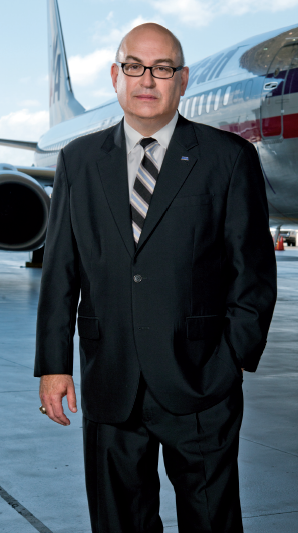
American Airlines Senior Vice President for Mexico, Latin America and the Caribbean Art Torno discusses the significance of Miami as a transport hub for the Americas

How has establishing a hub in Miami contributed to American Airlines’ business? 
In 2014, we celebrated the 25th anniversary of our Miami hub. This was momentous for both American Airlines and Miami-Dade; today, over 70 percent of departures from Miami International Airport (MIA) are American Airlines flights. We are privileged to be an airline company here, as Miami allows us to link North America to the rest of the hemisphere. This linkage has contributed greatly to American Airlines’ growth in MIA. In 1989, we had 19 flights a day and about 200 employees. That same year, we purchased assets from Eastern Airlines, which gave us access to routes in Latin America and the Caribbean. That investment was one of the smartest decisions American Airlines has made in its 80-year history. Today, we fly over 340 flights a day, to 126 different destinations, and employ 11,500 people.
 
What have been some recent developments in government relations in the hemisphere?
We constantly work with governments to develop the demand, to create the market, for air travel, particularly in the Caribbean, where we engage in cooperative advertising, work with hotels and travel agencies, to generate demand. Government relations are also the means by which we develop new routes. A great ex-ample is Brazil, where we’ve worked with, not just the federal government, but local governments as well, to increase access to locations that were previously isolated. As a result, American Airlines now controls 42 percent of traffic from Brazil to the U.S., from which Miami greatly benefits.
 
One challenge for Miami-Dade aviation pertains to lengthy customs processing. How can this be addressed?
Lengthy customs procedures could deter travelers from flying to MIA, thus hurting tourism and commerce. Addressing this matter – which is significant – has meant collaborating with the county and U.S. Customs and Border Patrol (CBP) to add additional officers; look at new technologies and staffing models and share different profiles of customers.
Most international airports in the U.S. have a lower split between foreign customers and domestic. At MIA, there is a larger percentage of foreign arrivals, so if MIA is being staffed with the same models used for other international hubs in the U.S., that model would be inadequate because a larger portion of our customers need a deeper level of scrutiny. In the last two years, we as an airport community entered into a pilot program with CBP where we would collectively fund overtime hours for their officers during peak travel times. So far, this initiative has been successful and is now being rolled out in two or three other airports in the country.

Soaring growth

Soaring growth

Miami International Airport Aviation Director Dr. Emilio T. Gonzalez, discusses infrastructural upgrades and plans to transform Miami-Dade into a global hub


Miami International Airport (MIA) has seen incredible growth in recent years. What is the strategy to keep pace?

Broadening capacity is a priority for this airport and at the core of both our medium and long-term strategies. We service 40 million passengers each year – roughly the population of Argentina – and the airport’s capacity is 50 million; at some point we will run out of space.

To anticipate these needs, we are undertaking a number of major infrastructural upgrades. One project is to build 40 hardstands to park planes. Until recently, air traffic operated on peaks and valleys. You see no arriving flights at 2 a.m., but at 6 a.m. there is a surge of planes. Some of our aircraft, particularly those originating from South America, fly here and go nowhere else. They arrive at, for example, 8 p.m. from Brazil and stay until 11 p.m. Because of American Airlines’ recent reorganization, we no longer have the peaks and valleys, but instead, have constant traffic. Consequently, we no longer have the luxury of avail-able empty gates for us to park idle planes.

We must also accommodate growth in air freight, another important driver in this economy. We operate five airfields. One of them, our training and transition airfield, located in the middle of the Everglades, has a 10,000-foot runway. We are looking to convert that into a cargo airport sometime in the distant future.


What is MIA doing to upgrade its terminals?

We are currently renovating Terminal E, which is part of the central concourse. Interestingly, we are only launching this project as a stopgap measure to buy us time before we can build new structures.

Eventually, Terminals G, F and E will become two terminals. We will start on one end of the airport and work our way in, knocking down terminals along the way. We are looking to break ground on this project in 2020 and it will take 10-15 years to complete the terminal.

Because of its central position within the airport, and because of added traffic from the slew of new flights that American Airlines has announced they will be adding, Terminal E will be where the action is. Subsequently, we are investing in modernizing it. We recently purchased a $90-million train system to improve connectivity within the airport. This will be delivered in the next two years and has a lifespan of 10 years. In the distant future, we are looking to erect a high-end mall, which will have all of the major luxury retailers, in the central terminal.


What are MIA’s plans for broadening connectivity with respect to passenger business?

MIA is the second-largest international passenger airport in the U.S. However, in looking at our existing network there are a number of gaps. With respect to Europe, we need to improve connections with Eastern Europe and Scandinavia. We are looking to develop routes like Warsaw-Miami and Stockholm-Miami.

Asia is another big untapped market for us, in terms of passenger service. We already have cargo business with Asian companies, namely China Air, Korean Air, and Cathay Pacific, and those are usually one-stop flights that go from East Asia to Alaska, refuel and go back. I have spoken to representatives from different Asian carriers, and they all want to come here; it’s not a matter of “if,” but “when.” The “when” will happen when these airlines get new, larger, aircraft, for instance, the Dreamliners. When they start getting A-380s, then we will start to see an increase in Asian traffic coming here.

We are also working on getting flights to Africa. These don’t necessarily have to be through African carriers but could be U.S. airlines with Miami-Johannesburg, Miami-Lagos or Miami-Cairo routes.

MIA is the number one international freight airport in the U.S. What are the growth fundamentals of this segment?Being a gateway city, Miami sees cargo both coming in and going out. Planes arrive full of goods, and the only way they can generate a profit is if they also leave with full loads. From a cargo perspective, Atlanta can’t be Miami because they don’t have much to send back. At MIA, thanks to South Florida’s robust distribution and logistics operations, all of our cargo planes come in full of goods and they leave full as well. They arrive with perishables – flowers, fish, fruit – and depart with high-tech exports, such as electronics, medical technology, mining equipment and automobiles.


How does MIA contribute to job growth and economic diversification in South Florida?

The airport is one of the largest employers in Miami-Dade County, contributing nearly 158,000 direct jobs to the economy annually. It also generates a significant number of indirect jobs in related and peripheral industries, such as tourism, logistics, and manufacturing.

For instance, although it may not be very visible, there is a robust aerospace industry in South Florida. One of the largest airplane manufacturing companies, the Brazilian-based Embraer, has its U.S. headquarters in Ft. Lauderdale. B/E Aerospace, which is headquartered in Palm Beach and manufactures interior cabin products, has more employees than U.S. Southern Command (SOUTHCOM). The French-Italian aircraft manufacturer ATR recently relocated their North American headquarters to MIA from Virginia.


What are the most pressing challenges of operating an airport of this size and significance?

There are a lot of moving parts – some of it operational, some financial. The operational aspect is tied to the fact that we have over 90 airlines that fly out of here and they need a lot of care. We also have over 200 concession locations, which would make us one of the largest malls in the U.S., as well as related businesses such as a hotel, parking facilities, etc.

On the financial side, MIA is the largest economic engine – not just in Miami-Dade County, but in the U.S. Southeast, from Washington, D.C., down. To put this in perspective, we generate $1 billion more revenue than Hatsfield-Jackson Atlanta International Airport; we are bigger than Disney World and bigger than the Tennessee Valley Authority. When you generate that much wealth and economic business, everyone wants a piece of the action. Consequently, I get lobbied frequently and must ensure that proper procedures, when it comes to bids, are enforced at all times.


What is your strategic vision for MIA and your outlook on South Florida’s economy?

Currently, Miami-Dade is the Gateway to Latin America. Ultimately, our goal is to transform it to a global hub. We have the fundamentals to support this – strong tourism, real estate, logistics and banking industries – and MIA’s capital projects will only boost this progression.