Florida Blue Market President Penny Shaffer discusses the challenges and opportunities presented by the Affordable Care Act (ACA)
How has the ACA impacted the relationship between health care providers and insurance companies?
ACA focuses mostly on access and does not mandate enough changes on the delivery side, yet the only way to provide affordable access is to have the right payment model in place and share accountability among all the players. Rather than maintain the current fee-for-service model, we need to strive for better health outcomes. Florida Blue has established over seventeen Accountable Care Organizations (ACOs) across the state and 2,500 patient-centered medical homes, with over 4,500 physicians participating. These arrangements allow physicians and insurance companies to share analytics regarding a set of patients. Doctors are rewarded for their patients meeting certain health standards. keeping the focus on wellness more than illness.
How has the implementation of ACA created challenges for businesses in South Florida?
It makes affordability a challenge, particularly in South Florida. We are a community of small businesses. Today these businesses are trying to figure out where to go from here as a result of the law. Do they offer insurance or do they let employees go to the individual market where they could get a subsidy? Miami is arguably the most expensive setting for health care in the U.S. This is primarily due to our large aging population. This market has a high concentration of medical specialties, with fewer primary care providers. Moreover, Miami has one of the highest concentrations of Medicare fraud, which further drives up the cost of health care. Finally, we have a large uninsured population, which is in large part comprised of immigrants from countries with socialized medicine, and are therefore unaccustomed to having to procure insurance for themselves or their employees.
How would Medicaid expansion affect South Florida?
Nearly 700,000 people in Florida are in the coverage gap, meaning that they make too much for the state’s current implementation of Medicaid and too little to qualify for subsidies on the exchanges. The majority resides in South Florida, and inevitably we have to fix this gap.
At the state level, what policy developments will have the greatest bearing on health care in the near term?
New legislation would expand the availability of telehealth services, which would provide more convenient access to health care services, particularly to Floridians in rural areas or areas with physician shortages. Proposals to modify prior authorization rules and step therapy protocols must strike a balance between the management of medical costs and the treatment needs of the patient along nationally-recognized guidelines. Covering more South Floridians should result in lower health care costs as uncompensated care is decreased.

Baptist Health South Florida President and CEO Brian E. Keeley discusses South Florida’s unique health care needs and strategies to tackle rising costs
What are the unique demographic and epidemiological trends in South Florida, and how have these driven growth in the health sector?
The most conspicuous trend is the same one driving growth on a national basis: people are getting older. I call it the demographic tsunami. Baby boomers are all turning 65, and the utilization of health care services for people over 65 is essentially twice as that for people under 65.
In South Florida, we also have a high percentage of uninsured individuals – around 30 percent. Hopefully, because of the Affordable Care Act (ACA), it will fall significantly. When people have insurance, demand goes up; without insurance, these folks don’t have access to, or they don’t use, health care services.
Epidemiologically, we see a higher incidence of diabetes here in South Florida relative to the national average. In part, this trend is informed by the area’s large Latin American and Caribbean population.
Miami-Dade’s growing international profile has created growth opportunities in medical tourism. How significant is medical tourism for Baptist Health?
Baptist Health does well in the international market, particularly when it comes to the Latin America and the Caribbean, where we focus our international outreach efforts. Patients from these countries come to Miami-Dade to seek medical treatment because of its proximity, and this market’s abundance of specialists that address the specific needs of this population. Our main focus in the international market, like the domestic market, is wellness and disease prevention. For Latin Americans, this means diabetes and obesity education because these diseases disproportionately impact the region. We provide diabetic educators and dialectologists for this purpose.
Because international patients tend to pay in full for their for their medical treatments, this segment generates significant revenues for area hospitals and other health care facilities engaged in medical tourism. Thus, although medical tourism comprises less than 5 percent of Baptist Health’s business, it probably contributes around 5 percent to our bottom line.
What are the key strategies necessary to care for a large contingent of international patients?
Baptist Health has one of the largest international programs in the U.S. We see around 12,000 patients a year, competing with the likes of the Cleveland Clinic and Johns Hopkins. We are long-term players in this space – we’ve been in it for 20 years. The reason we have been so successful is that, unlike other clinics that may provide service in multiple locales, our focus is honed on Latin America and the Caribbean. We know that market very well, and we benefit greatly from the high volume of direct flights to and from Latin America. In South Florida we have a large staff of bilingual and trilingual folks who can care for these patients, and we also have representatives working in various countries throughout the hemisphere.
What are the notable trends in health care-related employment in the South Florida market?
Our provider community has a very handsome and generous supply of specialists and a deficiency of primary care physicians. This situation contributes to higher utilization, as does excessive and unnecessary medical testing.
What are the greatest challenges facing South Florida’s health sector?
The real problem with health care in the U.S. is not quality, nor is it access – everyone has access because the federal government has the EMTALA (Emergency Medical Treatment and Active Labor Act). The problem is cost, and if left unchecked, I think we’re go-ing to bankrupt the country.
Fee for service, in my estimation, is the single number one foundational problem of cost. We have too many unnecessary surgeries and procedures – as high as 30 percent, which is a huge number – and it’s all driven by fee-for-service. Under this model, the more you do, the more you get paid. We’ve got the incentives misaligned. This is a cultural matter that needs to be changed.
How can rising costs be addressed? What are best practices from Baptist Health’s experience?
We have been successful in meeting our goal to reduce health care costs below the rate of inflation. This year saw the lowest rise in our 50-year history. Inflation was around 3.5 percent to 3.6 testing, whereas our admission costs increased by only 0.9 percent. This was not the result of one big change, but a thousand small ones.
That said, transitioning away from the fee-for-ser-vice model is key. We are very patient-focused, while fee-for-service is not. It is not only an excessive and costly model, but also deteriorates the quality of care. We want to pay our doctors in capitation – providing them incentives for promoting good health outcomes and keeping their focus on wellness and prevention. To ensure we appropriately leverage the doctors, we complement them with highly trained nurse practitioners along with dieticians and physical therapists. We have been hiring a high number of primary care physicians to bring balance to a system that is so specialist-heavy.
We have been experimenting with a number of alternative care models that cater to the needs of the patients. For instance, they open early and close late, so as to eliminated their having to go to urgent care or the emergency room “after hours” for minor symptoms simply because their doctor’s office was not open.
What is Baptist Health’s strategy for growth and expansion?
Baptist Health is the fastest-grow-ing organization in South Florida and the largest private employer, providing jobs to 16,000 people. When people look at our growth, they say, “well, you have all of these hospitals,” but in fact, our growth has been on the outpatient side! We have 50 outpatient centers and buildings – that’s quietly how we have been expanding.
We are transitioning from a high-cost environment, anchored by acute care hospitals, to one based in outpatient care, which is the bulk of our business today.
From here, the next transition is to the doctor’s office, where we will grow primary care, and eventually back to the home, as advances in telemedicine – both on the technology and regulatory sides – continue.
In 2014, we finalized plans to build a $430-million world-class cancer treatment and research center, which will have the latest technology, including proton therapy. The center will conduct, not just bench, but also phase II and phase III – or translational – research. We are building a hotel for cancer patients and family members, and a wellness center too. This is the largest project we’ve undertaken. There are only 18 such facilities in the world – none in South Florida, Latin America or the Caribbean. Once the center opens, local patients and those from Latin America will not need to go to New York or Houston for treatment.
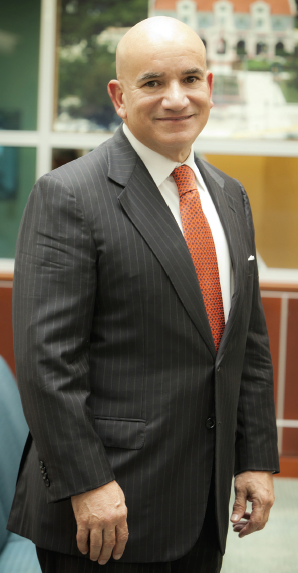
Jackson Health System President and CEO Carlos A. Migoya discusses changes in South Florida’s health landscape and their impact on public hospitals
What are the key components of Jackson Health System’s medium-term strategy?
Our medium-term strategy involves a $1.4-billion campaign we announced last year, which is largely comprised of an $830-million bond awarded to us by Miami-Dade County voters in November 2013. We spent 2014 preparing for the capitalization. These funds will be used to upgrade our buildings and facilities.
We also plan to invest heavily, to the tune of several hundred million dollars, on IT to ensure we have the latest equipment that can provide medical information quickly and more efficiently to nurses and doctors so they can make swift and well-informed decisions in caring for their patients. All of these efforts are geared towards making Jackson a more attractive option for health care.
In terms of physical infrastructure, what are Jackson Health’s plans for expansion and upgrades?
In March 2015, we break ground on a new rehabilitation center, which will benefit both our orthopedics and neurosurgery departments, and enhance our initiative to cure paralysis. Secondly, we have plans to construct a new building for the Miami Transplant Institute that will allow for all necessary procedures, including those pre- and post-transplant, to be done at the facility. Finally, we will build a 130-bed intensive care tower. In addition to those three signature buildings, we will modernize every patient room, emergency room and operating room, build 10-12 urgent care facilities throughout the county, along with a children’s ambulatory pavilion.
What demographic trends are unique to South Florida, and how have they impacted health care?
One unique aspect to South Florida is our large international population, and the high numbers of international visitors we get every year. Medical tourism is an important aspect of our business, enhanced by our partnership with the University of Miami’s Miller School of Medicine, which has an excellent reputation abroad. People from around the world come to us when their life depends on it, with neurosurgery, stroke, transplantation and pediatrics serving as some of the key areas attracting international patients. For years we have drawn many patients from Latin America and the Caribbean. Many doctors from the region do their residencies at Jackson Memorial and once they return to their home countries, they refer their complex cases to us, sending patients to be treated by their former professors. Increasingly, however, we are also seeing patients from Europe and the Middle East.
When we look at the patient profile for Jackson Health specifically, one notable trend has been the reduction of charity care. We continue to provide services to poor and underserved patients, but we have also taken a proactive approach when it comes to conducting financial screening. Many of the people coming through our doors are eligible for Medicaid, but they do not know that they qualify. We have been working hard to qualify those individuals. Not only then do we provide them with services that we receive subsidized payments for, but, more importantly, those eligible folks walk out of our doors with a Medicaid card, which allows them to obtain medical ser-vices in the future. As a result of these efforts, we have reduced the portion of our charity care from 20 percent to somewhere around 12 percent of our total patients.
How has the passage of the Affordable Care Act (ACA) impacted Jackson Health?
We are the largest provider of Medicaid services in the State of Florida. Medicaid patients comprise 35 percent of our business, while Medicare patients make up 20 percent and the rest come from commercial pay. This past year 100 percent of Medicaid cases in Florida became administered through managed care, which was a great adjustment for us. We are now at the forefront of partnering up with managed care companies, not just for managing Medicaid, but Medicare and HMOs as well, which is a complete shift from the fee-for-service model.
In your view, what are the most critical challenges facing the health sector in South Florida?
The biggest challenge continues to be the fact that government reimbursement, both Medicare and Medicaid, as well as supplements to cover some of the charity care continues to be reduced. To address changes in the funding landscape, institutions like Jackson Health need to focus on growing the commercial pay segment.
As baby-boomers age, this will continue to tax the federal budget. Both federal and state governments are looking to spend less on health care, so institutions like ours are being asked to do the same work, if not more, with fewer resources. Shifting to a more managed care environment – something more familiar to states like California and Texas, but less so Florida – is another challenge for this marketplace, as well as keeping pace with technological developments, in particular the rapidly changing landscape of telemedicine and electronic medical records.
South Florida is also affected by the changes in the medical profession. Being a doctor is not as lucrative as it once was, especially when considering the soaring costs of medical education in this country. In the next 10 years, there will be a great need for specialists, particularly in orthopedics, neurology and neurosurgery. It will be a challenge to meet this demand – to ensure that medicine continues to attract the brightest minds.
How do you see these rising costs being mitigated? Technology is certainly one mitigating factor. As telemedicine and health apps continue to develop, it will be possible for patients to collect and send their biodata to their doctors and be diagnosed remotely, thereby reducing the costs associated with seeing a physician in person. Electronic health records will streamline the process of sharing information between multiple caregivers and facilities, reducing the occurrence of duplicate testing.
Another factor is the change in the nursing profession. Many RNAs [Restorative Nursing Assistants] and ARNPs [Advanced Registered Nurse Practitioners] are now trained to conduct procedures that primary care physicians used to do. More work is being delegated to nurses as their skill sets become more sophisticated.
Where do you think the greatest opportunities for growth in South Florida’s health sector lie?
Healthcare is one of the fastest-growing industries in South Florida, and it will continue to grow over the next ten years. A big piece of the growth is on the technology side – specialties like radiology and radiation are exhibiting tremendous prospects.
We will also see growth in the area of hospital administration because of the massive changes taking places in health policy. The way hospitals and health systems are run today is considerably different from how they used to be run in the past, and requires a great deal of sophistication and knowledge of the complexities within the industry. As health policy continues to change, opportunities in managed care and HMO administration will continue to grow as well.